Key takeaways (quick answers):
- The current Australian/NZ high-visibility apparel standard is AS/NZS 4602.1 — many tenders and site rules still say "AS/NZS 4601," its predecessor name; specify the edition in your PO and confirm garments carry the class marking that matches.
- Australia/NZ classes read like D/2, N/3, F/2: a number (1-3) for visibility level combined with a use letter — D daytime, N day-and-night (retroreflective-dependent), F flame-resistant variants.
- Only two fluorescent background colors are permitted for high-visibility garments under the AS/NZS regime — fluorescent yellow-green and fluorescent orange-red; EN's third color (red) does not carry over.
- Hot-climate merchandising wins the season: as Australia enters summer (Dec-Feb), mesh vests, short-sleeve hi-vis polos and hi-vis headwear peak — and sun-protection (UPF) claims belong in the spec sheet, tested to the AU/NZ clothing sun-protection standard rather than asserted.
- No CE-style notified-body scheme exists — compliance evidence in AU/NZ is the test report against the named standard/edition plus the garment's class marking, enforced through state work-health-and-safety law and principal-contractor site rules.
- Australia mandates clothing care labeling (fiber content + care instructions) — one of the strictest label regimes in the world; a China export invoice that passes US/EU customs can still fail at the Australian border on labels alone.
Publisher disclosure: published by Jinhua Aoke New Materials Co., Ltd, a China-based hi-vis manufacturer selling into AU/NZ wholesale channels and listing AS/NZS among its product standards; we benefit commercially from inquiries. This guide summarizes publicly published structures of AS/NZS 4602.1 (and the legacy AS/NZS 4601 references), Australian care-labeling requirements and general import controls, reviewed November 13, 2026. It is B2B information, not legal advice; confirm current editions, standards currency and your obligations with the relevant authorities and your customs broker. Companion market guide: our ANSI/US wholesale guide.
Stocking for the AU/NZ season? Send your class spec (D/N, level 1-3), garments and quantities or start from catalog SKUs.
What is AS/NZS 4602.1 — and why do tenders still say AS/NZS 4601?
Short answer: AS/NZS 4601 was the long-running joint Australian/New Zealand standard for high-visibility safety apparel; the current traffic-apparel requirement most AU buyers actually cite today is AS/NZS 4602.1, while "4601" survives inside older tender language, site induction decks and catalog copy. For a wholesale buyer the practical rule is identical either way: the standard, the class and the edition must be named in your specification, and the garment's sewn marking must show the matching class code. Never accept "AS/NZS compliant" without the number — a D/1 daytime sash and an N/3 road-worker coat are both "compliant" and completely different products.
How do Class D, Class N and the 1-2-3 numbers work?
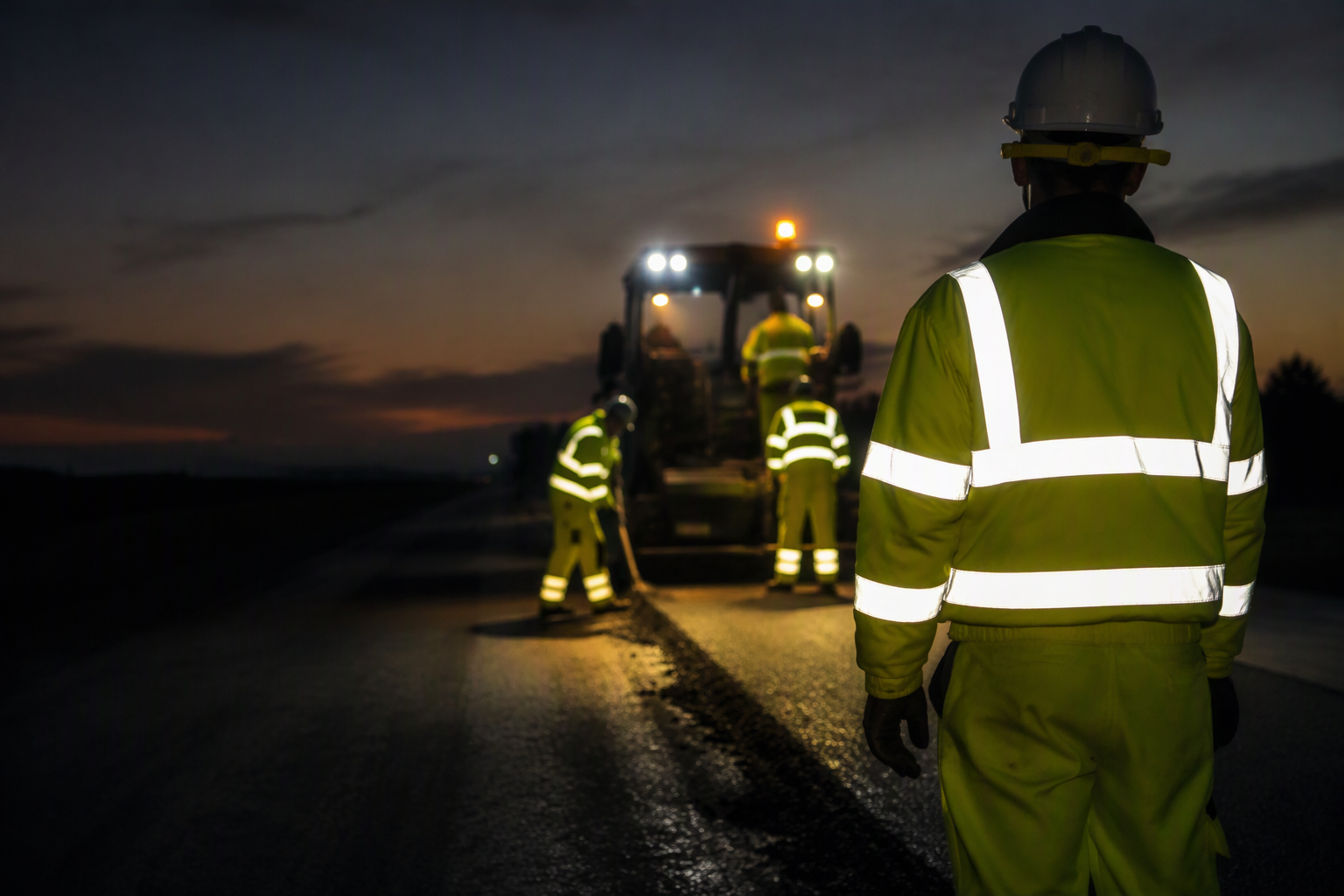
Short answer: two axes again. The number (1-3) scales how much fluorescent and/or retroreflective material the garment carries. The letter answers "when is it worn": Class D = daytime use — fluorescent material does the work, retroreflective tape not required; Class N = day-and-night use — retroreflective bands are essential and tested for headlight return; D/N marks garments serving both; and F denotes flame-resistant variants for spark/flash risk sites. Typical AU roadworks contracts ask for at least N/2, with N/3 for high-speed or low-visibility exposure — check your client's controlling-authority specification rather than assuming.
Wholesale translation: D-class garments (hi-vis shirts, vests without full banding) are volume fashion-adjacent movers; N-class is the certified core of every roadworks, rail and logistics tender; F-class is its own FR lane requiring its own certificate discipline — same warning as the US FR market: never cross-sell across the lane.
How do Australia/NZ classes compare with EN and ANSI?
Short answer: three overlapping philosophies, three marking systems — none transfers automatically.
| Dimension | AS/NZS 4602.1 (AU/NZ) | EN ISO 20471 (EU/UK) | ANSI/ISEA 107-2020 (US) |
|---|---|---|---|
| Class system | Level 1-3 × use letter D / N (D/N) / F | Class 1-3 by minimum areas | Class 1-3 × Type O / R / P |
| Day/night logic | Built into the class letter itself | Implicit (class assumes 24h performance) | Implicit; night work drives class 3 |
| Background colors | Two fluorescent colors: yellow-green, orange-red | Three: yellow-green, orange-red, red | Three: fluorescent yellow-green, orange-red, red |
| Approval route | No notified body — test evidence + class marking under WHS law | Cat II PPE: EU type examination + production controls | Manufacturer certification to the standard with accredited-lab evidence |
| Buyer's file | Test report naming standard, edition and class code | EU type certificate + report | 107-2020 report per model/colorway |
The area thresholds in each publication rhyme (a level-2 AU vest and a class-2 EN vest occupy similar territory) but the test conditions, color gamuts and marking differ, so the compliance file must be written to the destination standard — mechanics shared across markets are covered in our wholesale buying guide, and the US logic in the ANSI guide.
Which fluorescent colors are legal for AU/NZ hi-vis garments?
Short answer: two — fluorescent yellow-green and fluorescent orange-red. Australia/NZ do not carry over EN's red background option; an "all red with bands" EN class-2 garment does not become AU-compliant by adding tape. Assortment consequence for distributors: plan yellow-green as the default road/industrial color, orange-red as the secondary and contrast play (strong against bushland and urban grey), and stop quoting red-background SKUs into AU listings. Color gamut values and aging expectations live in the standard's test requirements — your supplier's test report, not the fabric swatch, is the proof.
What sells in the AU/NZ summer — and how does hot-climate hi-vis differ?
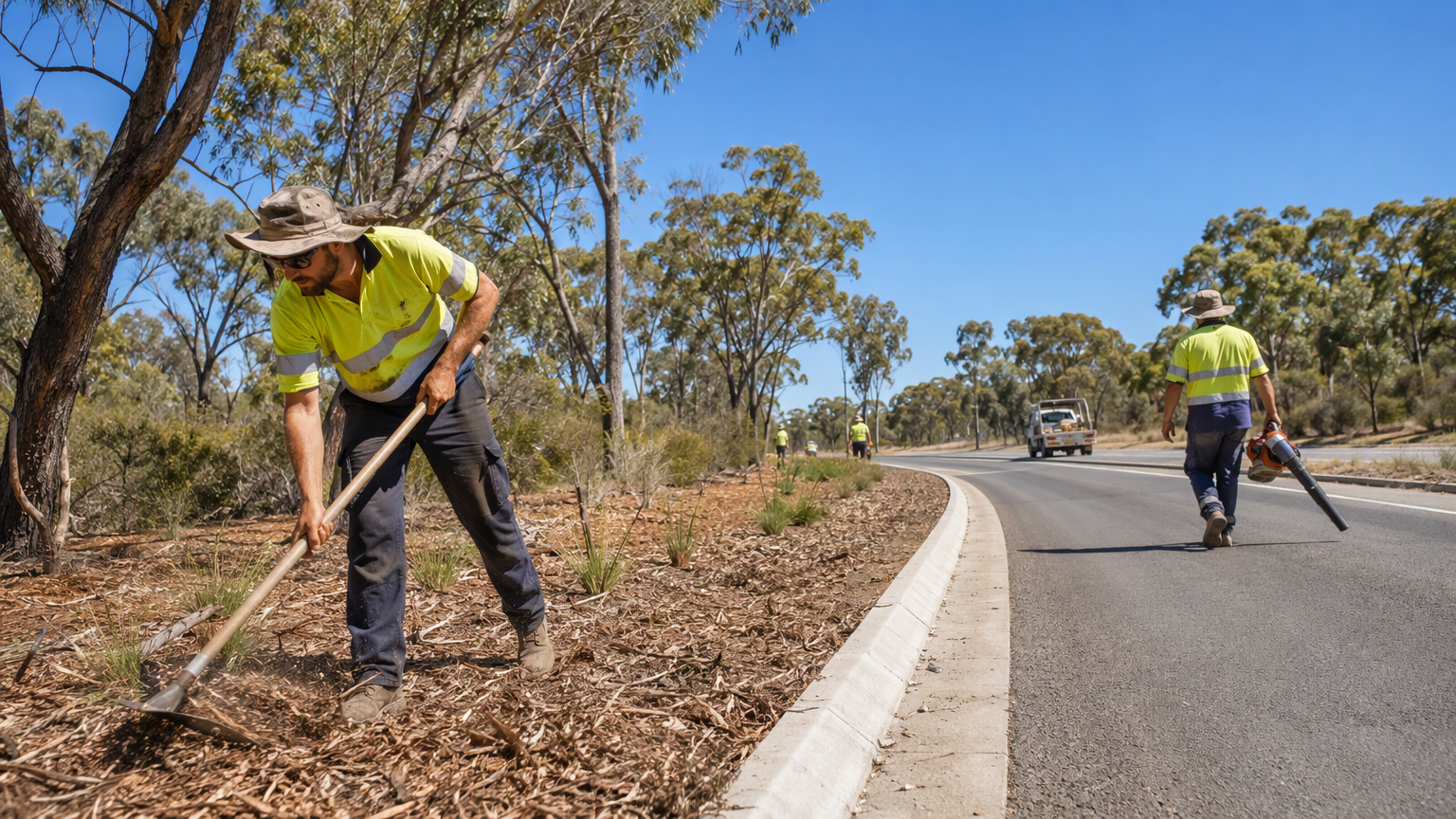
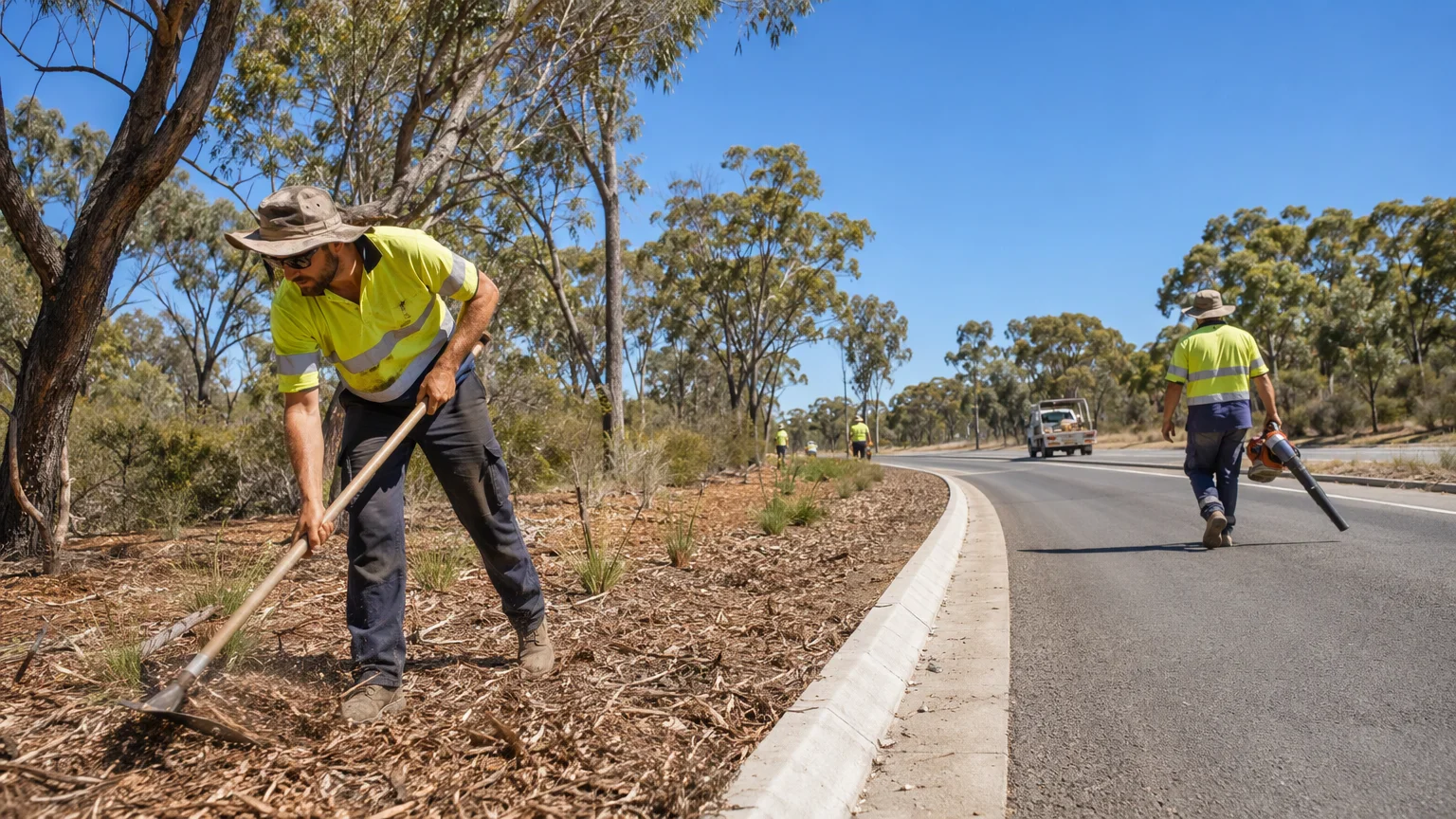
Short answer: breathability is the product. The December-February season (plus the evergreen roadworks calendar Down Under) moves mesh ventilated vests, short-sleeve hi-vis polos and t-shirts, and hi-vis bucket hats far more than the enclosed jacket silhouettes that dominate northern-hemisphere Q4. Two spec details AU buyers check that EU/US sheets often miss: UPF claims on sun-exposed garments belong behind the AU/NZ sun-protection clothing standard's test method (AS/NZS 4399 is the reference buyers recognize) — print "UPF 50+" only against test evidence, never fabric marketing; and ventilation architecture (mesh panels under arms, open backs) changes class area math, so re-verify the class code on ventilated models, exactly as our weather-resistant field matrix argues for waterproof claims.
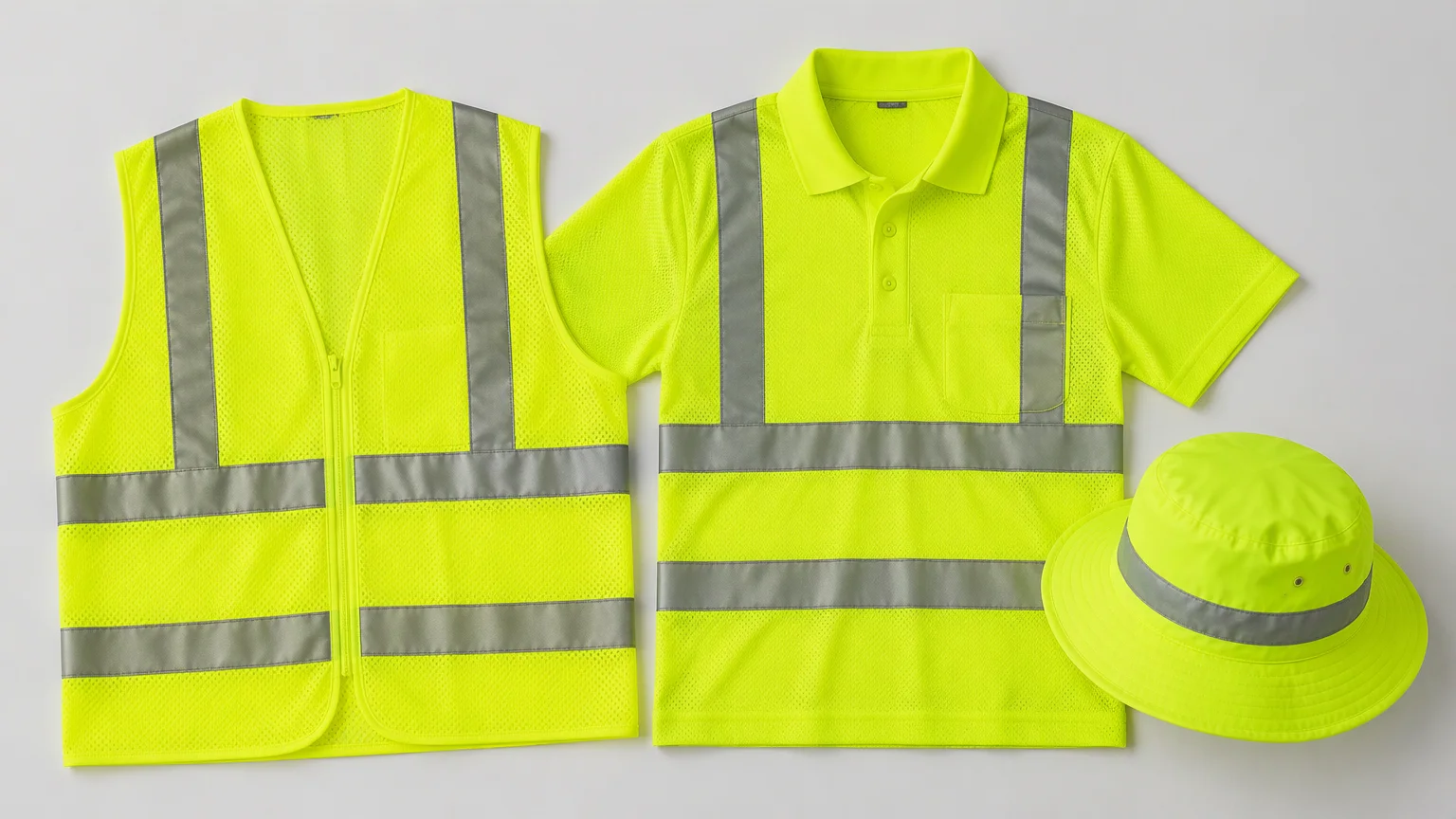
Illustrative image: the summer assortment — ventilated vest, short-sleeve polo and hi-vis headwear carry AU/NZ volume; class codes still decide which are roadwork-grade.
Does Australia run a CE-style certification for hi-vis?
Short answer: no. There is no government "approval" sticker for hi-vis garments in Australia the way EU Cat II PPE has notified-body type examination. The compliance chain runs through work-health-and-safety law (administered state and territory by state), which requires PPE to be suitable for the task — and in practice that resolves into the named standard and class printed on the garment plus the test evidence behind it, checked by principals, tier-1 contractors and procurement specs (controlling authorities and large miners/energy majors write their own add-ons). Commercially this is good news for exporters with real test files and bad news for paper tigers: nobody can hide behind a certificate logo, but every serious buyer will ask you for the report and class marking and will audit both.
What labels does Australian law require on imported apparel?
Short answer: Australia is one of the few markets with mandatory care labeling for clothing and textile floor coverings: fiber content by percentage and appropriate care instructions must appear on the garment (the consumer-goods labelling determination under the ACL framework is the reference), alongside country-of-origin honesty rules enforced through consumer law. On certified hi-vis you add the standard class marking itself. Practical import note that catches first-time shippers: "dry clean only" on a site vest that crews will actually hose down is a labeling failure that returns containers — write care instructions that match real use, and proof the label artwork against the AU format expectations before bulk sewing.
What should first-time AU/NZ importers budget and verify?
Short answer: the same landed-cost discipline every market needs, plus three AU/NZ twists. (1) Biosecurity and packaging: wooden pallets/crates need ISPM-15 treatment and organic-material risks get real scrutiny at the border — spec paper or plastic packing from the factory. (2) GST and duty on landed value: model it with your broker on your real HTS-equivalent classification rather than copying someone else's spreadsheet — and, as in our US guide, treat this article as refusing to quote volatile rates, deliberately. (3) Replenishment economics over first-order price: AU distributors live or die on container consolidation across the summer assortment (vests + polos + hats in one PO, sizes weighted for the local curve, which runs broad like the US pattern discussed in our bulk size-ratio guide). The general mechanics — MOQ tiers, payment terms, inspections — are in the wholesale buying guide.
What MOQ and order calendar fit AU/NZ wholesale?
Short answer: mirror-image calendar to the north. Summer peak demand lands December-February, so ocean freight arrives best on POs placed roughly May-August; the roadworks/rail segment buys steadily all year; and the pre-Christmas industrial gifting/event window adds a hard September-October deadline tier. Stock-lane class codes (D/1-D/2 fashion items) follow the 100-500 replenishment band with fast dispatch; N-class tender garments with your labels and artwork behave like the mid/high tiers (multi-hundred to low-thousands per colorway) with 25-45 day production. AU buyers should also hold the southern-hemisphere advantage: when northern factories are jammed for Christmas consumer goods (Aug-Oct), hi-vis production slots in the same plants are comparatively easier to secure — schedule against the traffic, not inside it.
Does New Zealand buy differently from Australia?
Short answer: less than distributors fear — but more than they notice. The "AS/NZS" prefix means the same standards family governs both markets, so one certified production lane answers both tenders; NZ enforcement simply runs through its own health-and-safety regime (WorkSafe NZ under the HSWA framework) and its transport authority specs rather than Australian state documents. Practical deltas for a wholesale file: NZ order quantities arrive in smaller drops with a wider tolerance for AU-consolidated shipments (many distributors serve both from one container, relabeling nothing because the class marking is shared), freight routing adds Wellington/South Island legs some China factories quote poorly at tender stage, and NZ's coastal climate puts cold-wind and rain layers into the same annual plan that summer mesh dominates in Australia — a genuinely year-round assortment rather than a single peak. Write listings as "AU/NZ" once, deliver logistics as two lanes.
How do you verify AU-compliant stock when it lands?
Short answer: build the check into receiving, not into a complaint email. Five gates that catch realistic failures: (1) label audit — class code (e.g., N/2), standard citation, fiber content and care instructions present, matching the approved artwork proofs; (2) geometry template — a printed band-layout gauge against which qc samples are laid flat, because band width and spacing drift is the most common production deviation on ventilated styles; (3) color visual lot check against the golden sample under daylight lamp — fluorescent drift between fabric lots is invisible on a single vest and obvious across a pallet; (4) retroreflection spot evidence for N-class — either retain periodic lab tests or ask the factory for batch test sheets from the tape supplier, which serious factories keep; (5) AQL functional sampling (closures, seam slippage, print/tape adhesion) at the agreed level before containers release, the same inspection discipline our durability test plan describes. AU tender audits happen after delivery; your gates have to happen before it.
Do recycled-content and ESG claims actually win AU/NZ tenders?
Short answer: they increasingly shortlist you. Council, rail and mining-services procurement now routinely carries sustainability criteria — recycled polyester content with supply-chain certification (GRS is the scheme AU buyers recognize), substance-safety evidence (OEKO-TEX 100 is a common question), and take-back or durability claims. The discipline that protects you: every claimed attribute needs a transaction-certificate-grade paper trail from fiber to finished garment, and class/area testing must be done on the recycled-fabric version, not the virgin one it replaced. For suppliers already running both certificates — as several China hi-vis factories including the publisher advertise on their company pages — recycled SKUs are a genuine differentiator in AU listings; for everyone else, "eco" language without the paper trail is a disqualification when the tender audit lands.
Quick glossary for AU/NZ hi-vis wholesale conversations
4602.1 / 4601: the current AU/NZ high-visibility apparel standard and its legacy name still quoted in tenders. D / N / F: daytime / day-and-night / flame-resistant class letters, crossed with level 1-3. Controlling authority: the road/rail authority writing site specs (state-by-state in AU). WHS: work-health-and-safety law — the enforcement layer under which "suitable PPE" becomes a duty. UPF / 4399: the sun-protection claim and its test method. ISPM-15: the wood-packing treatment mark biosecurity checks at the border. AQL: the accepted-quality-limit sampling your inspection runs on. Golden sample: the sealed approved unit every AU pallet gets judged against — same word, same weight, opposite hemisphere.
Frequently asked questions (AU/NZ wholesale buyers ask these first)
Is AS/NZS 4601 the same as AS/NZS 4602.1?
They belong to the same requirement family, but 4601 is the legacy name still embedded in many tenders and induction documents while 4602.1 is the standard edition current AU buyers typically specify and test to. For wholesale purposes the distinction is a documentation instruction: write the exact standard and edition your client's specification names into your PO, and make sure the supplier's test report and the garment's class marking answer that same citation. Ambiguity here is how containers get rejected at tender-audit level.
Can I sell EN ISO 20471 vests in Australia?
Physically yes, contractually usually no: AU site rules and tenders name AS/NZS classes (D/2, N/3 style codes), and a garment marked with the EN pictogram does not demonstrate the AU class your client specified even if its areas look equivalent. The distributor pattern that works: stock AU-marked production for road/rail/industrial specs, and treat EN-grade garments as a separate listing lane for non-spec buyers who simply want bright, banded clothing.
What is the difference between D/2 and N/2?
Both carry level-2 material quantities; the letter changes the tested job. D/2 relies on fluorescent material for daytime conspicuity, while N/2 must also perform as retroreflective day-and-night apparel — its bands and materials face the night-visibility testing. Pricing follows: N-class needs certified reflective banding and correct geometry, so it sits above comparable D-class items. Never let a "same fabric, cheaper letter" substitution into a night-exposure PO.
Do hi-vis garments need UPF ratings in Australia?
Not by law — but in a market with the world's harshest UV, serious buyers ask, and "UPF 50+" printed without test evidence is both a compliance and a credibility failure. The recognized method lives in the AU/NZ sun-protection clothing standard (AS/NZS 4399), so treat UPF as an optional tested feature like class: specify it, test it, label it truthfully. Tested-UPF summer vests and polos justify real price premiums in AU listings.
Which color sells most in Australia?
Fluorescent yellow-green dominates roadworks, rail and councils; fluorescent orange-red holds mining services, utilities and parts of Queensland/WA contractor culture, and reads stronger against green bushland. Because the regime permits only these two background colors anyway, the smart assortment splits between them by your customer mix rather than chasing exotic shades — promotional colors belong to non-certified lanes.
What about F-class for mining and oil & gas?
F-coded garments are the flame-resistant branch of the AU system — the domain of resources-site workwear programs. Like FR in the US market, it is its own evidence chain (FR standards, fabric lot traceability, certificate scope) that ordinary hi-vis factories should not improvise. If your PO names F-class, shortlist only suppliers whose FR test files cover the exact model — the general verification method in our 12-point supplier scorecard applies unchanged.
Are women's fits stocked Down Under?
Increasingly required: council, rail and mining diversity programs now spec female-cut hi-vis in tenders. Practically, women's curves on certified garments change area geometry, so each fit needs its own class determination — treat female-cut SKUs as separate certified models with their own reports, not a size suffix. AU demand for scoped small (6-8) through extended sizes makes true-curve programs a genuine differentiator versus importers dumping unisex boxes.
What documentation should the supplier pack with an AU-bound container?
Test reports (standard + edition + class + model/colorway), packing list with carton-size detail, AU-format care/compliance label artwork proofs, ISPM-15 declarations where any wood rides along, and commercial documents whose fiber-content wording matches the labels sewn in the garment. Keep the set with your golden sample record — AU tender audits request the pack as a unit, and a missing label proof reopens a closed shipment.
Why source AU/NZ hi-vis with Jinhua Aoke (publisher of this guide)?
Claim boundary: publisher self-description from our published profile — verify through the same report, sample and inspection gates you apply to every supplier.
Jinhua Aoke New Materials Co., Ltd has produced reflective and high-visibility apparel since 2010 and lists AS/NZS among its product-standard coverage alongside EN ISO 20471 and ANSI, published on the company profile together with management-system audits (ISO 9001, BSCI, ISO 14001) and substance-conscious certifications relevant to AU spec sheets (OEKO-TEX 100; GRS for recycled-content programs). For AU/NZ wholesale specifically: the two sample rooms produce class-checked golden samples per fit and size (including the ventilated summer silhouettes this market moves), in-house testing mirrors external-lab checks across fluorescent fabric, retroreflective tape and finished garments, and the three-plant footprint — Jinhua small-batch/high-custom (≈50,000 pcs/month), Chongqing (≈200,000 pcs/month), Myanmar (≈1.5M pcs/month) — supports AU replenishment cadence and origin-diversification questions with real capacity. Private-label and logo programs run per our custom-logo playbook, with AU-format care labels treated as production artwork, not an afterthought.
Next step: send the class code (D/N + level), garments, color split, size curve and arrival window through the contact page or inquiry center. You receive the quote with the standard/edition test-file references per SKU, AU care-label artwork proofs, and the same landed-cost checklist logic used across this cluster — starting with the manufacturers shortlist so your comparison sheet stays consistent.
Related reading from our B2B library
- ANSI-Compliant Hi Vis Wholesale — 2026 US B2B guide
- Reflective Safety Clothing Wholesale — the complete B2B buying guide
- Top 10 Reflective Vest & Hi Vis Clothing Manufacturers in China — 2026 shortlist
- Hi Vis Winter Jackets Wholesale — 2026 insulated workwear guide
- Custom Reflective Vests with Logo — bulk & private-label playbook
- High visibility workwear supplier — 12-point qualification scorecard
Research basis: standard structures summarize AS/NZS 4602.1 class designations (levels 1-3; D/N use letters; F flame-resistant variants), the two permitted fluorescent background colors, and AS/NZS 4399 sun-protection referencing as publicly described by Australian safety-apparel industry sources and standards catalogs, plus Australian mandatory clothing care-label requirements under consumer-goods labelling rules, reviewed November 13, 2026. Standards editions, tender wording and import controls change — verify current citations against Standards Australia/Standards NZ publications, state WHS regulators and your customs broker. MOQ, calendar and assortment patterns reflect publisher export experience and public B2B practice. B2B editorial information, not legal or customs advice.