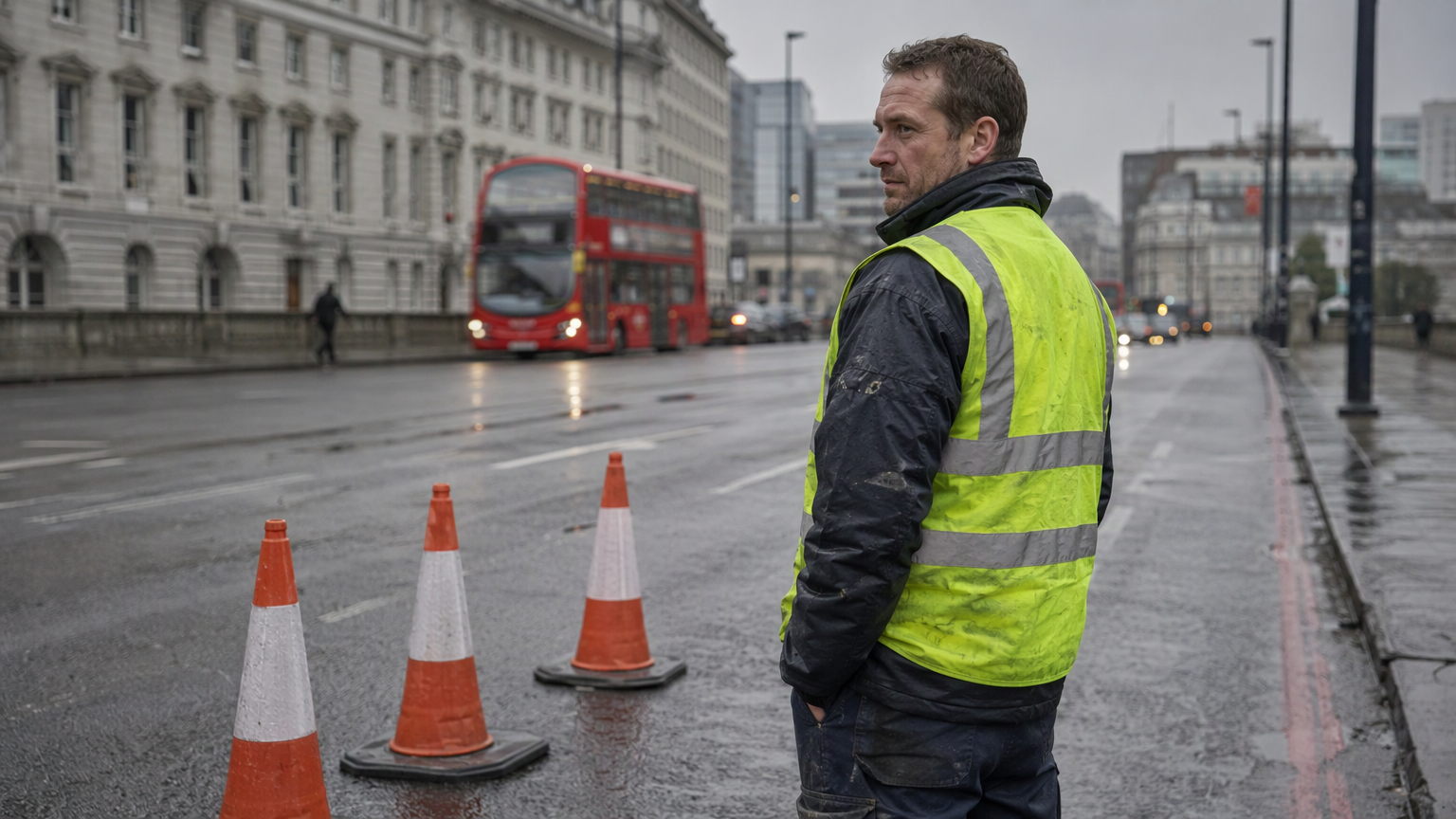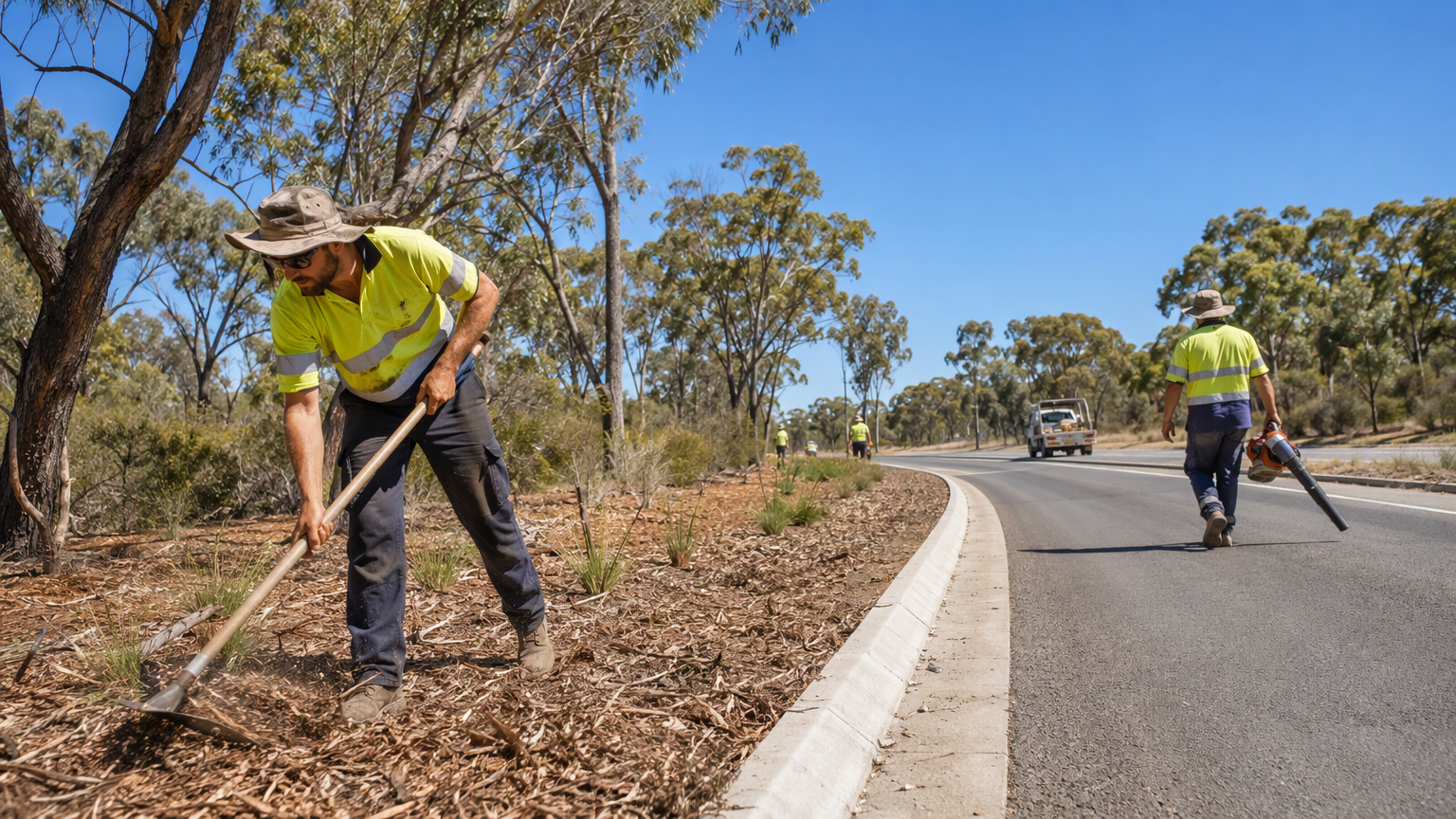

Key takeaways (quick answers):
- A polo can be genuine certified hi-vis — knits pass the same EN ISO 20471 / ANSI area-and-band math as woven vests; most short-sleeve polos land at class 1-2, and class 3 claims on polos deserve a certificate read before you believe them.
- Summer compliance is a system, not one shirt: breathable knit base + mesh overvest is how mature programs keep both heat tolerance and night-shift visibility, instead of forcing one garment to do two jobs badly.
- Fluorescent color fades on a clock. UV degrades fluorescent dye and optical brighteners long before the fabric tears — replacement programs should key off measured fading and the rated wash life from our wholesale guide's replacement section, not holes.
- UPF is a tested claim, not a color. "Hi-vis means sun-safe" is a myth — sun-protection ratings (AS/NZS 4399 in AU/NZ) are earned by construction and testing; bright fluorescents are not automatically protective.
- Logos on knits change the decoration playbook (embroidery rules for piqué, sublimation limits) — the placement math from our custom-logo playbook still governs.
Publisher disclosure: published by Jinhua Aoke New Materials Co., Ltd, a manufacturer of reflective apparel including knit hi-vis programs, which benefits commercially from inquiries. Standards statements summarize publicly documented scopes (EN ISO 20471, ANSI/ISEA 107-2020, AS/NZS 4602.1, AS/NZS 4399) reviewed November 20, 2026; verify current editions before contracting. B2B information, not legal advice. Published alongside our winter, rain and FR category guides — this one closes the seasonal square.
Planning a summer program? Send your garment mix, class targets and quantities or browse the product list.
Can a hi-vis polo shirt really be safety-certified?
Short answer: yes — the standards care about geometry and photometrics, not weave. EN ISO 20471 and ANSI/ISEA 107 judge background area, retroreflective placement and class thresholds equally on knits and wovens, and knit T-shirts and polos carry valid certifications across all three major systems (the class-area table in our wholesale guide applies unchanged). The arithmetic is what makes polos honest class-1-to-2 garments: short sleeves contribute little sleeve band area, torso coverage is split by open collars and button plackets, and the class table's configuration rules bite harder on a fitted knit than on a loose vest. A polo claiming class 3 usually means extended shoulder coverage and full-sleeve retroreflective — read the certificate photo of the certified configuration before stocking it as such. What polos genuinely win: site-acceptable smartness for supervisors, rental counters, utility daytime crews and non-highway logistics, where a hi-vis polo passes the dress code a vest fails.
Mesh, piqué, interlock — which summer fabrics earn their spot?
Short answer: buy by airflow and pilling behavior, not by price per kilogram.
| Fabric | Where it wins | Watch |
|---|---|---|
| Polyester mesh (open weaves) | Vest bodies, maximum airflow, lowest weight | Sagging under heavy embroidery; snags on hooks |
| Poly piqué (golf knit) | Polos — structured collar holds print/embroidery, classic uniform look | Pilling grades must be specced (ISO 12945 family tests exist for abrasion/pilling; ask for the number, not the promise) |
| Interlock / smooth knit | T-shirts, best sublimation canvas for all-over hi-vis graphics | Shows sweat marks; needs decent GSM to avoid transparency that voids background-area claims |
| Hybrid (knit body + woven shoulder yoke) | Reinforced-shoulder polos for repeated backpack/tool loads | Two-fabric certificates must cover both panels — verify both in the report |
Wholesale rule: the same class can be dressed in very different fabrics — compare quotes only when fabric, GSM and pilling/abrasion grades are printed on the sheet, per the same-spec comparison discipline in the rainwear guide.
Does hi-vis fabric protect from the sun?
Short answer: not automatically — and this myth sells sunscreen-less summers it should not. Visibility standards say nothing about UV transmission; sun-protection for garments is its own tested claim (AS/NZS 4399 UPF rating in the Australian/NZ market, where our AU/NZ guide shows summer demand is live right now). Physics to keep in mind: bright fluorescents transmit more UV than tightly constructed darks, and coverage fraction — collar rise, sleeve length, back-of-neck — decides real exposure more than fabric choice. Practical program design: sell UPF-rated cuts where the tender names a sun standard (AU/NZ corporate programs routinely do), pair short sleeves with the cap/hat line in the same colorway, and let the safety-officer conversation handle scheduling and shade. Distributor upside: sun-protective accessories in matching certified colors are exactly the attach-rate products our custom-logo playbook calls the basket-builder.
When does fluorescent clothing actually "expire"?
Short answer: the day its chromaticity drifts out of the standard's box — not the day it rips. Fluorescent dyes and optical brighteners are photochemistry: sunlight steadily breaks the brighteners that push fabric into the regulated chromaticity zones, and retroreflective bead glass and microprismatic tape degrade on their own clock (adhesive churn, crackle, edge lift). That is why both major standards constrain color and luminance within defined ranges and why tape performance is verified on tested samples — a three-season-old yellow-green polo can look intact and measure non-compliant, which is precisely the inspection our supplier scorecard tells buyers to demand evidence for at the fabric level. Wholesale translation: build a measured replacement cadence into program pricing (sun-hours and wash cycles, not holes), sell replacement audits as distributor service per the FR guide's retirement-log logic, and keep a swatch of the original certified shade for side-by-side field checks against faded stock.
How do logos and embroidery work differently on summer knits?
Short answer: same compliance math, different mechanics. Placement rules are unchanged — never over retroreflective bands, respect class area after printing — from the custom-logo playbook; the knit world adds three practical twists: (1) embroidery on piqué needs stabilizer discipline and sane stitch counts or the collar cockles and the placket gaps; (2) sublimation lives only in polyester content, so blended knits restrict all-over graphics; (3) heat-transfer edges lift faster on stretchy knits than on woven vests — demand stretch-compatible transfer specs in writing. The artwork-rights and print-block workflow (size-graded blocks, PMS locks, signed print blocks before bulk) transfers one-for-one from the playbook — it is exactly the file discipline that keeps polos and vests in your program printing as one brand instead of two budgets.
What does a complete summer assortment actually look like?
Short answer: three price points, two silhouettes, one color system.
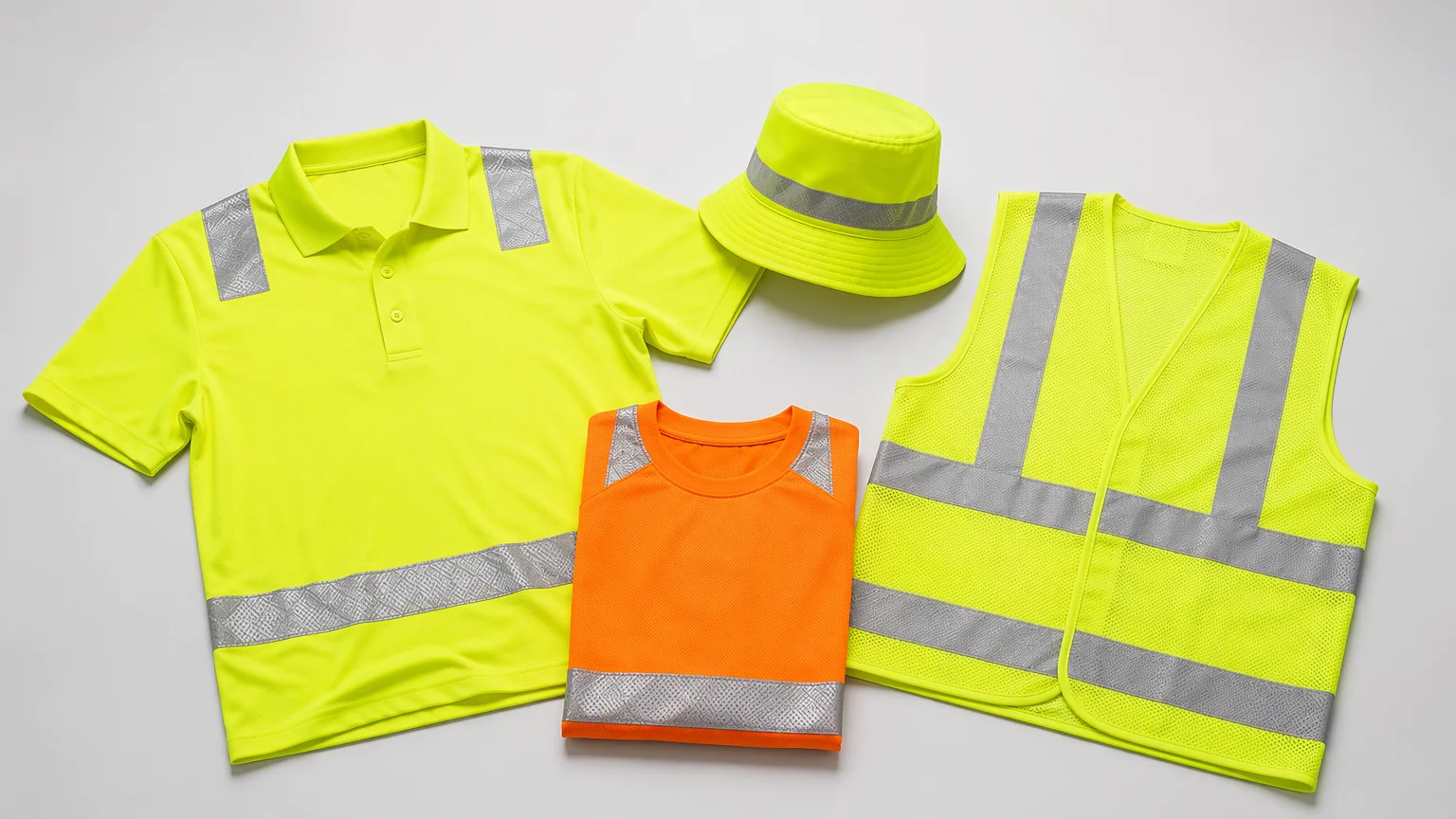
The attach-rate basket: polo, tee, hat and mesh overvest in one certified colorway (illustrative image).
- The base layer people wear voluntarily: polo or tee at entry price — this is the garment that decides whether the program has buy-in on the crew's back or folded in a locker.
- The compliance outer layer: mesh vest in the same colorway — crews add it for night work, visitor traffic and audit days without changing shirts; the vest-over-polo combo keeps each garment inside its honest class instead of asking one shirt to be everything.
- The headwear and accessories: bucket caps and breakaway lanyards in matching fluorescent color drive the margin conversation from unit price to basket size — the same logic as the custom-logo playbook's trim-consolidation math.
- One color system across the line: mixing yellow-green polos with orange vests reads as a clearance bin; pick by the market rules mapped in the US and AU/NZ guides and hold it across every silhouette.
How should summer size curves and fits differ?
Short answer: light garments reveal fit errors — the sizing discipline in our bulk-order planning guide matters more in July than January. Three summer-specific adjustments: (1) knit shrinkage must be measured after the rated wash cycle count and factored into the grade — a polo that shrinks a half-size by mid-season is a return wave by August; (2) women's cuts stop being optional in summer programs (short sleeves make boxy unisex failures visible), so hold a real women's block run, matching the market-level sizing notes in the US guide; (3) layering ease disappears — summer garments are worn next-to-skin, so order fit samples on the actual target body range, not on a single grader. Program economics: summer's larger unit counts mean a 0.5-size curve mistake multiplies harder than a winter one.
What does the summer order calendar look like?
Short answer: two summers a year if you sell globally, and both start earlier than buyers think. Northern-hemisphere programs need polos on the floor by March-April — which means the PO and logo-approval chain starts in Nov-January (you are inside that window right now), following the same certification-first timeline as our UK guide's budget calendar. Southern-hemisphere demand (AU/NZ) peaks December-February — already running, per the AU/NZ guide — served by early-scheduled production slots and air-freighted top-ups priced into the program. Knit-specific lead-time note: sublimation and embroidery approval loops (print blocks, stitch-out samples from the logo playbook) add two calendar weeks that vest buyers never wait for — build them into the quote conversation before the first complaint, per the workflow in the durability and planning cluster.
What actually drives summer-garment cost?
Short answer: yarn quality and decoration count, not the reflective tape. Mesh and piqué price by polyester grade and feel engineering (fine-denier soft knits cost multiples of scratchy bargain mesh that no crew keeps wearing); pilling and colorfastness grades add cents that save return freight; decoration is where summer programs overpay — every extra embroidery location or sublimation panel repeats across a bigger unit base than winter ever ships. The consolidation levers are the ones already proven in the wholesale guide: fewer colorways, shared artwork across polo/tee/vest, tiered pricing set at the quantities your replacement cadence actually re-orders — measured fade life, this time, from the section above.
How do you pilot a summer program without betting inventory?
Short answer: pilot on behavior, not opinions — polos live or die by whether crews actually wear them. A clean pilot runs four weeks with one crew group wearing the proposed polo-plus-vest combo and a control group on the current solution; track wear-rate ( shirts on backs at random site checks), collar and cuff condition at week four, and the unscripted question safety officers hear anyway ("can I buy this for my mate's crew?"). Order the pilot from the stock-shell lane of our MOQ tiers — plain certified polos with your transfer logo, no bespoke tooling — so the pilot tests the garment system rather than your patience for sampling. The pass bar should be written down before the first carton ships: wear-rate above your own vest baseline, zero geometry failures (collars lying flat, bands uncracked), and a replacement-cycle number the customer's budget accepts. Programs that clear that bar reorder themselves; the ones that don't cost you a stock-shell pallet, not a bespoke container.
Which construction details break first on summer knits — and how do you spec them out?
Short answer: collars, plackets and band edges, in that order. The polo failure catalog is short but expensive: collars that ripple after ten washes (spec fused interlining with a stated shrink tolerance), plackets that gape (double-stitch and bar-tack the ends, per the same wear-point philosophy as the durability testing guide applies to seams), and retroreflective bands delaminating at stretch zones (demand the band supplier's stretch-cycle data, not just its photometric report — the wash-life logic from the rainwear guide applies to adhesive under cyclic strain). None of these show up in a first-sample photo; all of them show up in a forty-wash test, which is exactly what the wear trial above is instrumented to catch. Print these three spec lines into the PO and you have eliminated most of next season's return authorization queue before it exists.
Frequently asked questions (summer program buyers ask these first)
Is a hi-vis polo acceptable PPE on a construction site?
If it carries the class the site risk assessment requires, yes — the standards do not exclude knits. Where site rules demand class 3 coverage, a short-sleeve polo alone rarely qualifies and the standard playbook is polo plus class-3-configured vest, which the assortment section above prices as one basket. Keep the certificate photo matching the exact garment sold, per the verification discipline every guide in this cluster teaches.
Do dark shoulders and two-tone polos break compliance?
They shrink the fluorescent-area budget, which is exactly why contrast-panel designs must be measured, not estimated — the class areas and configuration rules in our wholesale guide apply; the non-fluorescent panel below the hem band is the classic pattern, and the certificate for a two-tone model does not cover its one-color sibling. Same rule the UK guide states for every certificate-to-carton match.
Will a hi-vis polo keep its class through an industrial laundry?
Knits age differently from wovens: pilling lowers luminance, collar strain opens the front geometry, and band adhesion on stretch panels sees cyclic stress. Specify pilling grade, rated wash cycles and a collar-reinforcement build up front — the same wash-life documentation logic that governs rain and FR programs. Rental-channel polos should be bought as shorter replacement cycles at lower unit cost, not as forever garments.
Can I get sublimation-printed hi-vis polos cheap in small quantities?
Sublimation loves polyester and hates small runs — setup per artwork plus inventory of certified blank knits is what you are paying. The pragmatic ladder for small programs (our MOQ tiers apply): stock-shell polos with transfers first, sublimation when the program's repeat volume justifies certified-fabric commitments. And rights discipline from the logo playbook — your artwork, your plates, on file.
What hats and caps complete a summer program?
Full-brim bucket caps in certified fluorescent fabric with reflective piping beat baseball fronts for actual neck coverage, matching the sun-physics in the UPF section; keep them in the same fabric program as the polos so the color matches under UV light on site. For vehicle crews add hi-vis sun shades for hard hats — accessory-level price, complaint-level relief. The playbook's one-color-system rule applies here most visibly.
Does a long-sleeve hi-vis shirt help or hurt in summer?
Both — which is why programs spec summer long-sleeve in open-weave knits for sun-exposed crews and let the vest carry night visibility. Coverage against UV favors sleeves; thermoregulation favors venting; the standards don't care about season, only photometrics and configuration. Buy two silhouettes honestly for two jobs instead of one compromise, per the assortment logic above.
Are summer knits compatible with FR or antistatic programs?
Only when the knit itself is built to the performance standard — an FR certificate on a woven coverall says nothing about a poly polo worn under it, a point the FR guide makes for base layers generally (melting synthetics under arc-rated outer are a known failure). For antistatic-sensitive zones, the ESD-aware specing logic from the winter guide's standards stack applies to summer knits equally: ask for the test, not the adjective.
How many summer units should a distributor stock versus flow?
Stock the two proven core colorways and mid-sizes; flow-test everything else with the calendar advantage this cluster documents (production slots booked in the current window per the section above). The demand-shape notes in the size-curve guide transfer: summer's curve is broader and flatter across sizes than winter's, so deadstock risk concentrates in decoration-heavy variants, not base colors.
How should knit hi-vis be stored between seasons?
Flatter and darker than you think necessary — and that is the point. Fluorescent knits fade under warehouse skylights before a customer ever opens the carton, so store away from direct light (the same photochemistry as the expiration section), flat or folded without hanger stretch at the shoulders, and rotate FIFO by production month exactly as the rainwear guide's storage rules demand of coatings. Humidity control protects band adhesives and prevents the mustiness rental accounts reject on intake. Distributors holding summer stock through a northern winter are storing a fading asset — track its age like the FR guide tracks shelf life, and quote aged lots accordingly.
Do antimicrobial or odor-control treatments matter for summer programs?
They matter as comfort marketing, with two compliance asterisks. First, the treatment must not be claimed as protection — it is a hygiene feature, and tenders in healthcare-adjacent or food channels may ask which standard the claim leans on; get the supplier's actual test basis before printing it on a hangtag (the same evidence discipline the scorecard applies everywhere). Second, chemistry added to a certified knit should be listed in the technical file so nobody wonders later whether the finish touched colorfastness or photometrics — a one-line spec item that saves an audit conversation. For rental-channel programs the honest lever is wash-cycle-tested fabric, not a spray-on promise.
Why source summer hi-vis with Jinhua Aoke (publisher of this guide)?
Claim boundary: manufacturer self-description from our published materials; run the verification steps against us as you would anyone else.
Jinhua Aoke New Materials Co., Ltd has run reflective apparel production since 2010 across three plants (Jinhua, Chongqing and Myanmar, per our company profile), with knit hi-vis polos, T-shirts and caps among the core catalog lines — not a season-extension bolt-on. The summer-relevant execution: EN ISO 20471 / ANSI / AS-NZS certified colorways shared across the vest and knit lines (one color system, the assortment promise above), measured shrinkage and pilling specs held on the technical sheet rather than promised in chat, certified two-tone geometry handled as its own model per the certificate-matching rule, and the sample-room iteration loop the logo playbook documents. Two factories, two calendars: Myanmar lanes price the volume basics; Jinhua's small-lane strength fits the fast decoration approvals summer demands.
Next step: send the garment mix, class targets, quantities and market through the contact page or inquiry center — summer quotes arrive with the fabric sheet, shrinkage spec and certificate map attached, so comparisons stay same-spec from minute one.
Related reading from our B2B library
- Reflective Safety Clothing Wholesale — the complete B2B buying guide
- Custom Reflective Vests with Logo — bulk & private-label playbook
- AS/NZS Hi Vis Wholesale — live southern summer market guide
- Hi Vis Winter Jackets Wholesale — the other half of the seasonal square
- Bulk workwear jackets — size curves & order planning
- Hi-vis supplier selection — the 12-point scorecard
Research basis: class and configuration logic per EN ISO 20471, ANSI/ISEA 107-2020 and AS/NZS 4602.1 public scopes (the same standards mapped in our market guides of October-November 2026); fluorescent photochemistry and replacement-by-fading reflect published performance-retention practice under the standards' laundering clauses; UPF rating practice per the AS/NZS 4399 framework referenced in the AU/NZ guide; fabric-behavior claims (pilling, shrinkage, sublimation fiber limits) are standard textile trade knowledge; supplier capabilities only reference our published profile. Verify current standard editions before contracting. B2B editorial information, not legal advice. Reviewed November 20, 2026.