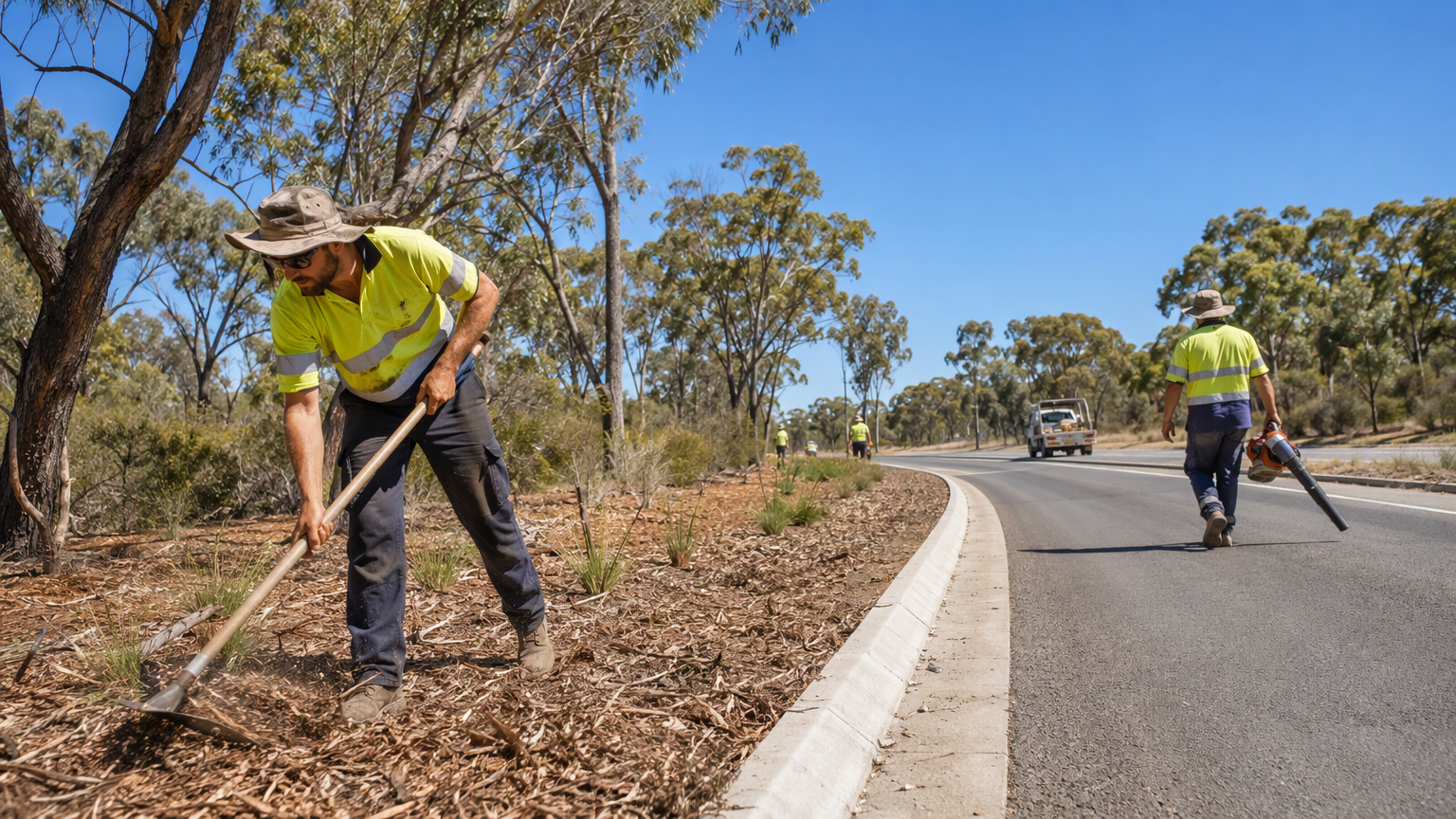

Key takeaways (quick answers):
- "Flame resistant" and "flame retardant" are different promises. Flame resistant (FR) garments are certified systems — fabric, thread, tape and trim tested together against a named standard; flame retardant (FR-treated) describes a finish on some fibers that may or may not survive a program's wash life. Wholesale programs that mix the two words in one listing invite returns, audit findings and worse.
- NFPA 2112 certifies the garment against a flash fire; NFPA 2113 governs how users select, wear, wash and retire it. A compliant program needs both the certification and the compliance-in-use documentation.
- EU-side heat-and-flame protection is EN ISO 11612 (performance codes for flame, radiant, convective and contact heat), while EN 14116 is a lighter limited-flame-spread test for brief flash exposure — tenders name one or both, and they are not interchangeable.
- US arc-flash protection runs on arc ratings, not flame tests. NFPA 70E work programs group clothing into PPE categories with minimum arc ratings of 4, 8, 25 and 40 cal/cm²; arc-rated (ASTM F1506-type) garments are engineered systems, and a hi-vis vest worn over them is a visibility layer, never the protection.
- FR + hi-vis is a real but narrower shelf: fluorescent shades, reflective-trim heat limits and heavier constructions all shrink the design space — buy it from suppliers who show the combination tested, not stitched together from two certificates.
Publisher disclosure: published by Jinhua Aoke New Materials Co., Ltd, a reflective and protective apparel manufacturer whose published certification list includes EN 11612, EN 14116, NFPA 2112 and UL marks (per our company profile) and which sells FR programs to B2B buyers; we benefit commercially from inquiries. This guide summarizes the publicly documented scope of the named standards and the arc-rating categories as published in NFPA 70E guidance materials reviewed November 17, 2026. Standard editions and category tables are revised — verify current editions before contracting. B2B information, not legal advice. Companion reading: our FR supplier audit checklist and the US market guide.
Building an FR program? Send your hazard profile (flash fire, arc flash, welding spark, hot metal splash), standard targets and quantities or start from the product list.
Is "flame resistant" the same thing as "flame retardant"?
Short answer: one is a garment category, the other is a fabric adjective — and the gap between them is where FR procurement failures live. Flame resistant (FR) labels a garment certified against a named standard: the exact fabric, thread, zippers, reflective trim and labels were tested as a system, and the certificate covers that bill of materials. Flame retardant describes chemistry: a treatment applied to a fiber or polymer engineered to self-extinguish. Some FR garments achieve protection through durable treatments on cotton; others use inherent fibers (modacrylic, para-aramid, FR-viscose blends) whose resistance lives in the polymer itself. Buyers confuse them because catalogs do — and then site audits discover a "FR" vest that is a treated commodity product with a test report for a different fabric. The procurement rule is simple: buy the certificate and the bill of materials, not the adjective. Our FR supplier audit checklist walks the document trail; this guide covers the category map around it.
What is the difference between NFPA 2112 and NFPA 2113?
Short answer: they split the job between the product and the program. NFPA 2112 is the garment certification — fast-flame and thermal-protection performance for workers at risk of brief flash-fire exposure (petrochemical, refining, fuel handling), assessed through third-party testing and certification of the specific product. NFPA 2113 is the user-side standard — it tells the wearing organization how to select the right class of FR for the hazard, wear it correctly (closure discipline, no synthetics underneath), wash it to spec, inspect it, and retire it on schedule. Why a wholesale buyer cares: an oil-and-gas framework tender increasingly asks for both halves — 2112-certified garments plus evidence the supply supports 2113 compliance (wash-cycle labeling, care instructions, retirement criteria printed or supplied). Suppliers who can talk about both are equipment partners; suppliers who quote only the certificate are trading stock.
Which EN standards cover flame risks — and what do the codes mean?
Short answer: three standards answer three different hazards. EN ISO 11612 is the workhorse for heat and flame — protection against short-duration flame contact and radiant/convective/contact heat, with performance letters and numbers describing each mechanism (the "code string" printed with the standard); welders' and utilities' tenders quote it constantly. EN 14116 is the lighter cousin — limited flame spread for brief, incidental flash exposure, common as an overgarment requirement (coveralls, sleeves) in oil-and-gas site rules. EN ISO 11611 is the welding-specific standard balancing flame performance with the visibility of sparks that welders need. Buy the standard the hazard map requires; buying the heaviest standard everywhere is cost without protection value, and buying the lightest everywhere is the audit finding everyone already knows is coming. The class-reading discipline from the general wholesale guide applies one-for-one: certificate, standard string, model and colorway must all agree.
What are arc-flash PPE categories, in buyer language?
Short answer: electrical utilities do not buy "flame resistance" — they buy arc ratings, measured in cal/cm² of incident energy the clothing system survives. NFPA 70E's hazard-risk method groups work into four PPE categories whose garments carry minimum arc ratings of 4, 8, 25 and 40 cal/cm²; category 1-2 programs run as single arc-rated layers, while the top categories build multi-layer kits (arc-rated shirt, coverall, hood, face shield) whose combined rating is the tested stack, not the sum of its layers. Arc-rated garments trace to fabric standards of the ASTM F1506 family with ratings established by the F1959 test method. Two wholesale truths: first, arc-rated is a certification world of its own — treated-FR commodities do not substitute; second, incident energy beyond 40 cal/cm² is treated as exceeding what clothing can provenly handle, which is why engineering controls, not jackets, close that gap. Distributors selling into electrical channels should stock the two lower-category garments and quote kits for 3-4 with the supplier's tested-stack evidence attached.
Can a garment be both FR and high-visibility certified?
Short answer: yes, and the combination earns its price — but it is a narrower design space, and bad copies of it fail audit on both standards at once. The physics: fluorescent background is hardest on FR substrates (the FR chemistry and heavier weaves fight fluorescent brightness; not every commodity colorway exists in FR), reflective trim must survive the heat limits of the FR system, banding over FR seams is specified by the certified construction rather than freestyle placement, and the visibility class math (the same EN ISO 20471 / ANSI area logic as in our ANSI guide) has to hold after those constraints. The result: FR hi-vis ranges are smaller, pricier and more supplier-specific than commodity hi-vis. Buying rule: demand evidence for the combination — visibility-class determination and FR certification for the same finished model — not one FR fabric report stapled to one hi-vis vest photo. Our winter guide's layered-system logic completes the picture: FR base and shell under an overvest is often the smarter program than seeking one garment that does everything.
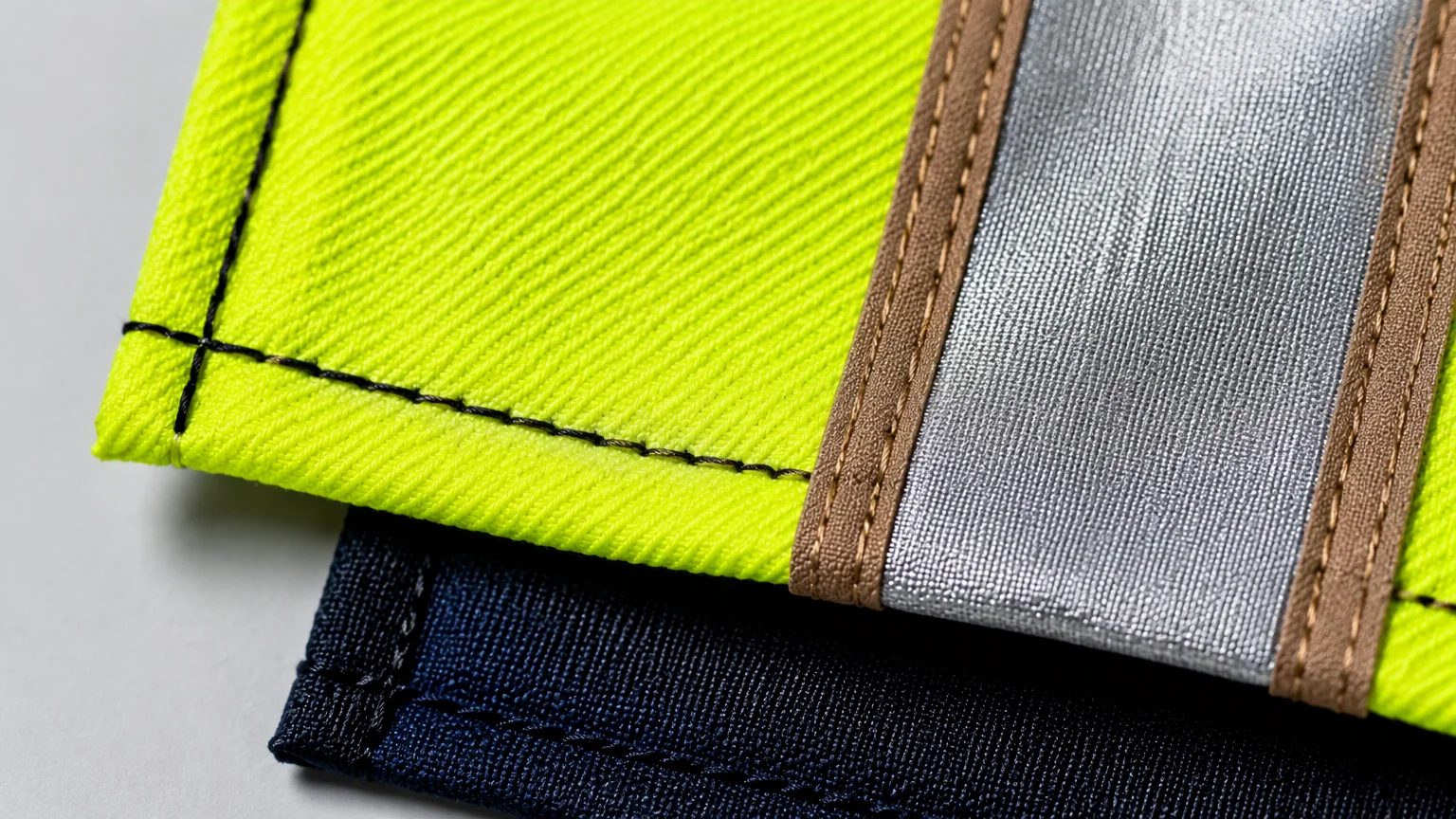
The FR hi-vis intersection in one frame: FR twill, contrasting aramid topstitch, trim spec'd for the certified build (illustrative image).
How long does FR clothing last, and who decides when it retires?
Short answer: the certificate has a life, not just the fabric. FR performance is certified for a defined number of home-laundering or industrial-laundering cycles (treated chemistries depend on the finish; inherent fibers survive more cycles but abrade like any fabric), so retirement arrives by whichever comes first: wash-count exhausted per label, physical damage beyond repair rules, or contamination — hydrocarbon soak-in changes flash behavior and usually ends a garment's life regardless of looks. The user-side standard (NFPA 2113 in the US, care-and-inspection clauses in EN programs) puts the retirement decision in the wearing organization's hands — which is a distributor opportunity: sell the care card, the wash-log label program and the retirement audit as part of the FR kit, because the framework buyers scoring availability in our UK guide's channels pay for compliance service, not cloth. From the supplier side, the honest file states rated wash cycles on the label and in the declaration pack — ask for it in the RFQ (template: wholesale guide).
Why does FR cost multiples of commodity workwear — and where can a buyer negotiate?
Short answer: the premium is fiber, weight, trim and certificates — and two of those four have real negotiation room.
| Cost layer | What drives it | Buyer leverage |
|---|---|---|
| Fiber chemistry | Treated-cotton FR (IFR) entry tier; FR-poly/cotton blends mid; inherent (modacrylic, aramid, FR-viscose) premium | Match tier to hazard honestly — over-spec'ing inherent fiber for a light EN 14116 overgarment duty is the most common wasted premium |
| Construction weight | FR garments run heavier (oz/yd²) for performance margins | Lighter certified constructions exist in the same class string — ask for weight options inside the same certificate |
| Trims & hi-vis elements | Aramid thread, FR zippers, reflective trim with protective edging, FR-care labels | Standardize trim kits across SKUs to consolidate purchasing — the same component-consolidation logic as our custom-logo playbook |
| Certification & testing | Third-party certification per model/colorway, lot traceability | Amortize by fewer, deeper SKUs and multi-year framework volumes; certificate fees do not scale per container |
The floor to never negotiate: the certified bill of materials. A cheaper "equivalent" fabric outside the certificate is not a discount, it is a different product.
What MOQ, lead time and channels shape FR wholesale?
Short answer: FR behaves like a certificate-gated category: fewer suppliers qualify, prices hold firmer, and MOQs run deeper because mills sell FR fabric by substantial runs. Expect treated-FR tiers from the upper end of standard workwear MOQs and inherent-fiber garments behaving like the premium tiers in our winter guide. Channels: oil-and-gas site programs (coveralls, overgarments, FR hi-vis overvests), electrical utilities (arc-rated lower-category layers plus kit sourcing), welding fabrication (EN ISO 11611 jackets, aprons logic), and rental/uniform-service accounts that buy for wash-cycle durability and resell the compliance file. Reorder rhythm differs from commodity vests: FR buyers reorder on retirement schedules, which converts your account planning (see the bulk order planning guide) into predictable program volumes — the reason distributors accept thinner initial turns to enter the channel.
How do you verify a supplier's FR claims?
Short answer: five documents or walk. (1) Certificate for the standard the tender names, covering the exact garment model, fabric and colorway — read it the way the scorecard guide teaches for hi-vis files. (2) Certified bill of materials — fabric, thread, closure, trim, labels — and a PO clause locking it. (3) Lot traceability promise: mill certificates delivered per production batch, not one representative report forever. (4) Rated laundering cycles on the label and in the technical file. (5) For US arc-rated lines, the fabric's arc rating (ATPV/EBT) with the F1506-family reference and the tested stack for multi-layer claims. The audit-method version of this list — with the factory-floor checks behind each document — is worked through in our FR supplier audit checklist; run both before samples.
Frequently asked questions (FR wholesale buyers ask these first)
Is an FR hi-vis vest enough protection for oil-and-gas sites?
It is the visibility layer of an FR program, not the program. Site rules typically require the base clothing (coverall or shirt/trousers) to meet the site's flame standard, with the FR hi-vis overvest adding class-rated visibility on top. Selling the vest as "site compliant" without the base layer in the conversation sets up a compliance gap your customer discovers at the gate — sell the two-piece kit, which is also the honest way to win the whole basket.
Does washing ruin FR clothing?
Washing within the certified cycle count is what the certificate assumes; washing outside it is what ruins it. Treated FR has chemistry keyed to a defined laundering regime — the wrong detergent (bleach/chlorine attacks many treatments), the industrial wash beyond rated cycles, or fabric softener coating the fibers all erode performance quietly. Inherent fibers tolerate more cycles but still abrade and tear. The commercial practice: label the rated cycle count, supply the care card (the rainwear guide's laundering-story logic applies), and let the retirement audit — not the garment's looks — end its service.
Can I add our logo to an FR garment?
Yes, with the FR file's discipline. Decoration must use FR-rated threads and materials — standard polyester embroidery thread is a melt point in an FR garment — must avoid covering certified performance areas, and must be listed or assessed in the supplier's technical file. The placement and class-math rules from our custom-logo playbook still govern the visibility side; the FR certificate governs the materials list. Suppliers who "just embroider it like normal workwear" just voided the standard — which is exactly the conversation to have before the PO.
What is the difference between arc flash and flash fire garments?
Different physics, different numbers, different certificates. Flash-fire standards (NFPA 2112) measure how a garment behaves in a brief hydrocarbon flame front; arc-flash protection measures the incident energy (cal/cm²) an assembled clothing system withstands from an electrical explosion. A garment can legitimately hold one claim and not the other, and utility buyers read arc ratings first while petrochemical buyers read 2112 first. Selling one into the other's channel is the classic cross-market mistake this FAQ exists to kill.
Is modacrylic better than treated cotton FR?
Better on longevity and laundering margin — modacrylic blends are inherent, keep performance through more cycles, and light-weight comfortably — at a real price premium. Treated FR cotton wins on hand-feel familiarity, entry price and availability. Neither is "right" universally: map fiber tier to the wash-cycle reality of the wearing population (rental service laundry aggression vs office-managed home wash), which is the same lifecycle-math logic the durability testing guide applies to non-FR workwear.
Why do FR MOQs feel double the hi-vis program?
Because FR fabric economics do: mills run FR yardage in substantial campaigns, certification is per model/colorway, and the supplier pool is certificate-gated (the scarcity logic in the manufacturer shortlist guide in reverse — fewer qualified factories, firmer terms). The buyer workaround is not chasing MOQ discounts but SKU consolidation: fewer styles, deeper runs, trim standardization across the range — which is also what your framework buyers' availability scores reward.
Do FR garments expire on the shelf?
Not like food, but storage is on the certificate's honor system: treated FR in hot, humid warehouses can hydrolyze finishes, and elastane components age regardless of wear. Distributors should FIFO by production month (the storage discipline from the rainwear guide), keep cartons climate-sane, and honor manufacturer shelf-life guidance in writing — because a framework audit asking "when was this lot made and how was it stored" has ended more FR contracts than bad fabric ever did.
Can rental/uniform-service companies handle FR properly?
Yes — the industrial ones certify their process to handle FR at rated cycles and can document it; that documentation is a qualification question, not a courtesy. For distributors, rental-channel accounts buy durability plus paperwork: wash-cycle-verified lots, retirement-triggered replacement orders and the service story included. It is the stickiest FR channel in the cluster — and the one that punishes cheap uncertified stock fastest, which protects suppliers who documented everything from the start.
Is EN ISO 11612 the same performance level as NFPA 2112?
No translation table makes them equal: different test batteries, different hazards emphasized, different certification machinery. Real programs in global energy companies often require both — the practical sourcing move is the same-certified-fabric approach where a supplier's construction holds two certificates, letting one program buy one platform with two document packs (the label-matrix thinking from our UK guide, applied to FR).
What is the fastest way to enter the FR channel without betting the warehouse?
Start as the compliance-organized, not the inventory-rich: stock two certified, high-turn items (one FR hi-vis overvest, one coverall tier) as sample-grade programs with full document packs, and win framework pilots on audit-readiness before volume. Your differentiators — certificate file discipline, lot traceability, retirement-service story — cost documentation effort, not containers of inventory, and they are exactly the line items commodity competitors skip.
Why source FR and FR hi-vis programs with Jinhua Aoke (publisher of this guide)?
Claim boundary: publisher self-description from our published profile — run the five-document verification and the audit checklist against us as you would against any supplier.
Jinhua Aoke New Materials Co., Ltd has produced protective apparel since 2010 and publishes EN 11612 and EN 14116 among its flame-performance certifications, NFPA 2112 and UL among its US-side marks, alongside the EN ISO 20471 / ANSI visibility stack the FR hi-vis combinations in this guide require (see the company profile). The program execution matches this guide's arguments: certified bill-of-materials locked at PO level with lot-level fabric traceability, rated wash cycles printed on labels and mirrored in declarations, trim standardization across the FR range per the cost logic above, and the hi-vis class engineering this guide family documents — including the trim-and-banding constraints FR imposes, handled by the same sample rooms that build layering-fit prototypes. The three-plant footprint sequences the channel reality: Jinhua for high-custom FR hi-vis pilots, Chongqing for certified volume programs, Myanmar for the duty-managed end of framework pricing.
Next step: send the hazard profile, standard targets, garment mix, quantities and channel (direct site, framework, rental) through the contact page or inquiry center. Quotes arrive with the five-document pack pre-listed — so every supplier you quote can be compared on the same compliance grid.
Related reading from our B2B library
- Flame resistant workwear supplier audit — the factory-floor checklist
- ANSI-Compliant Hi Vis Wholesale — US market guide
- Hi Vis Wholesale UK — UKCA vs CE sourcing guide
- Reflective Safety Clothing Wholesale — the complete B2B buying guide
- Custom Reflective Vests with Logo — bulk & private-label playbook
- Heavy-duty workwear durability — the test plan before the PO
Research basis: standard scopes summarize the publicly documented purposes of NFPA 2112 (flash-fire garment certification), NFPA 2113 (selection, use, care and retirement of FR clothing), EN ISO 11612 / EN 14116 / EN ISO 11611 (protective clothing against heat, flame and welding), NFPA 70E's arc-flash PPE categories with minimum arc ratings of 4, 8, 25 and 40 cal/cm² as published across multiple safety-industry references of the 70E tables reviewed November 17, 2026, and the ASTM F1506/F1959 fabric-and-test framing for arc ratings. Editions and category tables are revised periodically — verify current editions and full texts before contracting; garment-level claims always follow the certificate, never this summary. B2B editorial information, not legal advice.