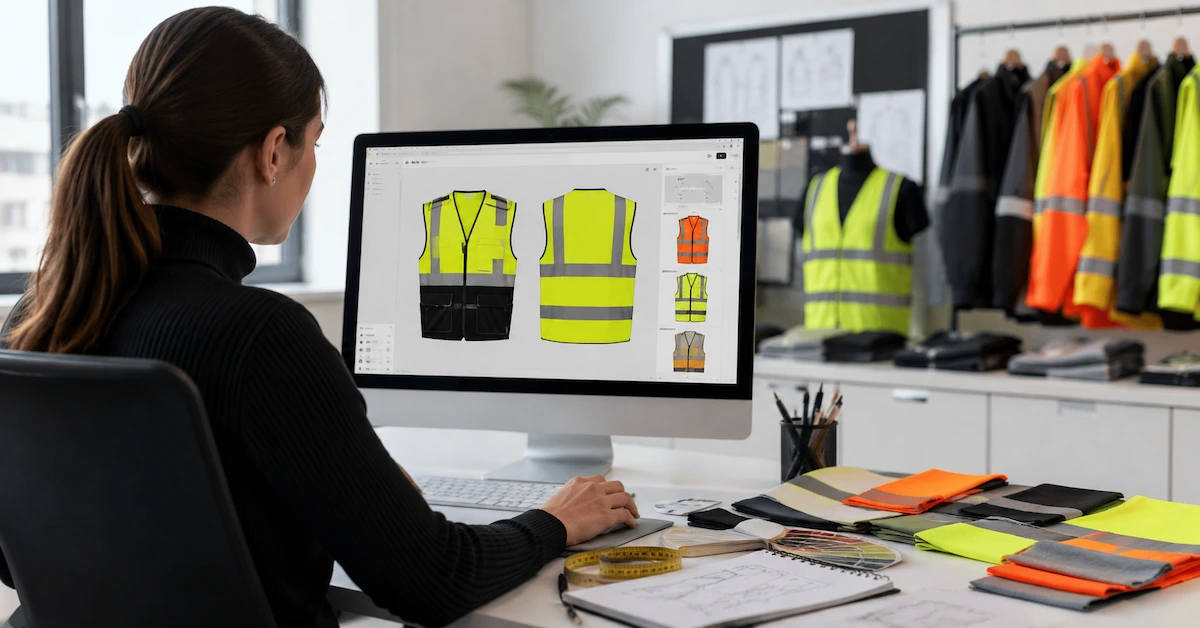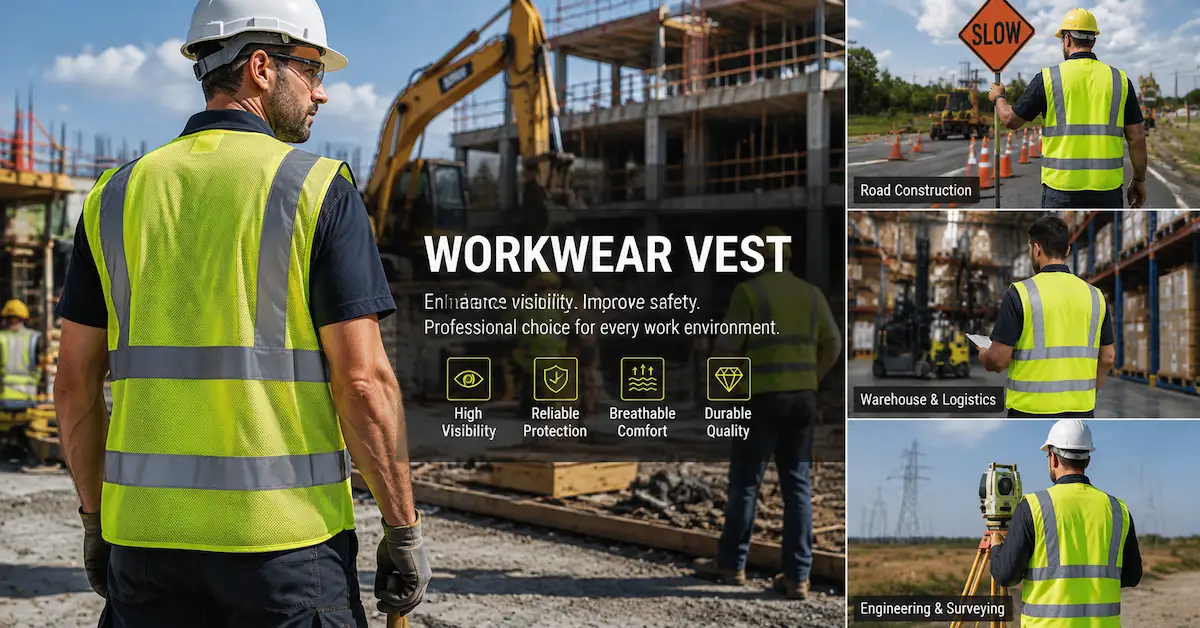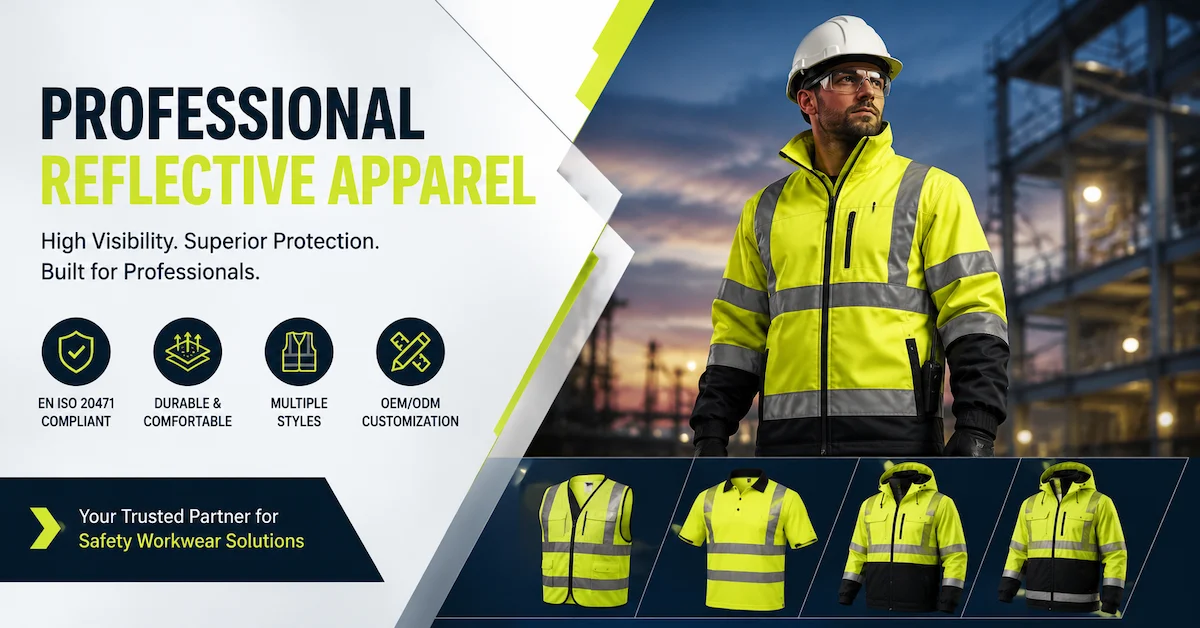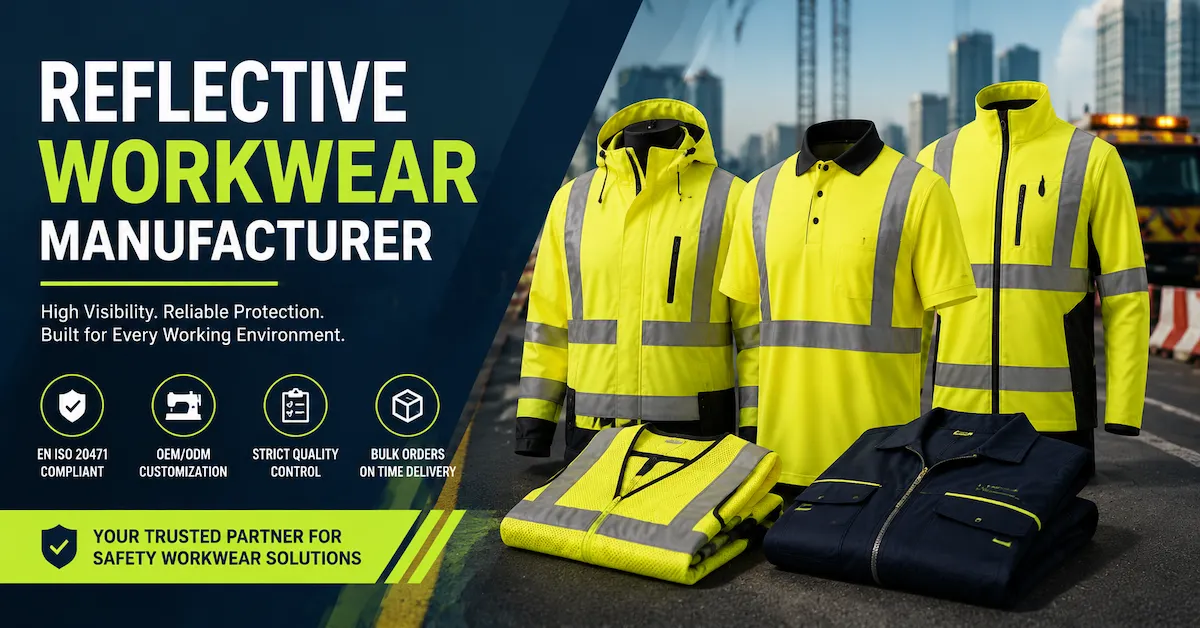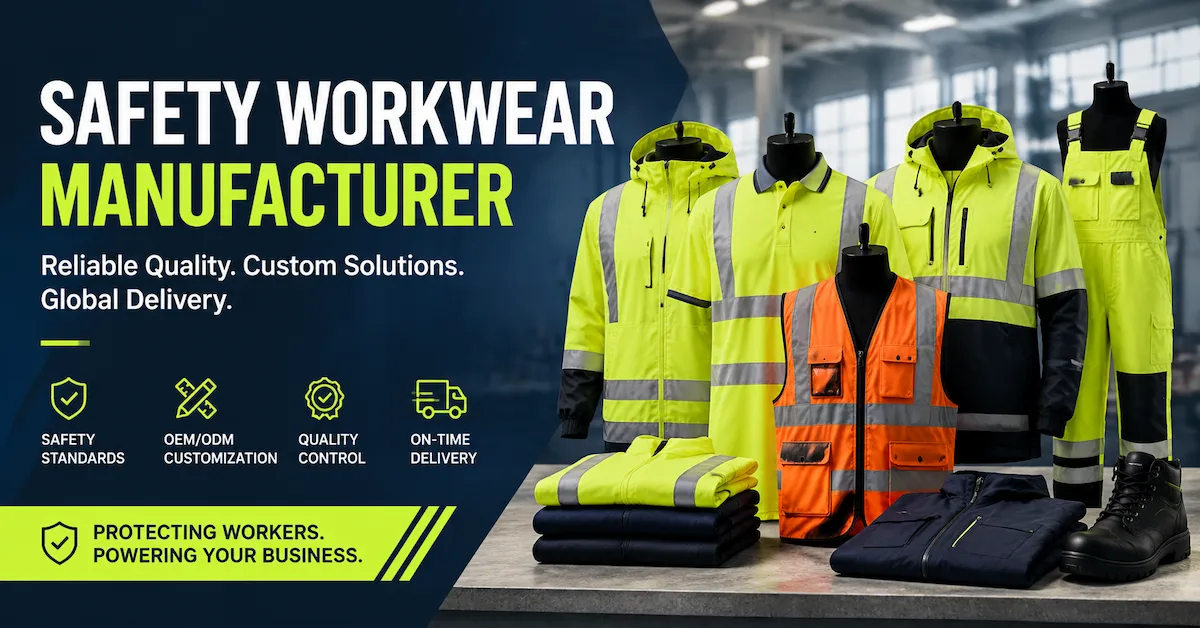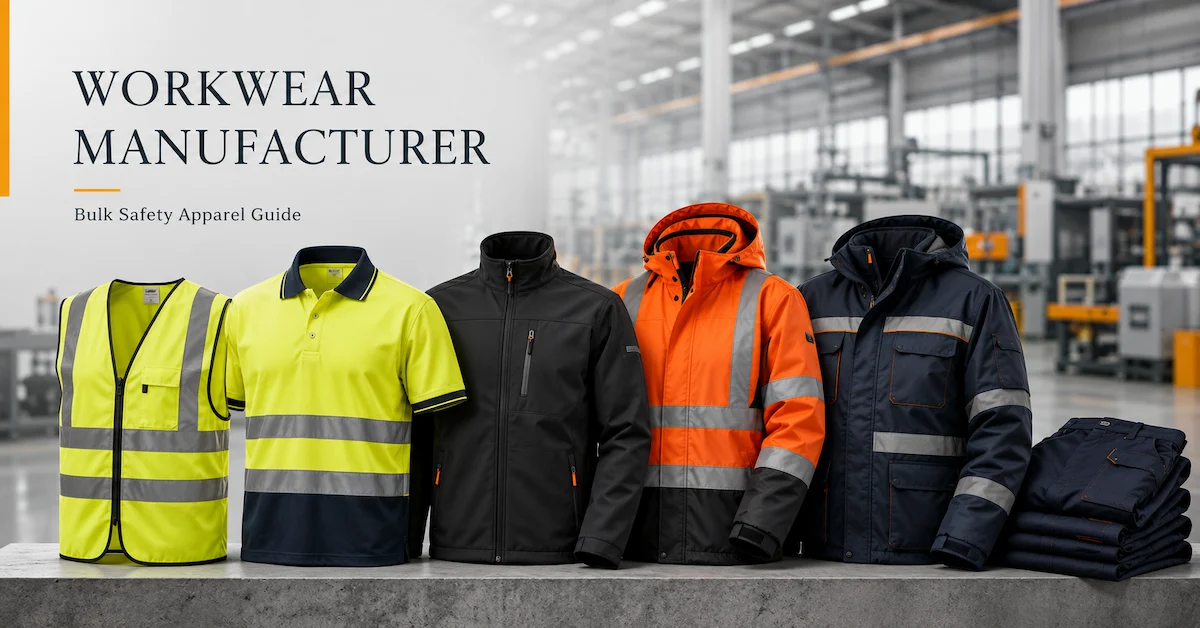

Bulk workwear production is the process of manufacturing large quantities of workwear for companies, distributors, contractors, industrial teams, and safety apparel brands. For high-visibility and safety workwear, buyers should evaluate production capacity, fabric consistency, reflective tape quality, stitching strength, size control, OEM branding, packaging accuracy, quality inspection, and delivery schedule.
For global B2B buyers, bulk workwear orders are not only about price. The real goal is to receive consistent products that match the approved sample, meet the target market’s requirements, and support long-term repeat orders.
AOKE supplies reflective apparel and safety workwear for global buyers. You can explore related product categories through the Vest / Waistcoat Products page.
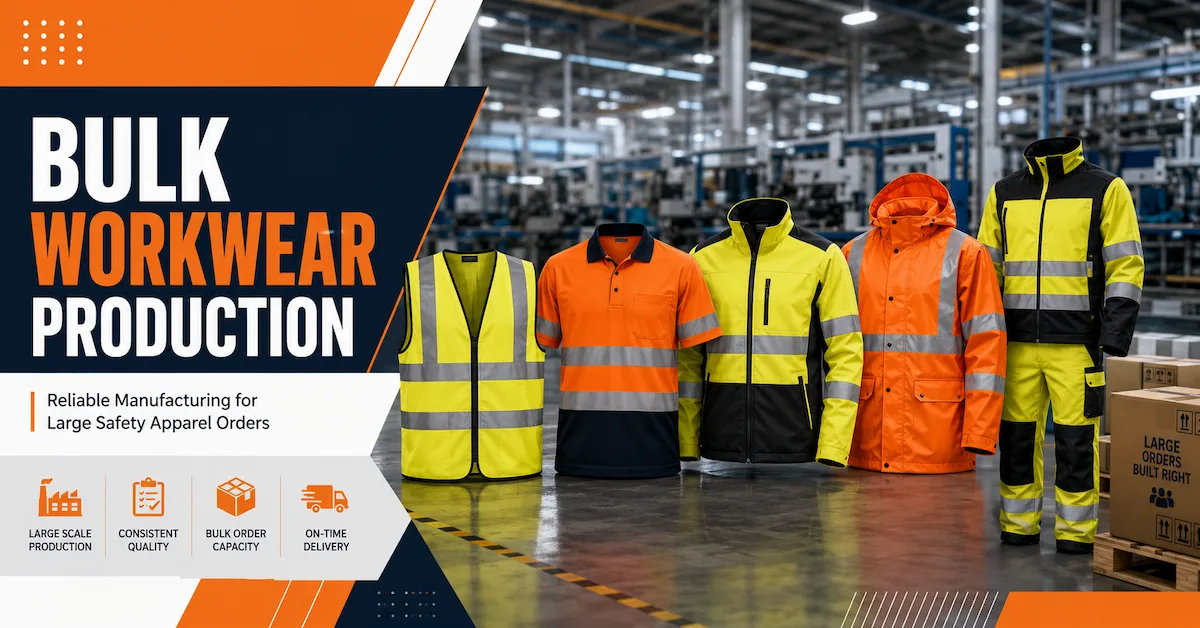
Why Bulk Workwear Production Needs Careful Planning
Bulk workwear is often used by large teams in construction, logistics, roadwork, warehouses, factories, utilities, municipal services, and outdoor industrial environments. These products are worn repeatedly, washed frequently, and used in practical jobsite conditions.
A small defect in a sample may seem minor. But in bulk production, the same issue can become a serious problem across thousands of pieces. Common risks include size inconsistency, color variation, weak reflective tape, poor stitching, wrong logo position, incorrect labels, delayed delivery, or mixed packaging.
This is why buyers should treat bulk workwear production as a complete project, not just a garment order. A professional manufacturer should manage fabric sourcing, pre-production samples, production planning, line inspection, final inspection, packaging, and shipment coordination.
For buyers who want to understand AOKE’s company background and manufacturing direction, the About Us page is a useful starting point.
Who Needs Bulk Workwear Production?
1. PPE Distributors and Wholesalers
PPE distributors often need large quantities of reflective vests, hi vis shirts, jackets, rainwear, and industrial workwear for resale. Their main concerns are stable quality, competitive pricing, packaging, private labels, and repeat order reliability.
2. Construction and Roadwork Contractors
Construction companies and roadwork contractors need workwear for workers operating near vehicles, heavy equipment, cranes, trucks, and traffic zones. Visibility, comfort, and durability are key purchasing factors.
3. Logistics and Warehouse Companies
Logistics teams need breathable and lightweight workwear for daily use around forklifts, loading docks, delivery vehicles, and sorting areas. Bulk orders often require consistent sizing and logo branding for large teams.
4. Industrial Manufacturers and Maintenance Teams
Industrial buyers may need woven workwear, jackets, trousers, or special protective garments for repair, manufacturing, maintenance, and technical operations.
5. Workwear Brands and Importers
Brands and importers need bulk workwear production with OEM support, private labels, packaging design, stable color, and repeatable product quality.
Main Products for Bulk Workwear Production
A bulk workwear manufacturer should be able to support different categories for different climates, industries, and jobsite environments.
| Product Category | Main Features | Common Applications | Buyer Value |
|---|---|---|---|
| Reflective Safety Vest | Lightweight, visible, cost-effective | Roadwork, construction, traffic control, warehouse | Suitable for large-volume orders |
| Hi Vis T-shirt / Polo Shirt | Breathable, comfortable, suitable for long shifts | Logistics, delivery, warehouse, factory teams | Good for daily team uniforms |
| Hoodie / Fleece / Softshell Jacket | Warm, flexible, suitable for cooler seasons | Outdoor maintenance, utilities, construction | Combines comfort and visibility |
| Raincoat / Rain Jacket | Waterproof, reflective, protective | Ports, road maintenance, wet worksites | Suitable for wet weather orders |
| Winter Jacket | Insulated, windproof, high visibility | Cold regions, outdoor teams, municipal workers | Suitable for seasonal bulk demand |
| Woven Workwear | Durable, structured, multi-pocket design | Industrial production, repair, engineering teams | Better for heavy-duty environments |
| FR Garment | Flame-resistant safety protection | Welding, oil and gas, power, chemical industries | Suitable for higher-risk work areas |
AOKE’s product range includes reflective vests, work shirts, polo shirts, hoodies, jackets, rainwear, winter workwear, woven workwear, and ready-to-ship safety apparel. Buyers can also visit the AOKE Blog for more sourcing and product selection topics.
Key Factors in Bulk Workwear Production
1. Production Capacity
Capacity matters when buyers need thousands or tens of thousands of pieces within a fixed schedule. A reliable manufacturer should be able to explain its production timeline, material preparation time, sampling period, sewing capacity, inspection schedule, and shipping plan.
Before placing a large order, buyers should ask:
- What is the monthly production capacity?
- How long does fabric preparation take?
- How long does sample confirmation take?
- Can the factory support repeat orders?
- Can production be split by size, color, or style?
2. Fabric Consistency
Fabric consistency is critical in bulk workwear production. Differences in color, weight, texture, or shrinkage can create problems across large orders.
Common fabric options include:
- Polyester mesh for lightweight reflective vests
- Knitted fabric for hi vis T-shirts and polo shirts
- Woven fabric for industrial uniforms
- Softshell fabric for outdoor jackets
- Waterproof fabric for rainwear
- Insulated fabric for winter workwear
- FR fabric for flame-resistant applications
A good manufacturer should confirm fabric before bulk cutting and keep material information consistent for repeat orders.
3. Reflective Tape Quality
For hi vis workwear, reflective tape is one of the most important components. Buyers should confirm tape width, position, appearance, washing durability, and target market requirements.
Common reflective positions include:
- Shoulder tape
- Waist tape
- Sleeve tape
- Back tape
- Leg tape for trousers
For bulk production, reflective tape placement must remain consistent across all sizes and styles.
4. Size Control
Sizing issues can cause complaints, returns, and team dissatisfaction. Before production, buyers should confirm:
- Size chart
- Measurement tolerance
- Fit style
- Sample approval
- Size ratio
- Plus-size requirements
- Market-specific sizing expectations
For North American, European, Australian, and Asian markets, size expectations may differ. A professional manufacturer should help buyers confirm size details before mass production.
5. OEM Branding
Bulk workwear production often includes branding. Buyers may need company logos, private labels, hang tags, barcodes, carton marks, and custom packaging.
Common OEM options include:
- Heat transfer printing
- Screen printing
- Reflective printing
- Embroidery
- Woven labels
- Private label packaging
- Barcode labels
- Carton marks
If you are planning OEM bulk workwear production, you can send your product details through the Contact Us page.
Bulk Production Process for Custom Workwear
A practical bulk workwear production process usually includes the following steps:
| Step | Production Stage | Buyer Focus |
| 1 | Requirement confirmation | Product type, quantity, target market, fabric, logo |
| 2 | Quotation | Material, labor, customization, packaging, shipping |
| 3 | Sample development | Fabric, fit, reflective tape, logo, workmanship |
| 4 | Sample approval | Final confirmation before bulk production |
| 5 | Material preparation | Fabric, tape, trims, labels, packaging |
| 6 | Cutting and sewing | Production consistency and line control |
| 7 | Logo and branding | Print, embroidery, labels, hang tags |
| 8 | Quality inspection | Size, stitching, tape, logo, packaging |
| 9 | Packing | Polybags, carton marks, size sorting |
| 10 | Shipment | Delivery schedule and export documents |
This process helps reduce misunderstanding and keeps the buyer and manufacturer aligned.
Safety Standards Buyers Should Consider
For high-visibility and safety workwear, different markets may require different standard directions.
Common references include:
- ANSI/ISEA 107 for North American high-visibility safety apparel
- CSA Z96 for Canadian high-visibility safety apparel
- EN ISO 20471 for European high-visibility clothing
- AS/NZS 4602.1:2011 for Australia and New Zealand
- OEKO-TEX 100 for textile safety consideration
- FR-related standards for flame-resistant workwear applications
Not every order requires the same certification, but buyers should confirm the target market before selecting fabric, color, reflective tape layout, and product structure.
Common Risks in Bulk Workwear Production
Risk 1: No Approved Pre-production Sample
Without an approved sample, bulk production may have wrong fabric, color, size, logo position, reflective tape layout, or packaging.
Better approach: approve a pre-production sample before mass production.
Risk 2: Inconsistent Fabric Color
Different fabric batches may have color variation, especially for fluorescent yellow and orange workwear.
Better approach: confirm color standard and batch control before bulk cutting.
Risk 3: Poor Reflective Tape Attachment
Tape peeling, misalignment, or weak stitching can affect product appearance and durability.
Better approach: check reflective tape position and attachment during production.
Risk 4: Mixed Sizes or Wrong Packaging
Large workwear orders often include many sizes and carton requirements. Packaging errors can create warehouse and distribution problems.
Better approach: confirm size ratio, individual packaging, carton marks, and packing list before shipment.
Risk 5: Delayed Delivery
Bulk production delays can affect construction projects, distributor sales, or seasonal demand.
Better approach: confirm material lead time, production schedule, inspection date, and shipping plan early.
Buyer Checklist Before Placing a Bulk Workwear Order
Before starting bulk workwear production, prepare:
- Product category
- Target market
- Safety standard direction
- Fabric type
- Color requirement
- Reflective tape layout
- Size chart
- Size ratio
- Logo file
- Label and packaging design
- Order quantity
- Sample approval requirement
- Inspection standard
- Delivery deadline
- Shipping destination
This helps the manufacturer quote accurately and reduces production mistakes.
Why Choose AOKE for Bulk Workwear Production?
AOKE focuses on reflective apparel and safety workwear for global buyers. Its product categories cover reflective safety vests, hi vis shirts, polo shirts, hoodies, jackets, rainwear, winter workwear, woven workwear, and ready-to-ship safety apparel.
For bulk workwear production, AOKE is suitable for buyers who need:
- Reflective safety apparel
- Hi vis workwear sourcing
- OEM logo branding
- Private label support
- Bulk order supply
- Product development assistance
- Workwear for construction, logistics, roadwork, warehouses, and industrial teams
- Long-term factory cooperation
Visit the AOKE homepage at https://www.aokenew.com/ to explore the brand and product direction.
FAQ
1. What is bulk workwear production?
Bulk workwear production means manufacturing large quantities of workwear for companies, distributors, contractors, industrial teams, and safety apparel brands.
2. What products can AOKE produce in bulk?
AOKE can support bulk production for reflective safety vests, hi vis T-shirts, polo shirts, hoodies, jackets, rainwear, winter jackets, woven workwear, and safety apparel.
3. Can bulk workwear orders include custom logos?
Yes. Bulk workwear can include heat transfer printing, screen printing, reflective printing, embroidery, woven labels, private labels, and custom packaging.
4. Why is sample approval important?
Sample approval helps confirm fabric, color, fit, reflective tape, logo position, workmanship, and packaging before mass production.
5. What information should I send for a bulk order quotation?
Send product type, quantity, target market, fabric requirement, size range, logo file, packaging needs, delivery time, and shipping destination.
6. How do I avoid size problems in bulk workwear production?
Confirm the size chart, measurement tolerance, sample measurements, size ratio, and target market fit before production.
7. Why is reflective tape quality important?
Reflective tape improves worker visibility in low-light conditions. In bulk production, tape quality and placement must be consistent across the full order.
8. Can AOKE support private label bulk workwear?
Yes. AOKE can support private label options including labels, hang tags, packaging, carton marks, and logo branding.
9. What industries need bulk workwear?
Common industries include construction, roadwork, logistics, warehousing, transportation, manufacturing, utilities, municipal service, and industrial maintenance.
10. How can I start a bulk workwear production project with AOKE?
You can contact AOKE through the official contact page and send product specifications, quantity, logo files, packaging requirements, and delivery schedule.
Conclusion
Bulk workwear production is a serious sourcing project. Buyers need more than a low unit price. They need stable fabric, accurate sizing, reliable reflective tape, durable workmanship, clear packaging, quality inspection, and on-time delivery.
A professional manufacturer can help reduce sourcing risk, improve product consistency, and support repeat bulk orders. For PPE distributors, contractors, logistics companies, industrial buyers, and workwear brands, this is the foundation of a reliable safety apparel supply chain.
If you are sourcing reflective safety vests, hi vis shirts, rain jackets, winter jackets, woven workwear, or custom safety apparel, AOKE can help develop suitable bulk workwear production solutions for your market.
Contact AOKE today to discuss your product specifications, logo requirements, packaging needs, and large-order production plan.