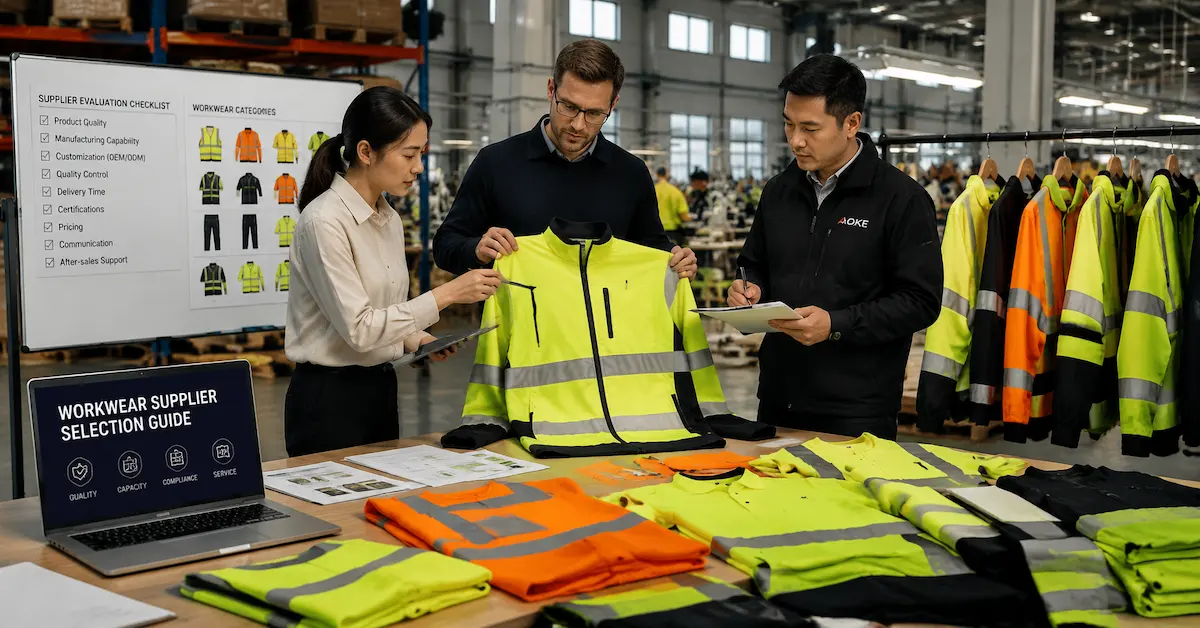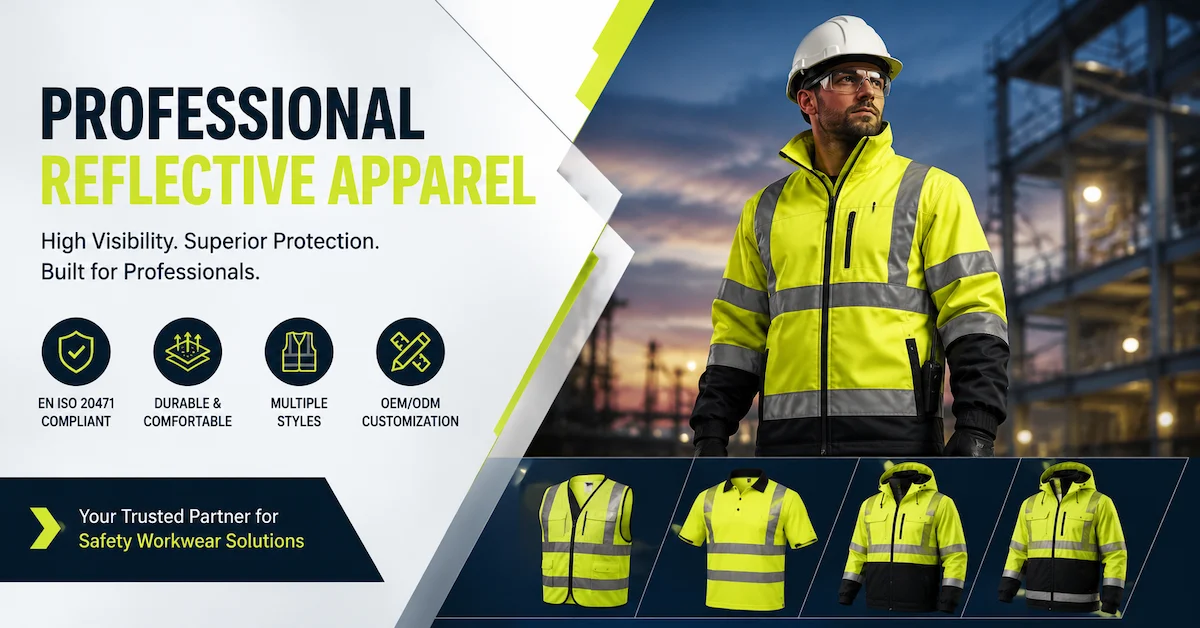

A reliable safety workwear manufacturer should provide more than basic garment production. Buyers should evaluate product specialization, fabric knowledge, reflective material experience, OEM capability, quality control, production capacity, delivery management, and understanding of the target market.
For high-visibility clothing, the manufacturer should also understand how fluorescent materials, reflective tape placement, garment coverage, sizing, and working environments affect product performance.
AOKE focuses on reflective apparel and safety workwear for global B2B buyers. Buyers can begin by reviewing AOKE’s reflective safety vest products or submitting project requirements through the Contact Us page.
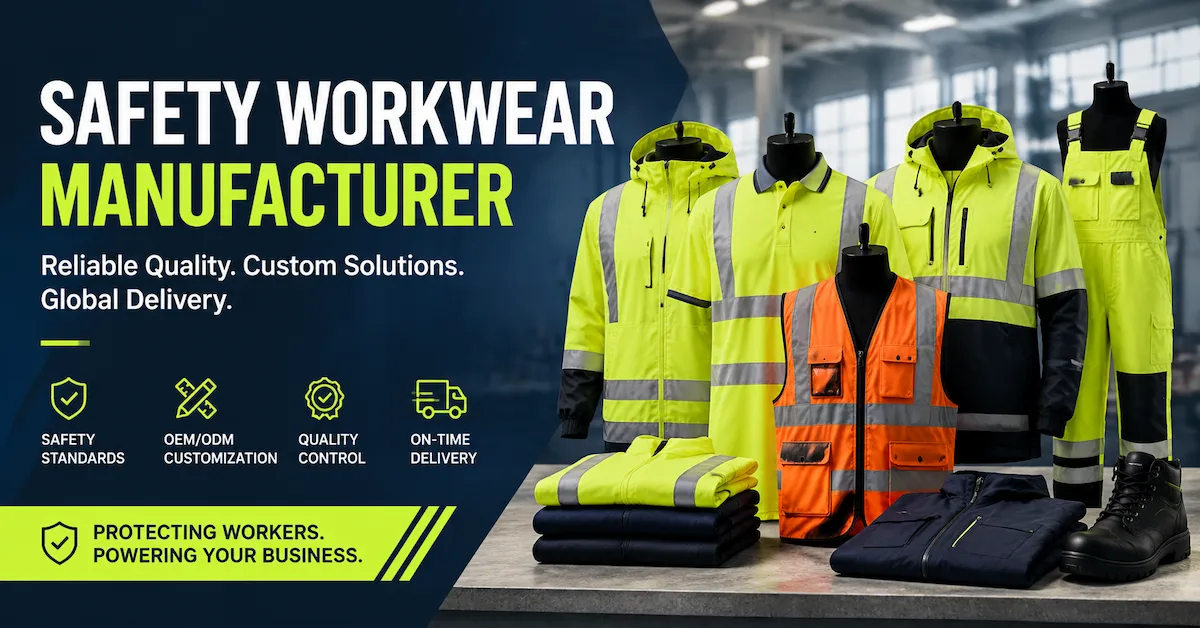
What Does a Safety Workwear Manufacturer Do?
A professional manufacturer manages the complete process from product concept to bulk shipment.
Typical services include:
- Product and style development
- Fabric and trim sourcing
- Reflective tape layout planning
- Sample development
- Logo and branding customization
- Size chart adjustment
- Bulk cutting and sewing
- In-line quality inspection
- Final inspection and packaging
- Export and delivery coordination
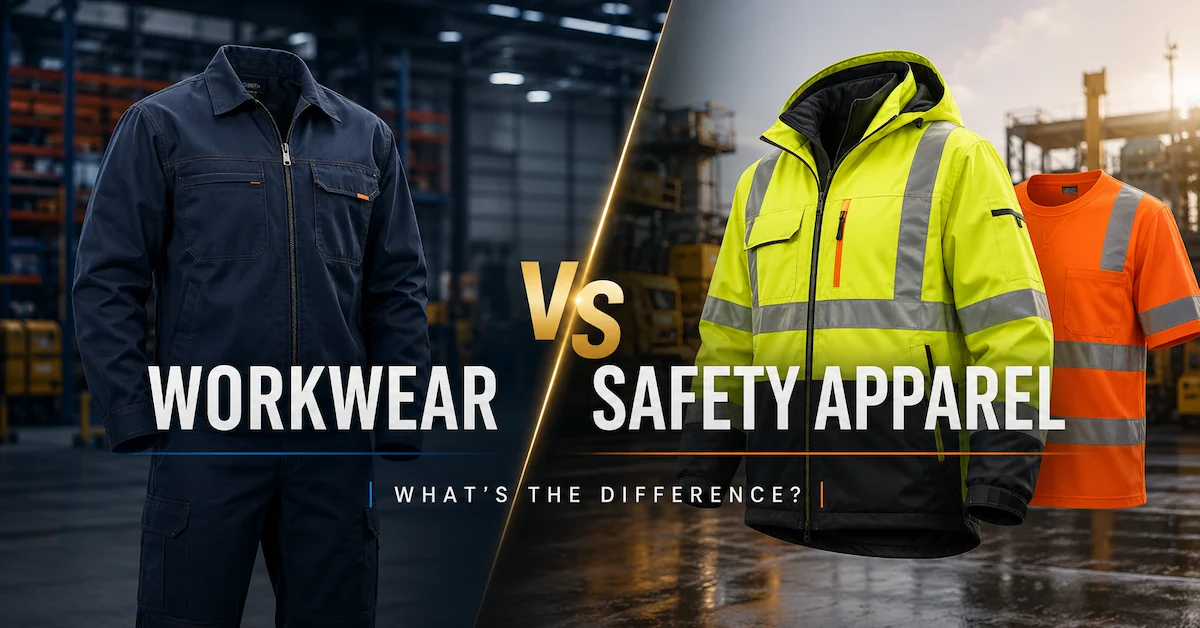
This is different from purchasing generic uniforms. Safety workwear must be matched to the industry, climate, worker activity, target market, and intended risk environment.
For example, a lightweight mesh vest may suit a warehouse team, while an outdoor road maintenance crew may need a waterproof jacket with high-visibility panels and reflective tape. Industrial maintenance employees may require durable woven workwear with reinforced pockets and strong closures.
Who Buys Safety Workwear in Bulk?
PPE Distributors and Wholesalers
PPE distributors need a broad product range and stable repeat production. Their customers may include construction companies, logistics operators, factories, municipal departments, and utility contractors.
Their main concerns include:
- Competitive bulk pricing
- Product consistency
- Private label support
- Packaging accuracy
- Standard-related documentation
- Reliable repeat orders
Construction and Roadwork Contractors
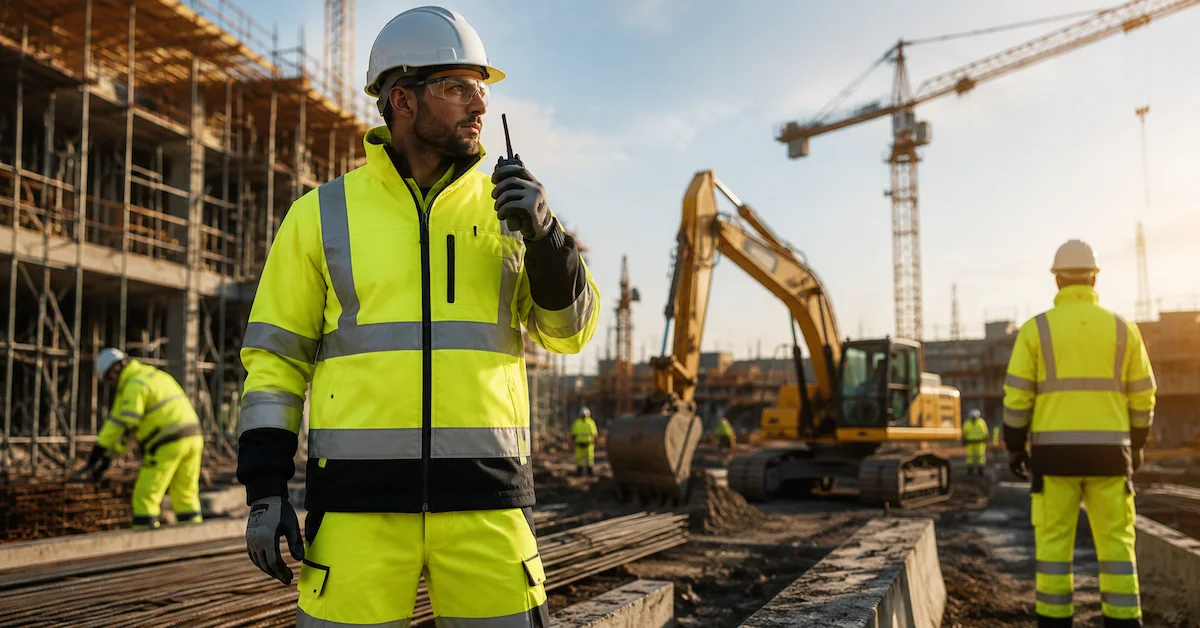
Workers operating around vehicles, cranes, heavy equipment, and road traffic need clothing that improves visibility and remains practical during physical work.
Common requirements include:
- Fluorescent yellow or orange materials
- Reflective tape coverage
- Strong seams
- Comfortable movement
- Weather-resistant options
- Company logo customization
Logistics and Warehouse Companies
Warehouse employees work near forklifts, loading docks, trucks, and moving goods. Their workwear should remain visible without becoming heavy or uncomfortable.
Important purchasing factors include:
- Breathable fabric
- Lightweight construction
- Wash durability
- Stable sizing
- Clear team identification
- Easy replacement ordering
Industrial and Manufacturing Companies
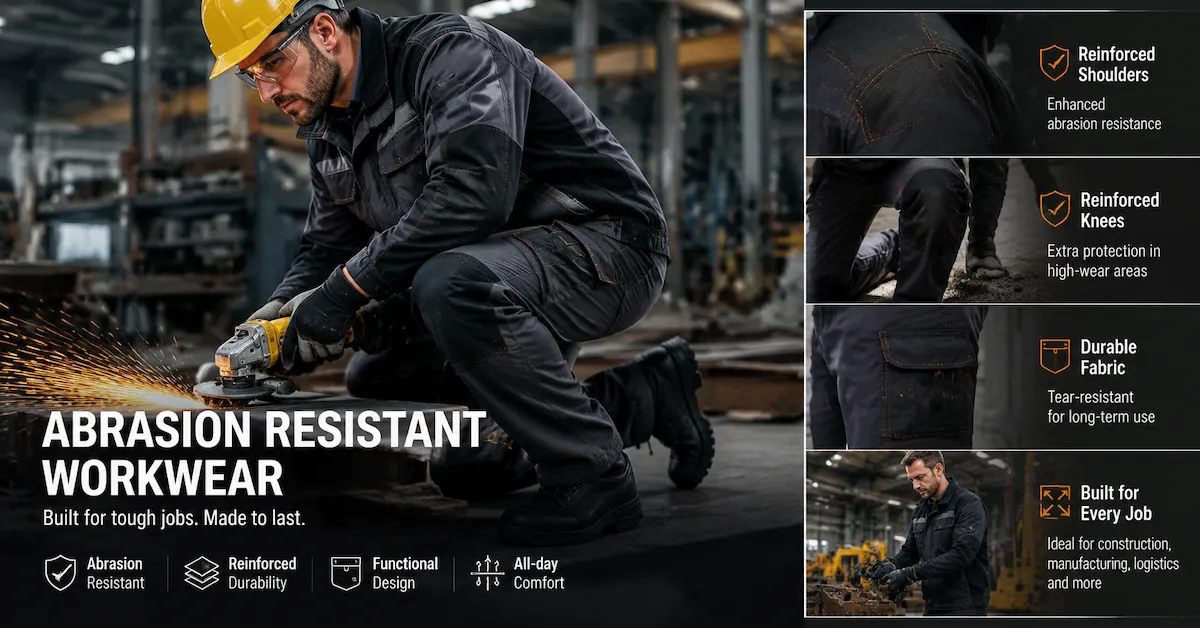
Manufacturing and maintenance teams may require stronger jackets, trousers, coveralls, or woven workwear for frequent movement and tool use.
Their priorities often include:
- Abrasion resistance
- Reinforced seams
- Functional pockets
- Strong zippers and closures
- Long garment life
- Consistent sizing across teams
Workwear Brands and Importers
Brands need a safety workwear manufacturer that can support product development, private labels, packaging, repeat production, and different market requirements.
They usually prioritize:
- OEM and ODM services
- Custom labels and hang tags
- Retail-ready packaging
- Product consistency
- Flexible product development
- Long-term factory cooperation
What Products Should a Safety Workwear Manufacturer Offer?
A capable manufacturer should provide several product categories so buyers can build coordinated workwear programs.
| Product Category | Main Features | Common Applications |
|---|---|---|
| Reflective safety vest | Lightweight, visible, easy to layer | Construction, roadwork, warehouses |
| Hi vis T-shirt | Breathable and comfortable | Logistics, delivery, factory teams |
| Hi vis polo shirt | Professional appearance and visibility | Corporate and industrial teams |
| Hoodie or fleece | Warm and flexible | Outdoor maintenance, cool warehouses |
| Softshell jacket | Wind-resistant and flexible | Utilities, logistics, outdoor projects |
| Rain jacket | Waterproof and reflective | Ports, road maintenance, wet worksites |
| Winter jacket | Insulated and windproof | Cold regions and outdoor crews |
| Woven workwear | Durable and multi-pocket | Manufacturing, repair, engineering |
| FR workwear | Flame-resistant protection | Welding, energy, oil and gas |
AOKE’s workwear range includes reflective vests, T-shirts, polo shirts, hoodies, jackets, rainwear, winter workwear, woven garments, and ready-to-ship safety apparel. Additional sourcing information is available through the AOKE Blog.
Which Materials Are Commonly Used in Safety Workwear?
Polyester Mesh
Polyester mesh is commonly used in lightweight safety vests. It supports airflow and is suitable for warm environments or garments worn over other clothing.
Buyers should confirm:
- Fabric weight
- Mesh stability
- Color consistency
- Tear resistance
- Shrinkage and washing performance
Knitted Fabric
Knitted fabric is often used for hi vis T-shirts and polo shirts. It is more suitable for employees who wear safety clothing throughout a long shift.
Important factors include:
- Breathability
- Moisture handling
- Fabric weight
- Shape retention
- Colorfastness
- Pilling resistance
Woven Fabric
Woven fabric is suitable for jackets, trousers, coveralls, and industrial workwear sets. It offers greater structure and can support reinforced pockets and heavy-duty construction.
Buyers should check:
- Fiber composition
- Fabric weight
- Tear strength
- Shrinkage
- Wash durability
- Surface treatments when required
Softshell, Waterproof, and Insulated Fabrics
Outdoor safety workwear may require wind protection, waterproof layers, insulation, lining, adjustable cuffs, and protective hoods.
The correct choice depends on:
- Temperature
- Rain exposure
- Worker activity
- Layering requirements
- Required mobility
- Expected washing frequency
Special Protective Fabrics
Some working environments may require flame-resistant, anti-static, oil-resistant, or other functional materials.
Buyers should verify technical claims through relevant documents, samples, testing requirements, and target-market compliance reviews.
How Should Reflective Materials Be Evaluated?
Reflective tape is a functional component of high-visibility workwear. It should not be selected only by appearance.
Buyers should confirm:
- Reflective tape type
- Tape width
- Shoulder and torso layout
- Sleeve and back coverage
- Trouser tape position
- Attachment method
- Washing durability
- Compatibility with the fabric
- Consistency across different sizes
The appropriate layout may differ between a vest, polo shirt, softshell jacket, raincoat, and pair of trousers.
A professional safety workwear manufacturer should help balance reflective coverage with comfort, pocket access, branding areas, and garment movement.
Which Safety Standards Should Buyers Consider?
The required standard direction depends on the target market and intended application.
Common references include:
| Standard or Reference | Typical Market or Purpose |
| ANSI/ISEA 107 | North American high-visibility apparel |
| CSA Z96 | Canadian high-visibility clothing |
| EN ISO 20471 | European high-visibility clothing |
| AS/NZS 4602.1 | Australia and New Zealand |
| OEKO-TEX Standard 100 | Textile substance considerations |
| FR-related standards | Flame-resistant applications |
A product should not be described as compliant only because it uses fluorescent fabric and reflective tape. Buyers should confirm the exact garment design, classification, test reports, certificates, and validity of supporting documents required for their market.
What OEM and ODM Options Should Be Available?
A safety workwear manufacturer should support both simple branding and deeper product customization.
Common options include:
- Heat-transfer logos
- Screen printing
- Reflective printing
- Embroidery
- Woven brand labels
- Printed care labels
- Hang tags
- Size stickers
- Barcode labels
- Private label packaging
- Custom color combinations
- Pocket modifications
- Size chart adjustments
- Reflective tape layout changes
The correct branding method depends on the material and garment structure. Embroidery may suit corporate jackets, while heat transfer may work better for lightweight shirts. Waterproof garments may require methods that do not unnecessarily damage protective layers.
How Does the Safety Workwear Production Process Work?
| Step | Production Stage | Buyer Confirmation |
| 1 | Requirement analysis | Product, market, use, quantity |
| 2 | Material recommendation | Fabric, tape, trims, colors |
| 3 | Quotation | Product, branding, packaging, lead time |
| 4 | Sample development | Fit, design, materials, workmanship |
| 5 | Sample approval | Final specification confirmation |
| 6 | Material preparation | Fabric, tape, zippers, labels |
| 7 | Cutting and sewing | Size and production consistency |
| 8 | Logo and branding | Position, color, adhesion |
| 9 | Quality inspection | Measurements, seams, tape, packaging |
| 10 | Packing and shipment | Size sorting, cartons, delivery |
A clear production process reduces misunderstandings and helps buyers compare suppliers using the same requirements.
What Quality Control Should Buyers Expect?
Incoming Material Inspection
Fabric, reflective materials, zippers, labels, buttons, and packaging materials should be checked before production.
Cutting Inspection
Cut panels should follow the approved patterns, size charts, and tolerances. Cutting errors can affect the fit of an entire order.
In-Line Sewing Inspection
Defects should be identified during production rather than waiting until all garments are finished.
Typical checks include:
- Seam consistency
- Reflective tape alignment
- Pocket position
- Closure function
- Loose threads
- Panel matching
Branding Inspection
The factory should verify logo size, color, location, direction, and adhesion against approved artwork and samples.
Measurement Inspection
Finished garments should be measured according to the agreed size chart and tolerance.
Final Packing Inspection
Final checks should cover:
- Size ratio
- Labels
- Individual packaging
- Barcode accuracy
- Carton quantities
- Carton marks
- Packing list consistency
For bulk orders, early inspection is important because one repeated defect can affect hundreds or thousands of garments.
How Should Buyers Evaluate Capacity and Lead Time?
Production capacity should be evaluated together with product complexity.
A factory may produce lightweight safety vests quickly but require more time for:
- Lined winter jackets
- Waterproof rainwear
- Customized woven workwear
- Multiple logo applications
- Private label packaging
- Mixed colors and sizes
Before confirming the order, buyers should ask about:
- Sample development time
- Material preparation
- Bulk production
- Branding
- Inspection
- Packing
- Shipment date
- Seasonal capacity
- Repeat-order capability
A realistic schedule is more valuable than an unusually short promise that creates delivery risk.
Safety Workwear Manufacturer vs General Garment Supplier
| Supplier Type | Main Advantage | Main Limitation | Best For |
| General garment factory | Basic sewing and lower cost | Limited safety-apparel experience | Simple uniforms |
| Trading company | Mixed product sourcing | Less production control | Small mixed orders |
| Workwear manufacturer | Better materials, structure, QC, and OEM | Requires clear specifications | General B2B workwear |
| Safety workwear manufacturer | Stronger reflective and application knowledge | More technical confirmation needed | PPE and high-visibility markets |
For buyers requiring safety-focused products and repeat production, a specialized factory generally offers better control than a general clothing supplier.
Common Sourcing Risks and How to Avoid Them
Choosing Only by Price
The lowest quotation may use lighter fabric, lower-cost reflective materials, weaker trims, or fewer inspection steps.
Better approach: compare complete specifications and total value.
Sending Only a Product Photo
A photo cannot communicate fabric weight, measurements, tape requirements, branding, packaging, or testing needs.
Better approach: prepare a specification sheet before requesting the final quotation.
Selecting the Wrong Garment for the Environment
A lightweight vest may suit a warehouse but may be insufficient for cold outdoor work. A heavy jacket may protect workers outdoors but be uncomfortable in a warm distribution center.
Better approach: match the product to the real worksite.
Skipping Sample Approval
A sample helps verify materials, fit, reflective layout, branding, pockets, workmanship, and packaging before bulk production.
Ignoring Repeat-Order Consistency
Keep approved samples, color references, artwork, size charts, labels, and packaging files for future orders.
Buyer Checklist Before Requesting a Quote
Prepare the following information:
- Product category
- Target country or market
- Working environment
- Required safety functions
- Fabric preference
- Colors
- Reflective tape layout
- Pocket requirements
- Size range and size chart
- Logo artwork
- Labels and packaging
- Order quantity
- Sample requirements
- Inspection requirements
- Delivery date
- Shipping destination
Complete information helps the manufacturer recommend suitable materials and provide a more accurate quotation.
Why Choose AOKE as a Safety Workwear Manufacturer?
AOKE focuses on reflective apparel and safety workwear for global B2B buyers.
The company’s product direction supports:
- Reflective safety vests
- Hi vis T-shirts and polo shirts
- Hoodies and fleece garments
- Softshell jackets
- Rain jackets
- Winter workwear
- Woven industrial apparel
- OEM logo customization
- Private label packaging
- Bulk and repeat orders
AOKE is suitable for PPE distributors, contractors, logistics companies, industrial employers, workwear brands, and buyers serving roadwork, warehouse, municipal, utility, and outdoor applications.
Learn more about AOKE through the About Us page.
FAQ
What is a safety workwear manufacturer?
A safety workwear manufacturer develops and produces garments for construction, logistics, roadwork, industrial, warehouse, utility, and other professional applications where visibility, durability, or protection is required.
What safety workwear products can AOKE supply?
AOKE can supply reflective vests, hi vis T-shirts, polo shirts, hoodies, jackets, rainwear, winter workwear, woven workwear, and related safety apparel.
Can safety workwear be customized?
Yes. Buyers can customize fabrics, colors, reflective tape layouts, pockets, logos, labels, packaging, size charts, and selected garment structures.
Which buyers purchase safety workwear in bulk?
PPE distributors, construction companies, logistics providers, industrial employers, utility teams, municipal buyers, workwear brands, and importers commonly place bulk orders.
How should buyers choose the right fabric?
Fabric should match the climate, physical activity, washing requirements, durability expectations, and intended working environment.
Why is reflective tape important?
Reflective tape helps improve wearer visibility in low-light conditions. Buyers should check its width, layout, attachment method, durability, and suitability for the target market.
Should buyers request a sample?
Yes. Sample approval helps verify fabric, fit, tape layout, branding, workmanship, labels, and packaging before mass production.
Can AOKE support private label projects?
AOKE can support OEM and private label requirements, including logo branding, labels, hang tags, packaging, color customization, and bulk production.
What information is needed for a quotation?
Buyers should provide the product type, quantity, target market, fabric, colors, sizing, reflective requirements, logo files, packaging, delivery date, and shipping destination.
How can buyers start a safety workwear project?
Submit your product specifications, logo artwork, quantity, target market, packaging requirements, and delivery schedule through the AOKE contact page.
Conclusion
Choosing the right safety workwear manufacturer helps buyers improve worker visibility, reduce sourcing risks, maintain consistent quality, and build a dependable long-term supply program.
The ideal manufacturer should understand materials, reflective design, garment structure, target-market standards, OEM customization, quality inspection, production planning, packaging, and export delivery.
For reflective vests, hi vis shirts, jackets, rainwear, winter garments, woven workwear, or private label safety apparel, AOKE can help develop products suited to your market and application.
Request a custom safety workwear quotation and send AOKE your product type, target market, quantity, logo, packaging, and delivery requirements.