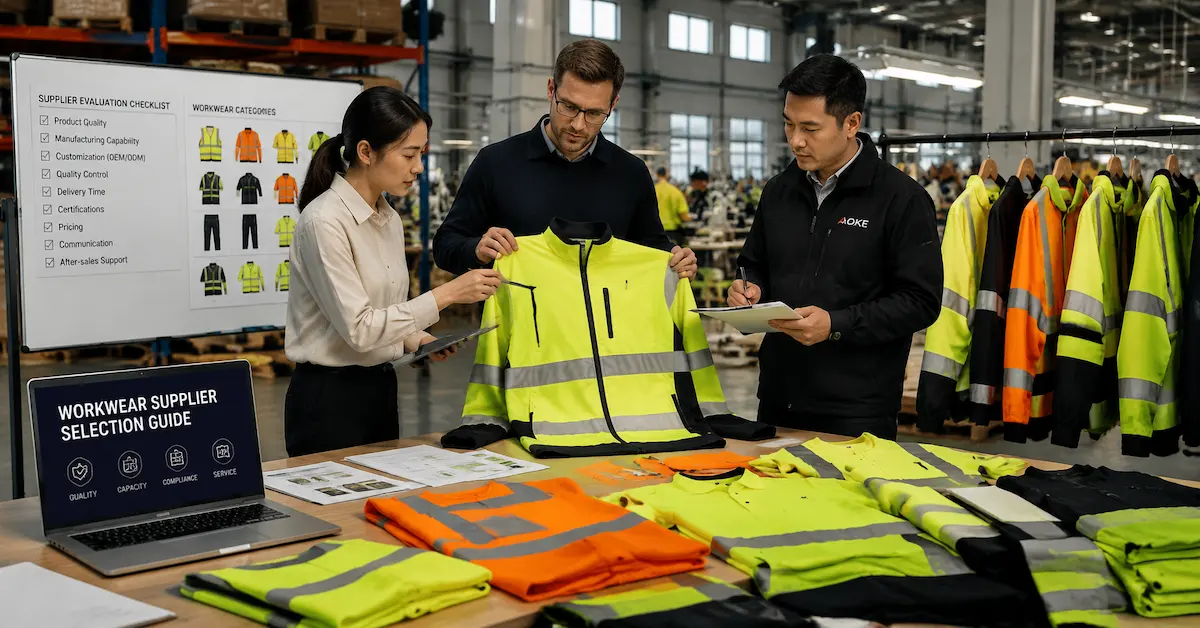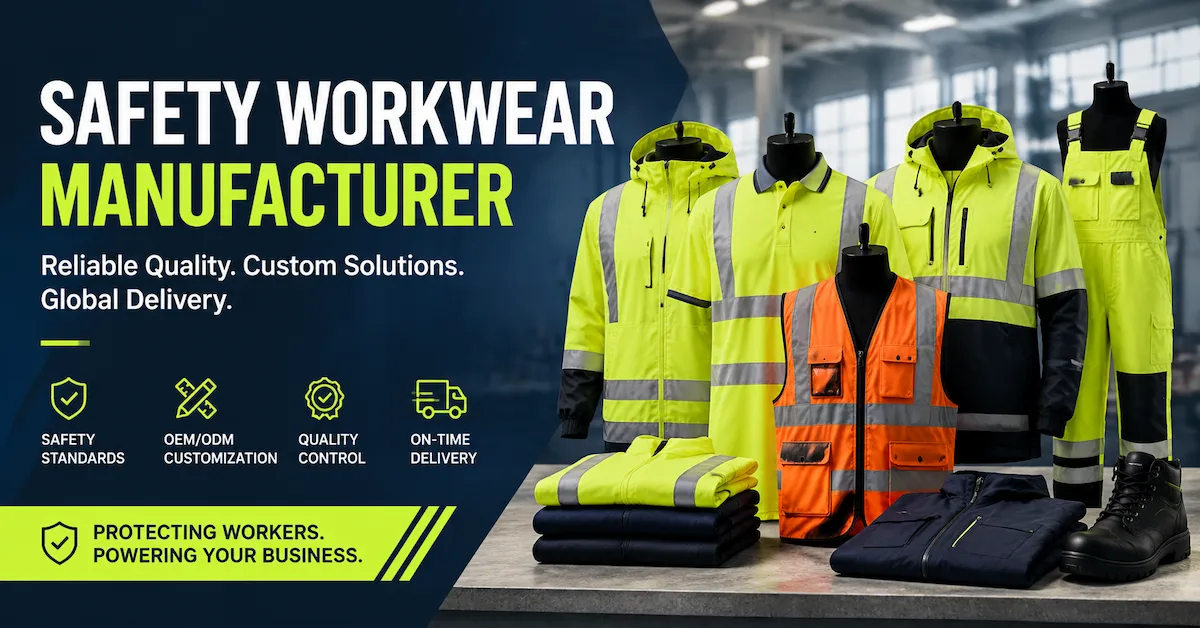

Choosing the right workwear manufacturer requires more than comparing prices. A reliable supplier should understand safety apparel, industrial applications, fabric selection, reflective materials, OEM customization, quality control, and bulk production.
Before placing an order, B2B buyers should evaluate:
- Manufacturing experience
- Product specialization
- Fabric quality
- Safety standards
- Customization capability
- Production capacity
- Quality inspection process
- Delivery reliability
The right manufacturing partner can help companies reduce sourcing risks, maintain consistent quality, and build a stable long-term supply chain.
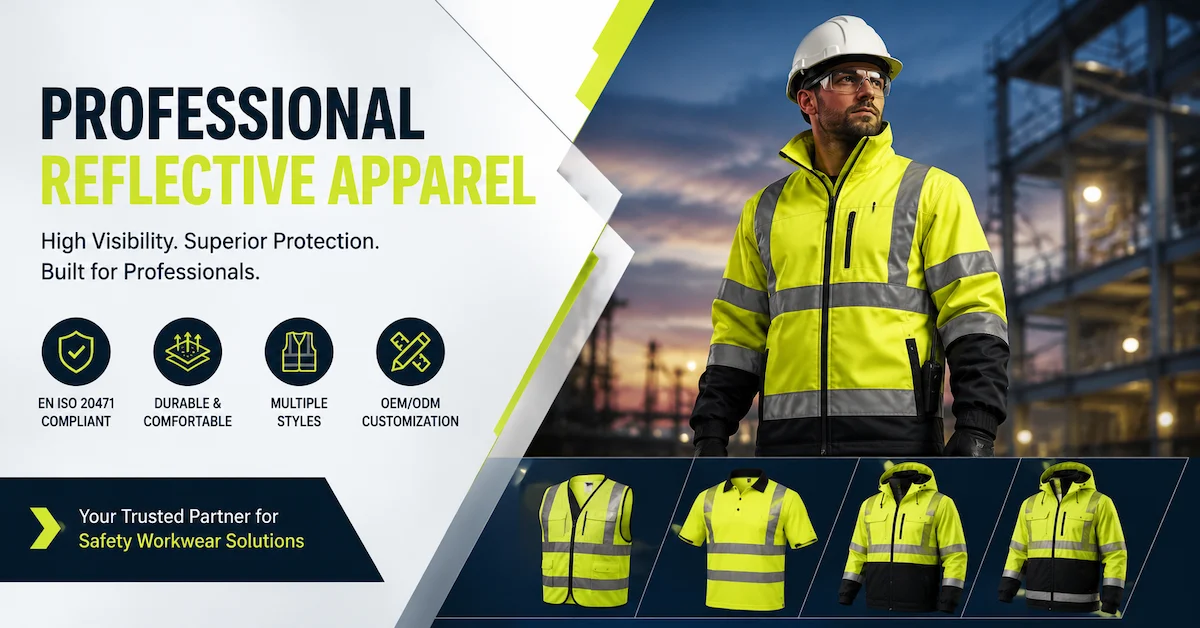
AOKE specializes in reflective safety apparel and workwear solutions for global buyers, including reflective vests, hi vis shirts, jackets, rainwear, and industrial workwear.
Explore AOKE products:
https://www.aokenew.com/products/vest-waistcoat
Why Choosing the Right Workwear Manufacturer Matters
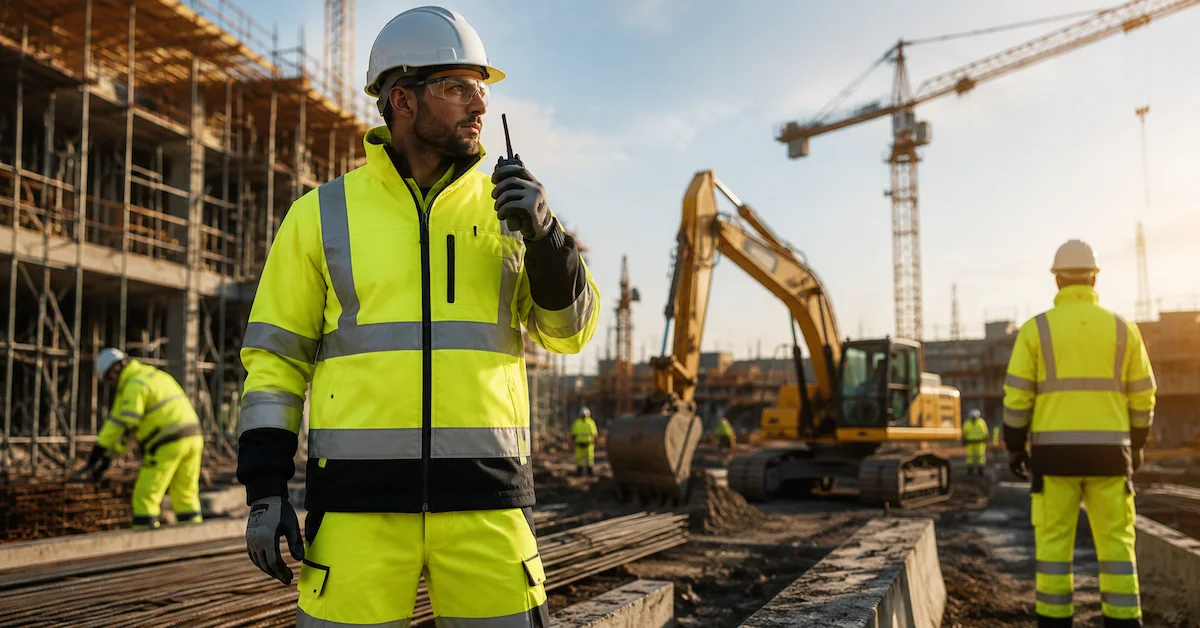
Workwear is not simply a uniform. For many industries, it directly affects employee safety, comfort, productivity, and company image.
Construction workers, warehouse employees, logistics teams, factory operators, and outdoor service workers often wear workwear for long hours in demanding environments.
A poor supplier choice may lead to:
- Inconsistent sizing
- Weak reflective performance
- Poor fabric durability
- Delayed delivery
- Incorrect branding
- High replacement costs
For B2B buyers, selecting a suitable manufacturer at the beginning can prevent costly problems later.
Step 1: Check the Manufacturer’s Industry Experience
The first factor when choosing a workwear manufacturer is industry experience.
A factory producing casual clothing may understand sewing but may not understand:
- Reflective tape placement
- High-visibility requirements
- Industrial garment structures
- Functional pocket design
- Weather protection
- Safety apparel applications
A professional workwear manufacturer should understand different industries, including:
- Construction
- Road maintenance
- Logistics
- Manufacturing
- Warehousing
- Utilities
- Outdoor services
Experience helps manufacturers recommend suitable products instead of simply producing according to pictures.
Step 2: Evaluate Product Range and Specialization
A reliable manufacturer should offer products that match your business requirements.
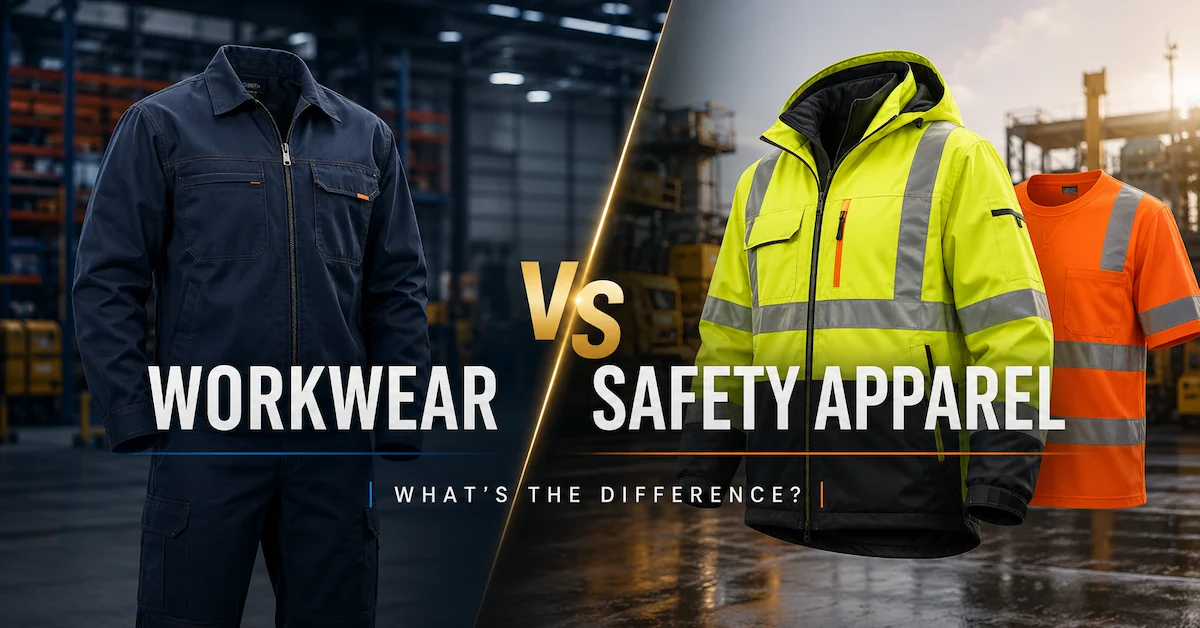
Common workwear categories include:
| Product | Features | Applications |
|---|---|---|
| Reflective Safety Vest | Lightweight and visible | Construction, warehouse |
| Hi Vis T-shirt | Breathable and comfortable | Logistics, factory teams |
| Polo Shirt | Professional appearance | Corporate teams |
| Safety Jacket | Protection and visibility | Outdoor work |
| Softshell Jacket | Flexible and weather resistant | Utility teams |
| Rain Jacket | Waterproof protection | Outdoor environments |
| Winter Workwear | Warm and durable | Cold regions |
| Woven Workwear | Strong and functional | Industrial applications |
A supplier with a complete product range can support different departments and future expansion.
AOKE provides reflective vests, hi vis shirts, polo shirts, jackets, rainwear, winter workwear, woven workwear, and ready-to-ship safety apparel.
Learn more:
https://www.aokenew.com/category/blog
Step 3: Check Fabric and Material Knowledge
Fabric selection directly affects workwear performance.
When choosing a manufacturer, ask whether they can recommend materials based on:
- Working environment
- Climate
- Wearing duration
- Washing frequency
- Required durability
Common materials include:
Polyester Mesh
Suitable for lightweight safety vests.
Advantages:
- Breathable
- Lightweight
- Comfortable in warm environments
Knitted Fabric
Commonly used for hi vis T-shirts and polo shirts.
Advantages:
- Comfortable
- Flexible
- Suitable for long shifts
Woven Fabric
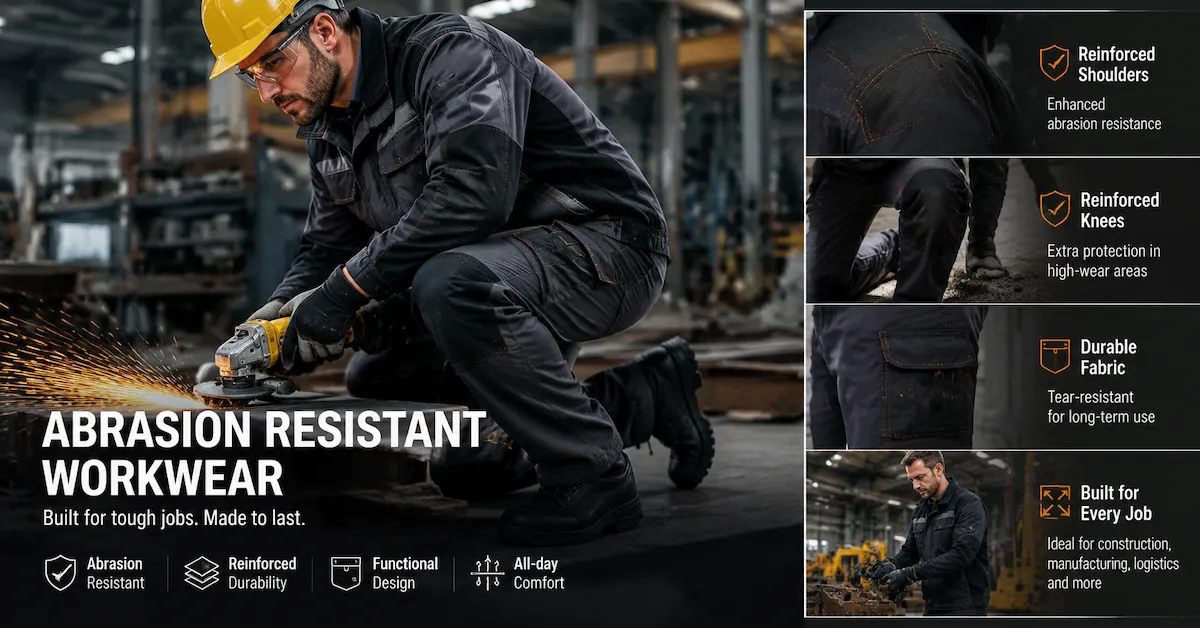
Used for industrial jackets, trousers, and heavy-duty workwear.
Advantages:
- Durable
- Structured
- Strong resistance to daily wear
Waterproof and Insulated Fabric
Used for rainwear and winter workwear.
Advantages:
- Weather protection
- Outdoor suitability
- Better worker comfort
A professional supplier should recommend materials based on application instead of choosing the cheapest option.
Step 4: Confirm OEM and Customization Capability
Many B2B buyers need customized workwear rather than standard products.
Before choosing a manufacturer, confirm whether they support:
- Logo printing
- Embroidery
- Reflective logo
- Custom colors
- Labels
- Hang tags
- Packaging
- Size adjustments
- Pocket modifications
OEM capability is especially important for:
- PPE distributors
- Workwear brands
- Corporate buyers
- Importers
A reliable manufacturer should help transform your requirements into a production-ready product.
For custom projects, contact AOKE:
https://www.aokenew.com/contact-us
Step 5: Review Quality Control Process
Quality control is one of the most important factors when choosing a workwear manufacturer.
A professional supplier should inspect:
Raw Materials
Including:
- Fabric
- Reflective tape
- Zippers
- Buttons
- Labels
Production Process
Including:
- Cutting accuracy
- Sewing quality
- Reflective tape position
- Logo placement
Finished Products
Including:
- Size measurement
- Appearance
- Packaging
- Final inspection
For bulk orders, quality problems can become expensive. A strong QC system reduces these risks.
Step 6: Check Safety Standards Knowledge
Different countries may have different requirements for safety apparel.
Common standards include:
- ANSI/ISEA 107
- EN ISO 20471
- CSA Z96
- AS/NZS 4602.1
When choosing a manufacturer, ask:
- Do they understand your target market?
- Can they recommend suitable products?
- Can they provide relevant testing information?
- Do they understand reflective apparel requirements?
A knowledgeable supplier can help buyers avoid selecting unsuitable products.
Step 7: Evaluate Production Capacity
Production capacity is important for companies placing bulk orders.
Ask the manufacturer:
- What is the monthly production capability?
- Can they support repeat orders?
- How do they manage peak seasons?
- How long does production take?
- Can they handle multiple colors and sizes?
A supplier should provide realistic delivery schedules instead of unrealistic promises.
Step 8: Check Sample Development Process
Before bulk production, buyers should always request samples.
Samples help verify:
- Fabric quality
- Color
- Size
- Fit
- Reflective layout
- Logo position
- Workmanship
- Packaging
A professional manufacturer should provide feedback during sample development and help improve the product.
Step 9: Compare Manufacturer vs Trading Company
| Supplier Type | Advantages | Limitations |
|---|---|---|
| Trading Company | Flexible sourcing | Less production control |
| General Garment Factory | Lower cost | Limited safety knowledge |
| Workwear Manufacturer | Industry experience and customization | Requires clear requirements |
| Safety Workwear Manufacturer | Strong technical knowledge | More specialized |
For long-term B2B cooperation, a specialized manufacturer is usually the better choice.
Step 10: Evaluate Communication and Long-Term Support
Good communication is essential for international orders.
A reliable manufacturer should provide:
- Fast responses
- Clear quotations
- Production updates
- Sample feedback
- Shipping information
- After-sales support
A supplier relationship should not end after delivery. Long-term cooperation requires continuous support.
Common Mistakes When Choosing a Workwear Manufacturer
Choosing Only the Lowest Price
Low prices may result in:
- Poor materials
- Weak stitching
- Lower inspection standards
- Short product lifespan
Not Confirming Product Specifications
Important details include:
- Fabric
- Color
- Reflective tape
- Size chart
- Packaging
- Logo
Ignoring Repeat Order Consistency
Future orders should maintain:
- Same fabric
- Same color
- Same size
- Same quality
Not Considering After-Sales Support
A good manufacturer should support problem solving and future improvements.
Buyer Checklist Before Selecting a Workwear Manufacturer
Prepare:
- Product category
- Target market
- Application environment
- Required standards
- Fabric preference
- Colors
- Reflective requirements
- Size chart
- Logo files
- Packaging requirements
- Quantity
- Delivery schedule
This information helps manufacturers provide accurate solutions.
Why Choose AOKE as Your Workwear Manufacturer?
AOKE focuses on reflective apparel and safety workwear for global B2B customers.
AOKE supports:
- Custom safety apparel
- Hi vis workwear
- OEM production
- Private label solutions
- Bulk manufacturing
- Quality control
- International supply
AOKE serves:
- PPE distributors
- Construction companies
- Logistics businesses
- Industrial manufacturers
- Workwear brands
Learn more:
https://www.aokenew.com/about-us
FAQ
What should I check before choosing a workwear manufacturer?
Check experience, products, materials, customization ability, quality control, capacity, and delivery reliability.
How do I know if a manufacturer is professional?
Review their product range, factory capability, samples, customer experience, and quality system.
Can workwear manufacturers provide OEM services?
Yes. OEM services usually include logos, labels, packaging, colors, and product customization.
What products can workwear manufacturers produce?
Common products include safety vests, hi vis shirts, jackets, rainwear, winter workwear, and industrial uniforms.
Should I order samples before bulk production?
Yes. Samples confirm quality and prevent production mistakes.
What safety standards should buyers consider?
Common standards include ANSI/ISEA 107, EN ISO 20471, CSA Z96, and AS/NZS 4602.1.
How important is fabric selection?
Fabric affects comfort, durability, safety performance, and product lifespan.
Can manufacturers support private label workwear?
Yes. Many manufacturers provide labels, packaging, and branding solutions.
What information is needed for quotation?
Provide product type, quantity, target market, customization needs, and delivery requirements.
How can I start a workwear project with AOKE?
Send AOKE your product requirements, quantity, logo, packaging, and timeline for evaluation.
Conclusion
Knowing how to choose a workwear manufacturer helps buyers make better sourcing decisions and avoid quality, delivery, and communication problems.
The best manufacturing partner should combine industry experience, product expertise, customization capability, quality control, and reliable production.
For businesses sourcing safety apparel, reflective clothing, and industrial workwear, selecting the right manufacturer is the foundation of a successful long-term supply chain.
Contact AOKE to discuss your workwear sourcing requirements.