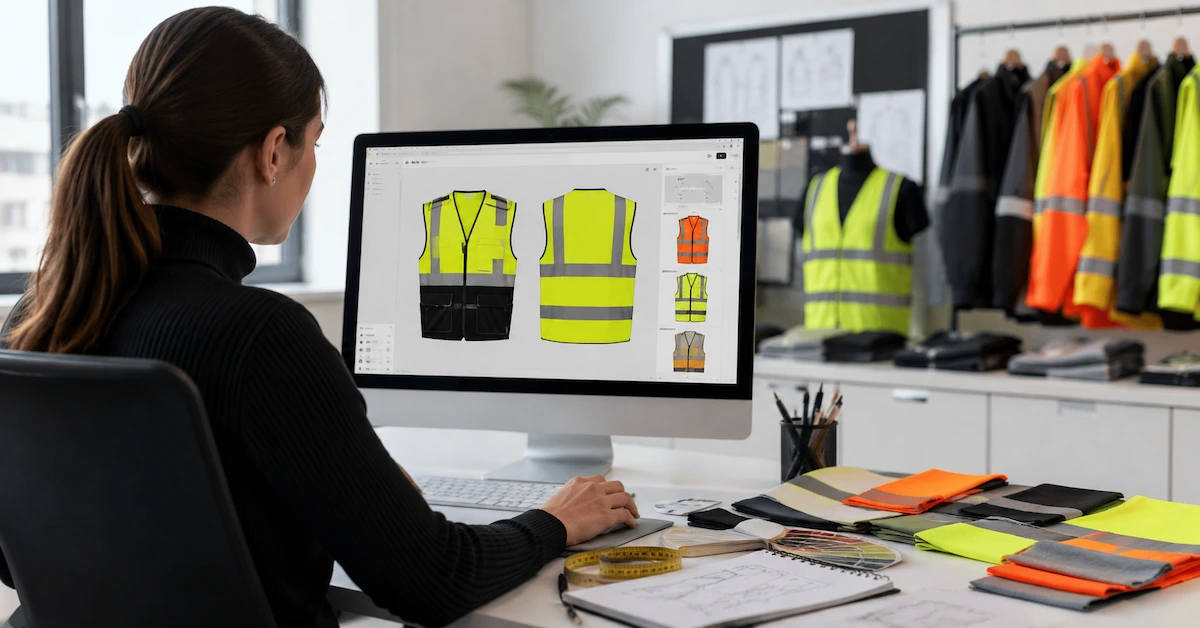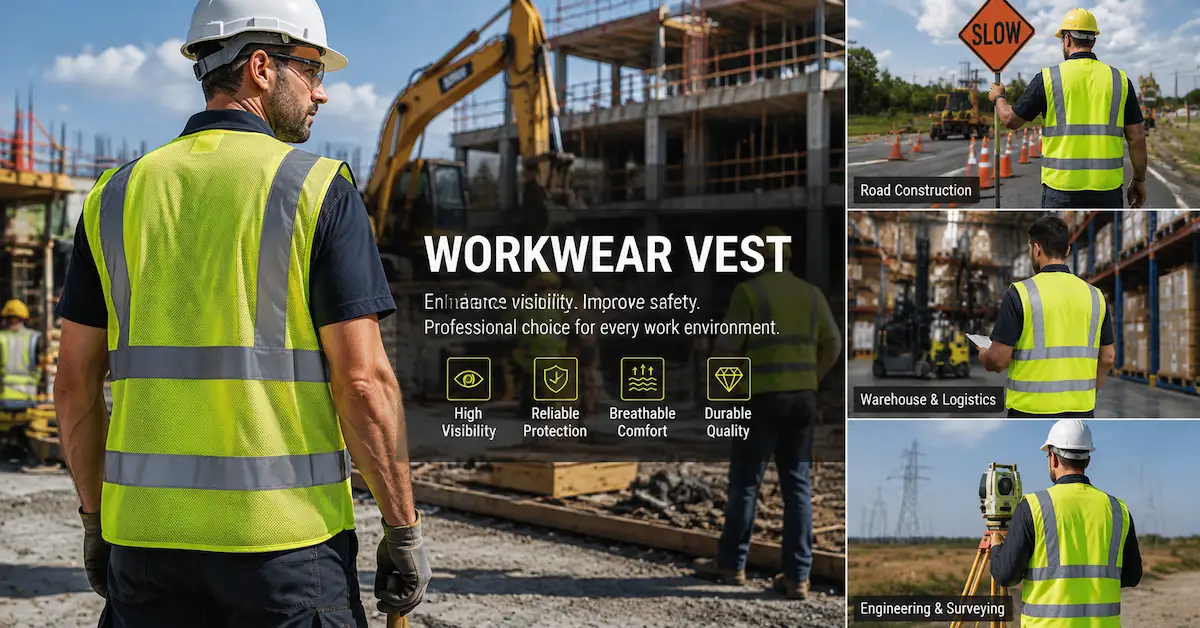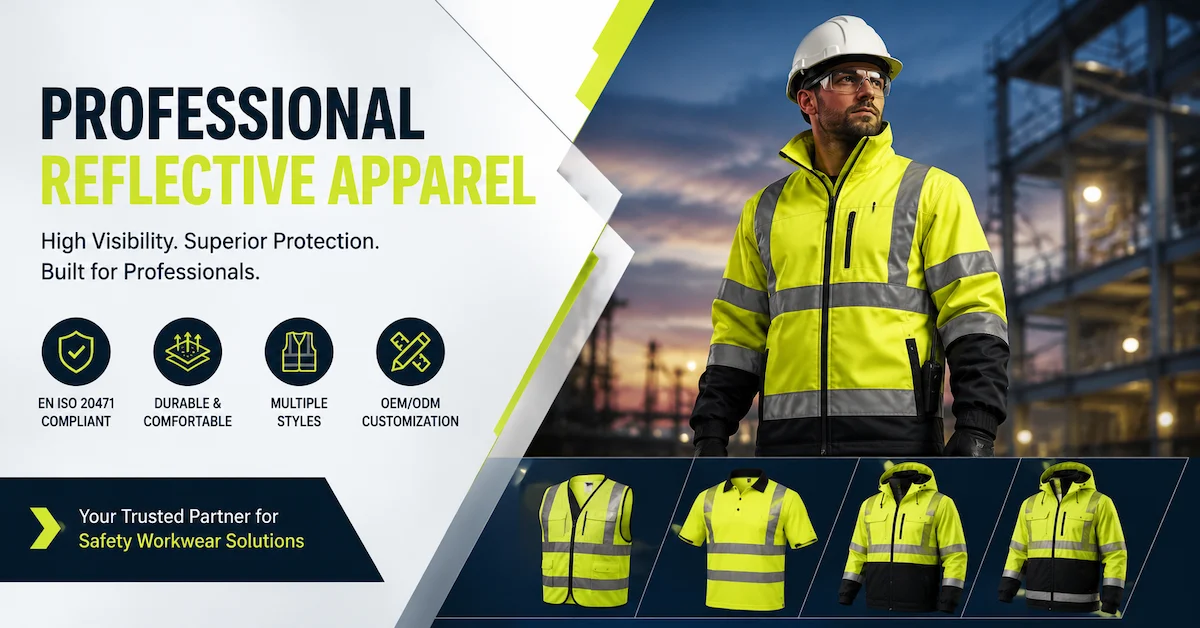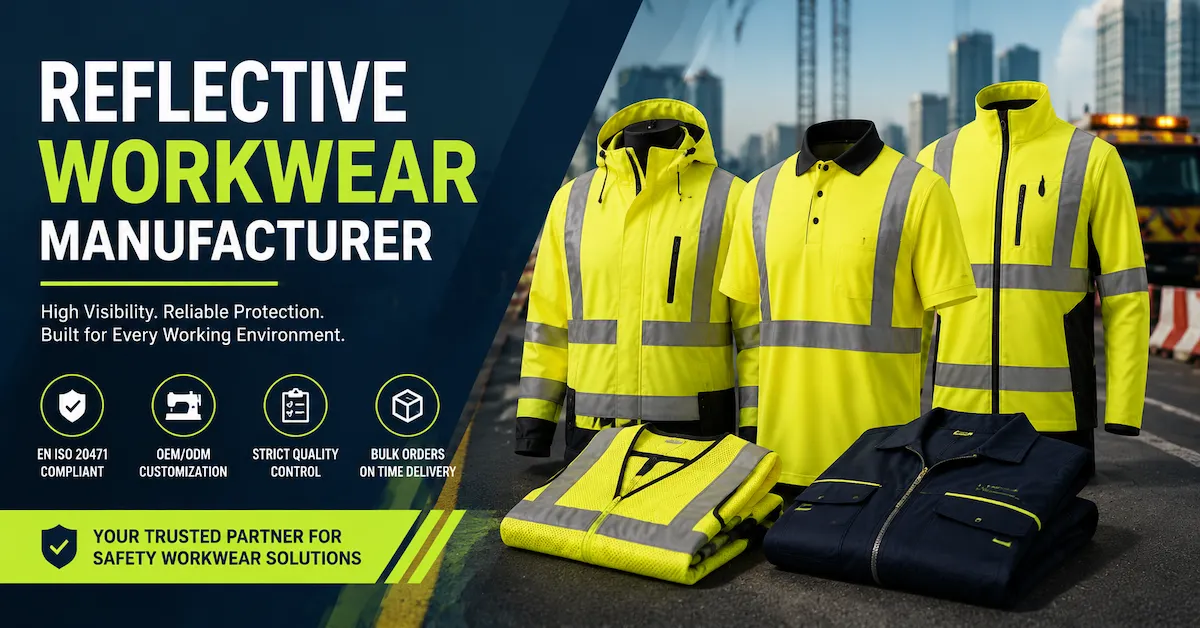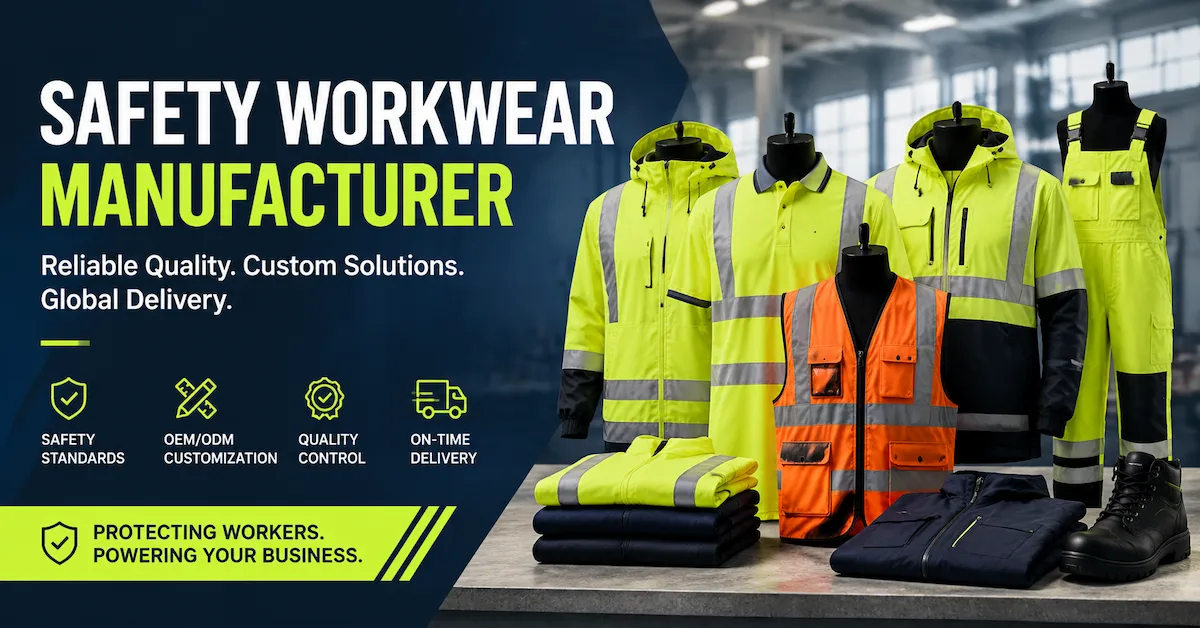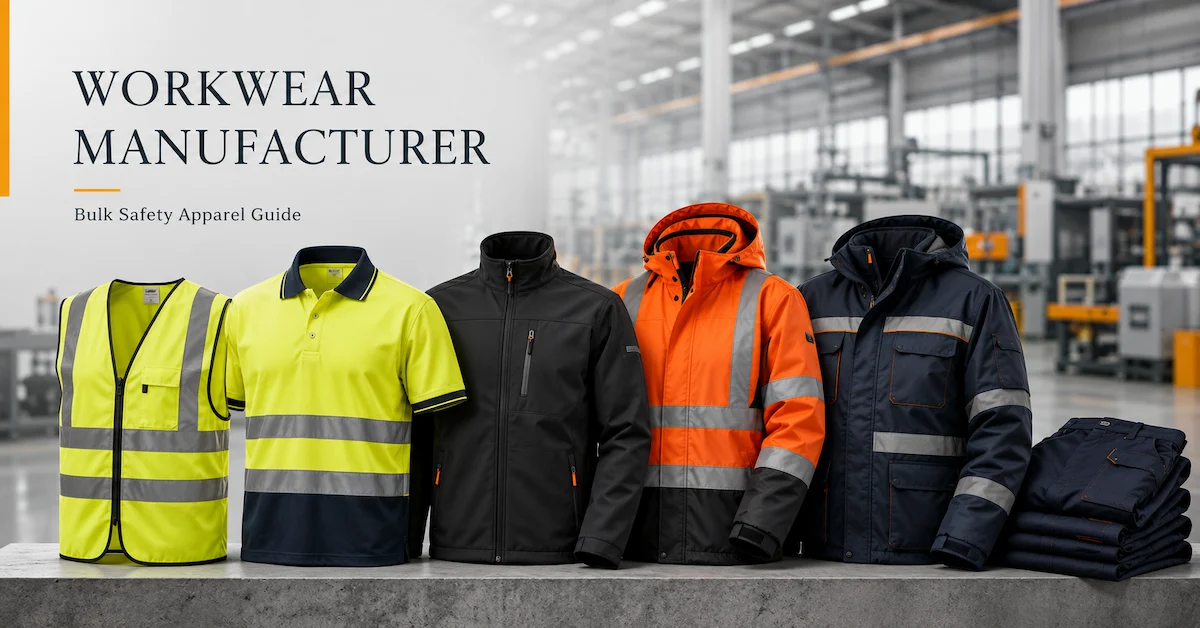

An OEM workwear factory helps buyers produce customized workwear according to brand, project, market, and safety requirements. For safety-related workwear, buyers should not only check price. They also need to evaluate fabric quality, reflective tape design, logo customization, stitching, sizing, packaging, production capacity, lead time, and quality inspection.
For buyers sourcing reflective safety vests, hi vis T-shirts, polo shirts, rain jackets, winter jackets, woven workwear, or other safety apparel, working with a professional OEM factory can reduce sourcing risk and improve long-term supply stability.
AOKE provides reflective apparel and safety workwear solutions for global buyers. You can view related product categories here: Vest / Waistcoat Products.
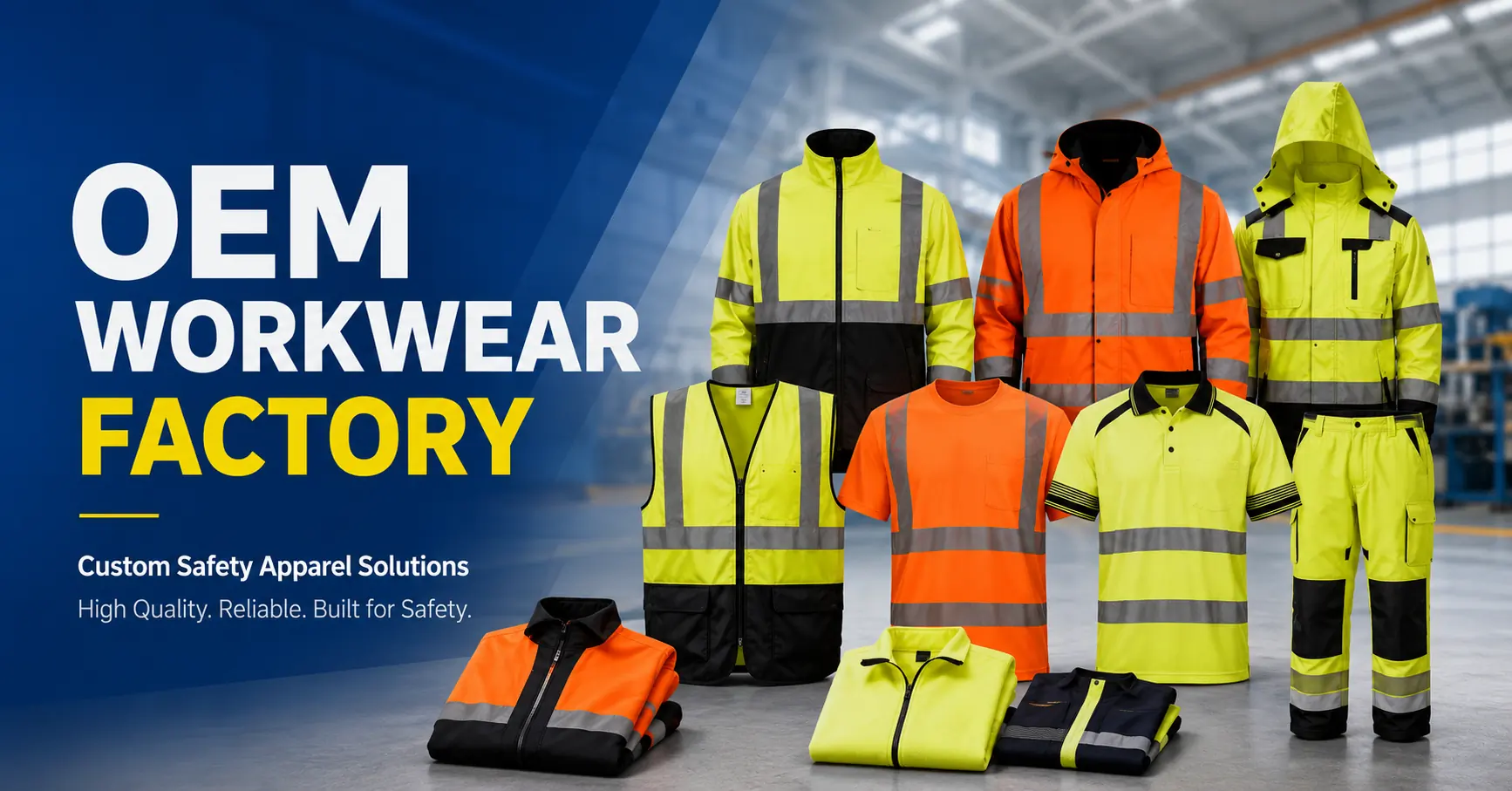
Why OEM Workwear Matters for Global Buyers
Workwear is more than a simple uniform. In many industries, it affects worker safety, team identification, brand image, comfort, and compliance. For construction, roadwork, logistics, warehouse, utility, municipal, and industrial teams, workwear must be practical and durable enough for daily use.
An OEM workwear project usually involves more decisions than standard stock products. Buyers may need custom colors, company logos, private labels, special pockets, reflective tape layouts, packaging, or fabric changes. Some buyers also need products suitable for regional safety standards such as ANSI/ISEA 107, EN ISO 20471, CSA Z96, or AS/NZS 4602.1.
This is why choosing the right OEM workwear factory is important. A good supplier can help buyers turn a product idea, sample, drawing, or market requirement into a stable bulk order.
Who Needs an OEM Workwear Factory?
Different buyers choose OEM workwear for different reasons.
1. PPE Distributors
PPE distributors need reliable supply, consistent quality, private label support, and a broad product range. They often purchase reflective vests, jackets, rainwear, and safety shirts for resale.
Their key concerns include:
- Stable product quality
- Competitive factory pricing
- Certification support
- Custom packaging
- Repeat order consistency
2. Construction and Roadwork Contractors
Construction and roadwork buyers need durable, visible, and comfortable workwear for workers operating near vehicles, machinery, and outdoor traffic areas.
Their key concerns include:
- High visibility performance
- Long wearing comfort
- Strong stitching
- Bulk size availability
- Fast delivery for project schedules
3. Logistics and Warehouse Teams
Logistics, warehouse, and transportation teams often need lightweight hi vis workwear for daily operations around forklifts, loading docks, trucks, and sorting areas.
Their key concerns include:
- Breathable fabric
- Easy movement
- Clear team identification
- Wash resistance
- Logo printing
4. Workwear Brands and Importers
Brands and importers need OEM factories that can support product development, labeling, packaging, and repeat production.
Their key concerns include:
- OEM design support
- Low-to-medium MOQ flexibility
- Custom label and packaging
- Stable sizing
- Long-term cooperation
5. Industrial and Utility Buyers
Industrial, electrical, maintenance, oil and gas, and utility buyers may require stronger fabric, weather protection, FR options, or anti-static functions.
Their key concerns include:
- Functional fabric
- Safety standard direction
- Workmanship durability
- Special environment performance
- Reliable inspection process
What Products Can an OEM Workwear Factory Produce?
A professional OEM workwear factory should support different workwear categories according to climate, job type, and safety requirements.
| Product Type | Main Features | Common Applications |
|---|---|---|
| Reflective Safety Vest | Lightweight, easy to wear, cost-effective | Roadwork, construction, traffic control, warehouse |
| Hi Vis T-shirt / Polo Shirt | Comfortable, breathable, suitable for long shifts | Logistics, delivery, warehouse, factory teams |
| Hoodie / Sweatshirt / Fleece | Warmer and more comfortable for cooler seasons | Outdoor work, maintenance, construction |
| Softshell Jacket | Wind-resistant, flexible, professional appearance | Utility teams, outdoor projects, logistics |
| Raincoat / Rain Jacket | Waterproof, reflective, suitable for wet weather | Road maintenance, ports, outdoor construction |
| Winter Jacket | Insulated, windproof, high visibility | Cold regions, outdoor work, municipal teams |
| Woven Workwear | Durable, structured, suitable for heavy-duty use | Industrial production, repair, engineering teams |
| FR Garment | Flame-resistant safety protection | Welding, oil and gas, power, chemical industries |
For buyers comparing different safety apparel options, AOKE’s Blog can be used as a supporting resource for sourcing and product selection topics.
Key OEM Customization Options
A strong OEM workwear factory should provide flexible customization. The goal is not only to add a logo, but to build workwear that fits the buyer’s market and end users.
Logo and Branding
Common branding methods include:
- Heat transfer printing
- Screen printing
- Reflective printing
- Embroidery
- Woven labels
- Hang tags
- Private label packaging
Heat transfer is often suitable for clean logo effects. Screen printing can be cost-effective for large orders. Embroidery gives a premium appearance but may not suit every fabric or waterproof garment.
Fabric Customization
Fabric should be selected according to application. For example, mesh fabric is suitable for lightweight vests, knitted fabric is suitable for hi vis shirts, woven fabric is suitable for industrial workwear, and waterproof fabric is suitable for rainwear.
For winter or outdoor workwear, buyers may also require softshell, fleece, or insulated materials.
Reflective Tape Layout
Reflective tape design affects visibility and product appearance. Buyers should confirm tape width, position, durability, and layout before bulk production.
Common positions include:
- Shoulder reflective tape
- Waist reflective tape
- Sleeve reflective tape
- Back reflective tape
- Leg reflective tape for trousers
A professional OEM workwear factory should recommend layouts according to product type and target market.
Size and Fit
Different markets may require different size standards. European, North American, Australian, and Asian markets often have different fitting expectations. Buyers should confirm the size chart before production.
For large teams, size range stability is especially important.
Packaging and Labeling
OEM buyers may need:
- Individual polybags
- Size stickers
- Barcode labels
- Carton marks
- Retail packaging
- Private label cards
- Washing instruction labels
Clear packaging requirements help avoid shipping and resale problems.
How to Evaluate an OEM Workwear Factory
Check Industry Experience
A basic garment factory may know how to sew clothing, but safety workwear requires more experience. Buyers should check whether the factory understands reflective apparel, high visibility colors, safety tape placement, industrial use, and workwear durability.
AOKE focuses on reflective apparel and safety workwear. Buyers can learn more about its company background from the About Us page.
Review Product Range
A reliable factory should provide multiple workwear categories, not only one simple vest. A broader product range makes it easier for buyers to build a complete safety apparel line.
Useful categories include vests, work shirts, jackets, rainwear, winter workwear, woven workwear, and special protective garments.
Confirm Material Knowledge
The factory should help buyers choose the correct material instead of simply accepting the cheapest fabric. Material affects comfort, cost, appearance, durability, and safety performance.
Important material questions include:
- Is the fabric breathable enough?
- Is it suitable for repeated washing?
- Is it strong enough for outdoor work?
- Is it suitable for printing or embroidery?
- Is it suitable for waterproof or FR requirements?
Ask About Quality Control
Quality control is one of the most important factors in OEM workwear. Buyers should ask how the factory checks incoming materials, cutting, sewing, reflective tape, logo printing, sizing, packing, and final shipment.
Common QC checkpoints include:
- Fabric inspection
- Color checking
- Reflective tape inspection
- Stitching inspection
- Logo position checking
- Size measurement
- Packaging inspection
- Final random inspection
Confirm Sampling Process
A sample helps the buyer confirm style, fabric, color, fit, logo position, reflective tape layout, and workmanship before placing a bulk order.
For OEM orders, buyers should avoid mass production without sample approval.
Evaluate Communication Speed
OEM workwear projects involve many details. Slow or unclear communication can cause mistakes. A good factory should respond clearly about specifications, sampling, quotation, production time, inspection, and shipping.
OEM Workwear Factory vs Trading Company
Some buyers compare factories and trading companies before placing orders. Both options can work, but they serve different needs.
| Option | Advantages | Limitations | Best For |
| Trading Company | Flexible sourcing, many product options | Less direct control over production | Small mixed orders |
| Basic Garment Factory | Lower sewing cost | May lack safety workwear expertise | Simple uniforms |
| OEM Workwear Factory | Better customization, QC, product development | Requires clearer order details | Brands, distributors, project buyers |
| Safety Workwear Factory | Stronger standard awareness and material knowledge | May have higher technical requirements | PPE and regulated markets |
For long-term safety apparel sourcing, an OEM workwear factory with real reflective apparel experience is usually more reliable.
Common OEM Workwear Sourcing Risks
Unclear Specifications
If the buyer only sends a simple product photo, the factory may not know the exact fabric, tape, size, logo method, packaging, and standard requirements.
Solution: Prepare a clear specification sheet before quotation.
Low-Quality Reflective Tape
Reflective tape directly affects visibility. Low-quality tape may lose performance after washing or may not meet buyer expectations.
Solution: Confirm tape type, width, layout, and durability requirements before sampling.
Wrong Fabric Selection
A fabric that works for a vest may not work for a rain jacket or winter jacket.
Solution: Match fabric to application, climate, and end user.
Logo Production Mistakes
Logo position, size, color, and method must be confirmed before production.
Solution: Use digital mockups and approved samples before bulk orders.
Delivery Delay
Workwear is often purchased for projects or seasonal demand. Delays can affect construction schedules, retail sales, or distributor commitments.
Solution: Confirm production schedule, material availability, and shipping plan early.
Buyer Checklist Before Placing an OEM Order
Before choosing an OEM workwear factory, buyers should prepare:
- Product category
- Target market
- Safety standard requirement
- Fabric type
- Color requirement
- Reflective tape layout
- Size chart
- Logo file
- Label and packaging needs
- Order quantity
- Sample requirement
- Delivery deadline
- Inspection requirement
- Shipping destination
This checklist helps the factory quote more accurately and reduces production misunderstandings.
Why AOKE Is Suitable for OEM Workwear Buyers
AOKE is positioned around reflective apparel and safety workwear. Its product range supports common safety clothing needs, including reflective vests, hi vis shirts, polo shirts, hoodies, jackets, rainwear, winter jackets, woven workwear, and ready-to-ship workwear options.
For OEM buyers, AOKE can support product selection according to working environment, target market, fabric requirement, logo branding, and bulk order needs.
Whether you are a PPE distributor, workwear brand, construction contractor, logistics buyer, or industrial safety purchaser, AOKE can help you develop custom workwear suitable for your market.
Visit the homepage at AOKE or send your sourcing details through the Contact Us page.
FAQ
1. What is an OEM workwear factory?
An OEM workwear factory produces workwear according to the buyer’s design, brand, specifications, materials, logo, packaging, and order requirements.
2. What types of workwear can be customized?
Common custom products include reflective vests, hi vis T-shirts, polo shirts, hoodies, softshell jackets, rainwear, winter jackets, woven workwear, and FR garments.
3. Can OEM workwear include a company logo?
Yes. Logo options may include heat transfer printing, screen printing, reflective printing, embroidery, woven labels, or private label packaging.
Conclusion
Choosing an OEM workwear factory is not only about cost. Buyers should evaluate product experience, fabric knowledge, reflective design, customization ability, quality control, sampling process, production capacity, and communication efficiency.
A reliable factory can help buyers reduce sourcing risk, improve product consistency, and build a stable workwear supply chain. For safety apparel buyers, the best partner should understand both garment manufacturing and real working environments.
If you are planning OEM orders for reflective safety vests, hi vis shirts, jackets, rainwear, winter workwear, or industrial workwear, AOKE can help you develop a practical custom workwear solution for your market.
Contact AOKE today to discuss your OEM workwear requirements, logo design, fabric selection, packaging, and bulk order plan.