A workwear export manufacturer is a supplier that produces workwear and supports international buyers with manufacturing, customization, quality inspection, export documentation, packaging, and global delivery.
For overseas buyers, choosing an export manufacturer requires more than checking product price. A reliable supplier should understand international safety apparel requirements, provide consistent production quality, support OEM and private label projects, manage export processes, and deliver products according to agreed specifications.
AOKE provides reflective apparel and safety workwear solutions for global buyers, including distributors, contractors, logistics companies, industrial teams, and workwear brands. You can explore related products through the Vest / Waistcoat Products page.
Why Choose a Professional Workwear Export Manufacturer?
International workwear sourcing involves more challenges than domestic purchasing. Overseas buyers need suppliers that can manage product quality, communication, production schedules, export documents, packaging standards, and international logistics.
A professional workwear export manufacturer should understand:
- Different market requirements
- International safety apparel expectations
- Export packaging standards
- Bulk production management
- Quality inspection procedures
- OEM customization
- Shipping coordination
For example, a European buyer may require workwear suitable for EN ISO 20471 requirements. A North American distributor may focus on ANSI/ISEA 107 high-visibility apparel. An Australian importer may consider AS/NZS 4602.1:2011.
The supplier must understand that different markets have different expectations.
Who Buys from Workwear Export Manufacturers?
1. PPE Importers and Distributors
PPE distributors purchase large quantities of safety apparel and resell products to local customers.
Their requirements usually include:
- Stable factory supply
- Competitive pricing
- Private label support
- Export experience
- Consistent repeat orders
Typical products:
- Reflective safety vests
- Hi vis shirts
- Safety jackets
- Rainwear
- Winter workwear
2. Construction and Infrastructure Companies
Large construction companies often require workwear for multiple workers and project locations.
They need:
- High visibility
- Durable materials
- Reliable delivery
- Employee size coverage
- Custom company branding
3. Logistics and Transportation Companies
Transportation and warehouse companies need comfortable workwear for daily operations.
Important factors include:
- Breathability
- Lightweight materials
- Easy maintenance
- Clear identification
- Bulk size management
4. Industrial and Manufacturing Companies
Industrial buyers require workwear that can withstand demanding environments.
They often need:
- Woven workwear
- Functional pockets
- Reinforced seams
- Protective fabrics
- Long service life
5. Workwear Brands and Retail Importers
Brands need export manufacturers that can support product development and private label programs.
Their requirements include:
- OEM/ODM capability
- Custom packaging
- Brand labels
- Product consistency
- Long-term cooperation
Main Products Exported by Workwear Manufacturers
A professional export manufacturer should provide a complete safety apparel range.
| Product Category | Export Applications | Main Advantages |
|---|---|---|
| Reflective Safety Vest | Construction, roadwork, warehouse | Lightweight and suitable for bulk orders |
| Hi Vis T-shirt | Logistics, delivery, factories | Comfortable for daily work |
| Polo Shirt | Corporate and industrial teams | Professional appearance |
| Softshell Jacket | Outdoor and utility work | Flexible and weather resistant |
| Rain Jacket | Wet environments and outdoor projects | Waterproof protection |
| Winter Jacket | Cold regions and outdoor teams | Thermal protection |
| Woven Workwear | Industrial maintenance | Durable and functional |
| FR Workwear | Welding, power, oil and gas | High-risk protection |
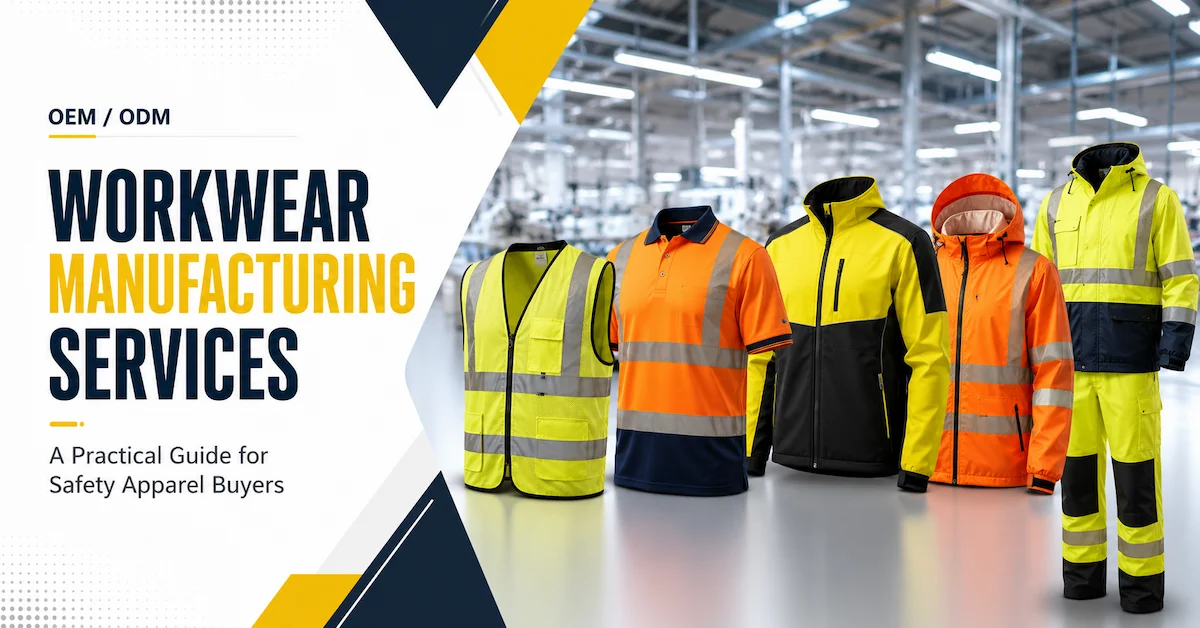
AOKE supplies reflective vests, hi vis shirts, polo shirts, hoodies, jackets, rainwear, winter workwear, woven workwear, and ready-to-ship safety apparel.
Buyers can also visit the AOKE Blog for more workwear sourcing information.
Key Capabilities of a Workwear Export Manufacturer
1. International Product Knowledge
Export manufacturers should understand different buyer markets and product expectations.
Important knowledge includes:
- Safety standards
- Fabric requirements
- Size differences
- Label requirements
- Packaging expectations
- Import regulations
A supplier experienced in export markets can help buyers avoid product selection mistakes.
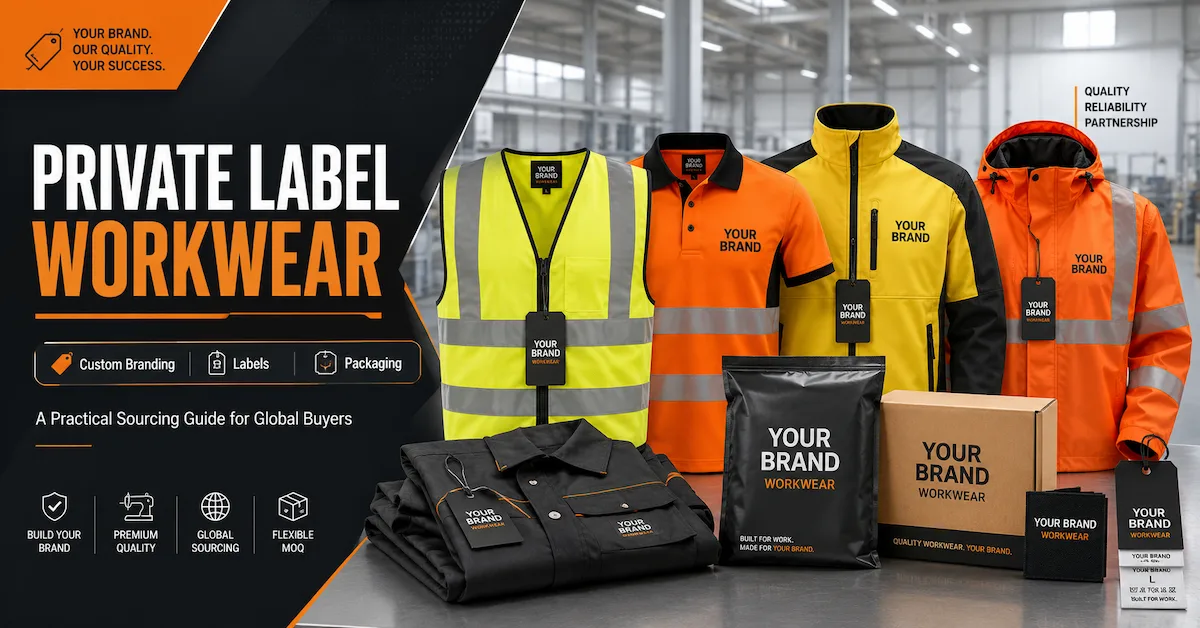
2. OEM and Private Label Services
Many international buyers require customized products instead of standard workwear.
Common export customization services include:
- Company logo printing
- Embroidery
- Custom labels
- Hang tags
- Packaging design
- Custom colors
- Reflective tape layouts
- Product modifications
OEM capability allows importers and brands to create differentiated product lines.
For customized projects, buyers can submit requirements through the Contact Us page.
3. Quality Control for Export Orders
Quality control is especially important for international shipments because returns and replacements are expensive.
A professional export manufacturer should inspect:
- Fabric quality
- Color consistency
- Reflective tape placement
- Stitching strength
- Zipper and button quality
- Logo accuracy
- Size measurement
- Packaging
Quality control should happen throughout production, not only after completion.
4. Export Packaging Capability
Export packaging protects products during international transportation.
Common requirements include:
- Individual polybags
- Size labels
- Barcode stickers
- Carton marks
- Packing lists
- Moisture protection
- Shipping labels
Correct packaging helps distributors manage warehouse operations efficiently.
5. Production Capacity and Delivery Management
Global buyers need predictable delivery schedules.
A reliable manufacturer should manage:
- Material preparation
- Sample approval
- Production planning
- Quality inspection
- Shipment scheduling
Stable delivery is especially important for seasonal products such as winter jackets and project-based workwear.
International Standards for Export Workwear
Different countries have different expectations for safety apparel.
Common references include:
| Standard | Market |
| ANSI/ISEA 107 | North America |
| CSA Z96 | Canada |
| EN ISO 20471 | Europe |
| AS/NZS 4602.1:2011 | Australia and New Zealand |
| OEKO-TEX 100 | Textile safety consideration |
| FR-related standards | Flame-resistant applications |
A professional workwear export manufacturer should understand these requirements and help buyers select suitable products.
You can learn more about AOKE’s company background through the About Us page.
Workwear Export Manufacturer vs Local Supplier
| Supplier Type | Advantages | Limitations |
| Local Supplier | Faster communication and delivery | Higher manufacturing cost |
| Trading Company | Flexible sourcing | Less production control |
| Export Manufacturer | Factory pricing, customization, export support | Requires clear specifications |
| Specialized Safety Manufacturer | Strong technical knowledge | More focused product range |
For international B2B buyers, working directly with an export manufacturer often provides better control over cost, quality, and customization.
Common Risks When Sourcing Export Workwear
Risk 1: Lack of Export Experience
Some factories can produce garments but lack experience handling international orders.
Possible problems:
- Incorrect documents
- Poor packaging
- Communication delays
- Shipping issues
Choose suppliers familiar with export procedures.
Risk 2: Ignoring Market Requirements
Different countries have different expectations.
Better approach:
Confirm target market, safety standards, labels, and documentation before production.
Risk 3: Poor Quality Consistency
Bulk export orders require stable quality.
Better approach:
Confirm inspection procedures and approve samples before production.
Risk 4: Unclear Communication
Export projects involve many details.
Important confirmations include:
- Product specifications
- Logo placement
- Packaging
- Delivery schedule
- Shipping documents
Risk 5: Weak After-Sales Support
Long-term buyers need suppliers that support repeat orders, product updates, and problem solving.
Buyer Checklist Before Choosing a Workwear Export Manufacturer
Before requesting quotations, prepare:
- Product category
- Target country
- Safety standard requirements
- Fabric preference
- Color requirements
- Reflective tape layout
- Size chart
- Logo file
- Packaging requirements
- Order quantity
- Delivery deadline
- Shipping destination
- Inspection requirements
Clear information helps manufacturers provide accurate quotations and suitable recommendations.
Why Choose AOKE as Your Workwear Export Manufacturer?
AOKE focuses on reflective apparel and safety workwear for international buyers.
The company supports:
- Export workwear supply
- Hi vis safety apparel
- OEM customization
- Private label programs
- Bulk production
- Quality inspection
- Product development
- Long-term cooperation
AOKE serves buyers including:
- PPE distributors
- Construction companies
- Logistics companies
- Industrial manufacturers
- Workwear brands
- Safety product importers
Visit the AOKE homepage at:
FAQ
1. What is a workwear export manufacturer?
A workwear export manufacturer produces safety apparel and supports international buyers with production, customization, quality control, and shipment.
2. What products can export manufacturers supply?
They commonly supply reflective vests, hi vis shirts, jackets, rainwear, winter workwear, woven workwear, and protective garments.
3. Can export manufacturers provide OEM services?
Yes. OEM services may include logos, labels, packaging, colors, and product customization.
4. What markets need exported workwear?
Common markets include North America, Europe, Australia, the Middle East, and other industrial regions.
5. What standards are important for export workwear?
Common standards include ANSI/ISEA 107, EN ISO 20471, CSA Z96, and AS/NZS 4602.1.
6. How do I choose a reliable export manufacturer?
Check factory experience, export capability, quality control, customization ability, and communication.
7. Should I request samples before bulk orders?
Yes. Samples confirm product quality before international shipment.
8. Can workwear manufacturers support private labels?
Yes. Many export manufacturers support labels, packaging, branding, and customized products.
9. What information is needed for quotation?
Provide product details, quantity, target market, logo, packaging, and delivery requirements.
10. How can I start an export workwear project?
Contact the manufacturer with your product requirements and project details.
Conclusion
Choosing the right workwear export manufacturer is essential for building a reliable international safety apparel supply chain.
A professional export partner should provide manufacturing capability, product expertise, OEM customization, quality control, export support, and stable delivery.
For global buyers sourcing reflective safety vests, hi vis shirts, jackets, rainwear, winter workwear, woven workwear, or custom safety apparel, the right manufacturer can reduce sourcing risks and support long-term business growth.
Contact AOKE to discuss your export workwear requirements, customization needs, and bulk order plans.