
Choosing the right workwear supplier requires evaluating more than product price. Professional buyers should consider supplier experience, product range, material quality, customization ability, quality control, production capacity, delivery reliability, and industry knowledge.
A reliable workwear supplier should help buyers develop suitable products, maintain consistent quality, support OEM requirements, and provide stable supply for future orders.
This guide explains the key factors companies should review before selecting a workwear partner.
AOKE provides reflective safety apparel and workwear solutions for global B2B buyers, including PPE distributors, construction companies, logistics teams, industrial manufacturers, and workwear brands.
Explore AOKE products:
https://www.aokenew.com/products/vest-waistcoat
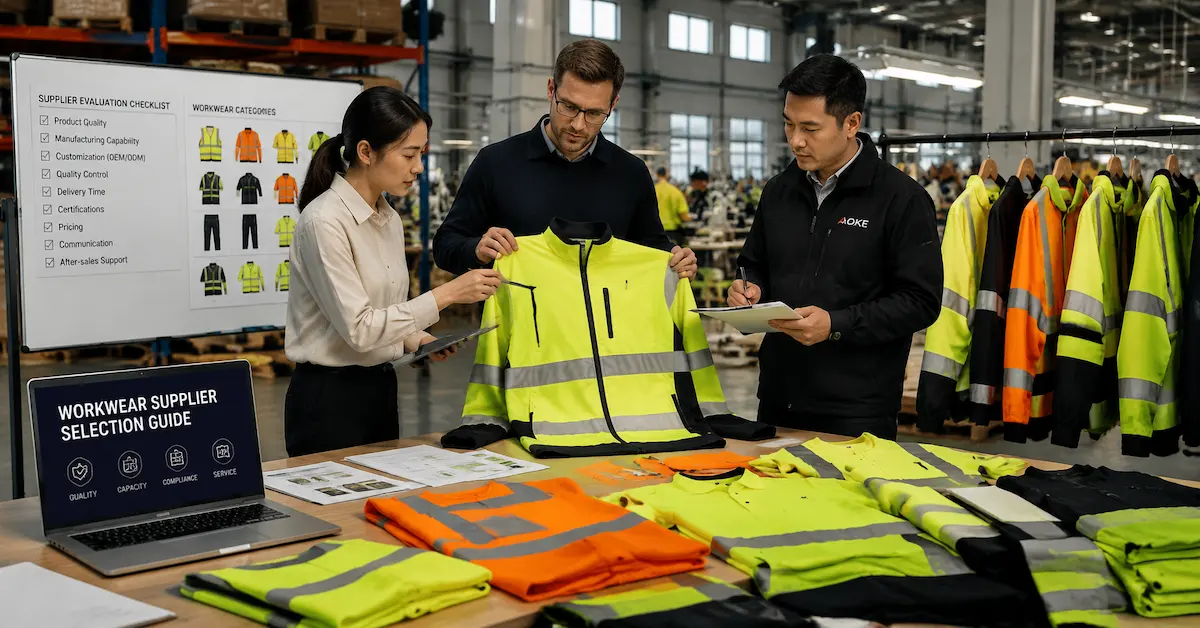
Why Workwear Supplier Selection Matters
For companies purchasing workwear in bulk, supplier selection directly affects product quality, employee satisfaction, project schedules, and long-term costs.
A wrong supplier choice may cause:
- Inconsistent product quality
- Incorrect sizing
- Poor reflective performance
- Delayed shipments
- Unstable repeat orders
- High replacement costs
Unlike ordinary clothing, workwear must meet practical requirements such as durability, visibility, comfort, and workplace functionality.
A professional supplier should understand both garment production and real working environments.
Who Needs a Workwear Supplier Selection Guide?
PPE Distributors
PPE distributors need suppliers that can provide multiple safety apparel categories and stable production.
Their priorities include:
- Competitive pricing
- Product variety
- Private label support
- Consistent quality
- Reliable delivery
Construction Companies
Construction companies need workwear suitable for outdoor environments and high-risk areas.
Important factors include:
- Visibility
- Reflective tape performance
- Durability
- Weather protection
- Worker comfort
Logistics Companies
Logistics teams require practical workwear for warehouses, transportation, and delivery operations.
They usually focus on:
- Breathable fabrics
- Easy maintenance
- Team branding
- Size availability
Industrial Manufacturers
Industrial companies often need durable workwear for production, maintenance, and engineering teams.
Requirements include:
- Strong fabrics
- Functional pockets
- Reinforced stitching
- Long service life
Workwear Brands and Importers
Brands need suppliers capable of OEM development and long-term product consistency.
Their concerns include:
- Custom designs
- Packaging
- Labels
- Product updates
- Repeat production
Step 1: Evaluate Supplier Experience
The first step in supplier selection is checking industry experience.
A supplier experienced in casual clothing may not understand industrial workwear requirements.
A professional workwear supplier should understand:
- High-visibility clothing
- Reflective materials
- Industrial applications
- Functional designs
- Safety apparel requirements
Experience allows suppliers to recommend suitable products instead of simply producing according to customer images.
Step 2: Review Product Range
A strong supplier should provide enough product categories to support different customer needs.
Common workwear products include:
| Product | Main Features | Applications |
|---|---|---|
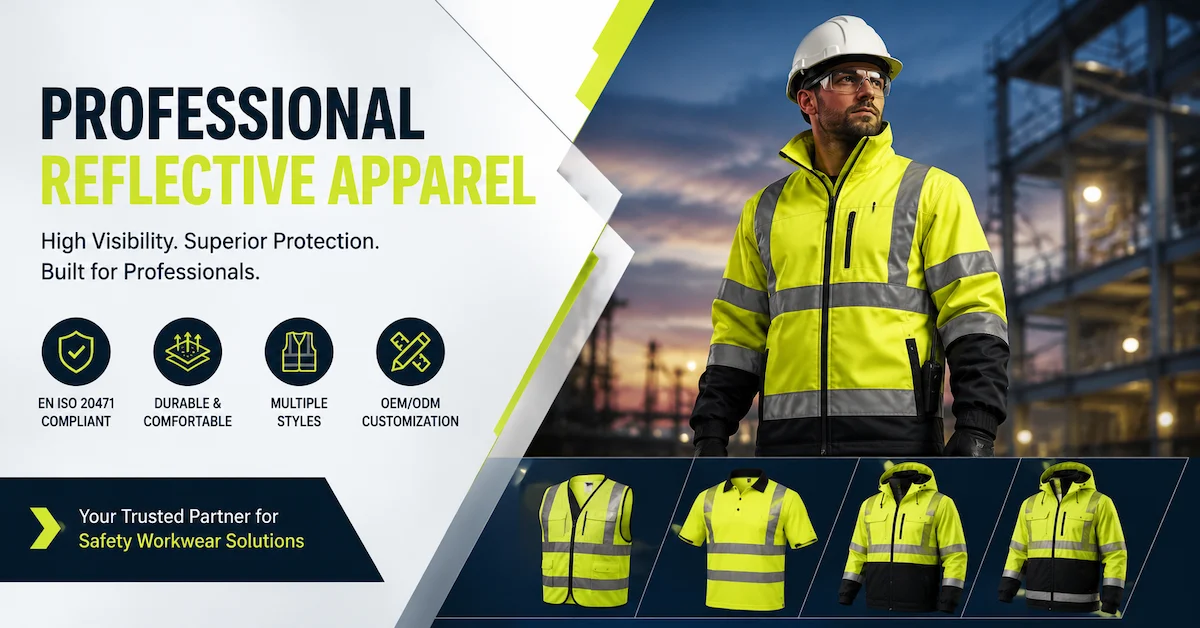
| Reflective Vest | Lightweight and visible | Construction, warehouse |
| Hi Vis T-shirt | Comfortable and breathable | Logistics, factory |
| Polo Shirt | Professional appearance | Corporate teams |
| Safety Jacket | Protective and visible | Outdoor work |
| Rain Jacket | Waterproof | Roadwork, ports |
| Winter Jacket | Warm and durable | Cold environments |
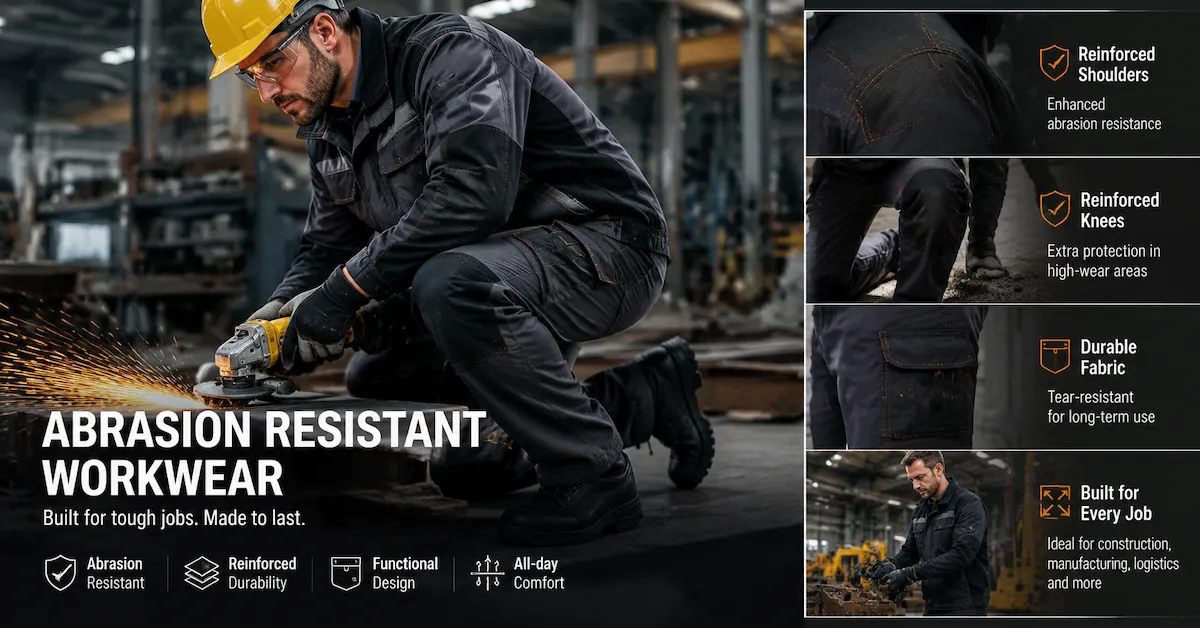
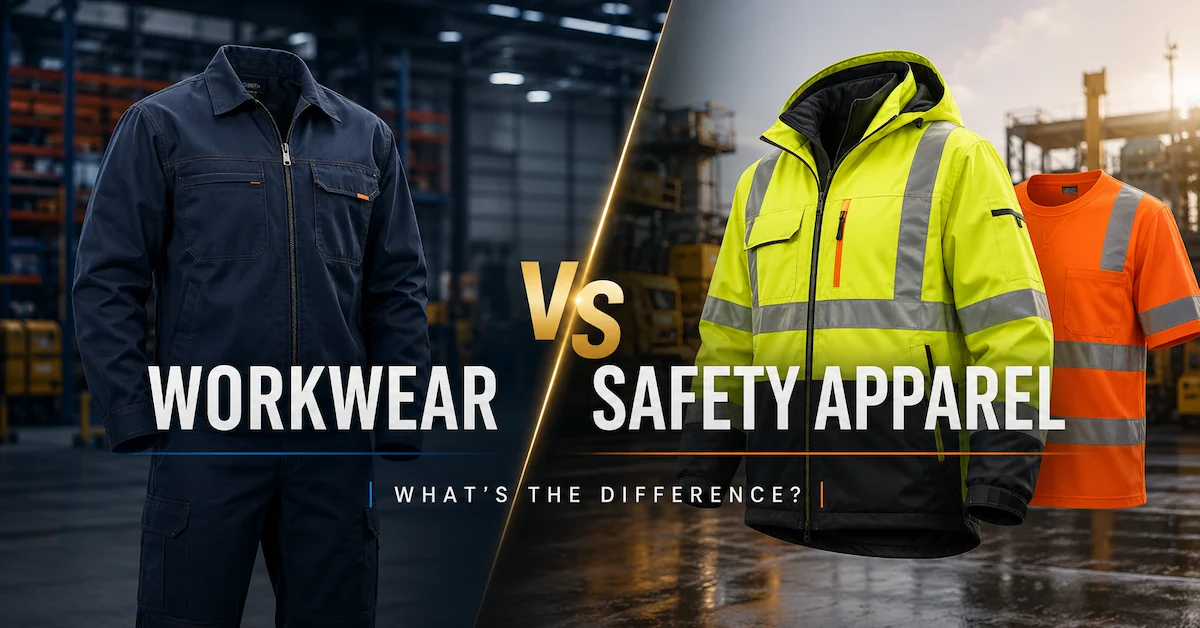
| Woven Workwear | Heavy-duty structure | Industrial use |
| FR Workwear | Protective performance | High-risk industries |
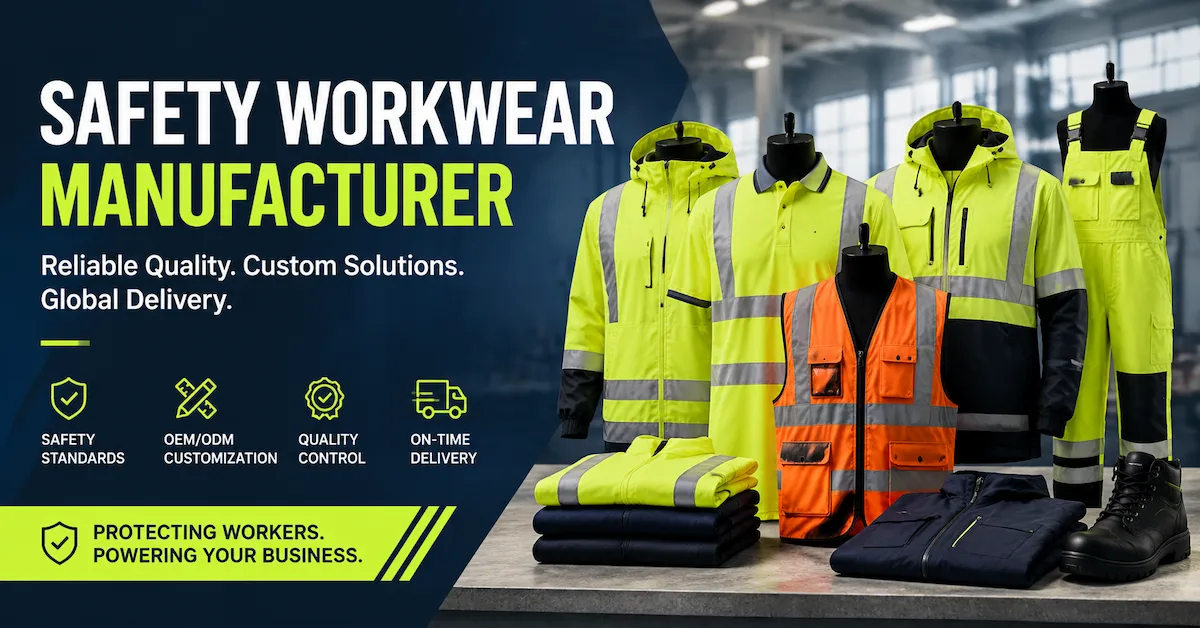
AOKE provides reflective vests, hi vis shirts, jackets, rainwear, winter workwear, and woven workwear for different industrial applications.
Step 3: Check Material and Product Knowledge
A reliable supplier should understand how materials affect performance.
Common materials include:
Polyester Mesh
Used for lightweight safety vests.
Advantages:
- Breathable
- Lightweight
- Suitable for warm conditions
Knitted Fabric
Used for shirts and polo products.
Advantages:
- Comfortable
- Flexible
- Suitable for long working hours
Woven Fabric
Used for industrial jackets and heavy-duty workwear.
Advantages:
- Durable
- Strong structure
- Better resistance to wear
Waterproof and Insulated Materials
Used for rainwear and winter workwear.
Advantages:
- Weather protection
- Outdoor suitability
- Improved worker comfort
Step 4: Confirm Customization Capability
Many B2B buyers need customized workwear instead of standard products.
A qualified supplier should support:
- Logo printing
- Embroidery
- Custom colors
- Labels
- Hang tags
- Packaging
- Size adjustments
- Pocket modifications
OEM capability is especially important for:
- PPE distributors
- Corporate buyers
- Workwear brands
- Importers
For customized workwear projects, contact AOKE:
https://www.aokenew.com/contact-us
Step 5: Review Quality Control System
Quality control is one of the most important supplier selection factors.
Buyers should check whether suppliers inspect:
Materials
Including:
- Fabric
- Reflective tape
- Zippers
- Buttons
- Labels
Production
Including:
- Cutting accuracy
- Sewing quality
- Logo placement
- Reflective tape position
Finished Products
Including:
- Measurements
- Appearance
- Packaging
- Shipment preparation
A strong QC system reduces problems in large orders.
Step 6: Check Safety Standard Awareness
Different markets may have different safety apparel requirements.
Common references include:
- ANSI/ISEA 107
- EN ISO 20471
- CSA Z96
- AS/NZS 4602.1
A professional supplier should understand:
- Market requirements
- Product classification
- Reflective material selection
- Testing expectations
This helps buyers avoid purchasing unsuitable products.
Step 7: Compare Production Capacity
A supplier’s production capability determines whether it can support your business growth.
Ask:
- Can they handle bulk orders?
- Can they support repeat purchases?
- How do they manage peak seasons?
- What is their production timeline?
Stable capacity is especially important for distributors and brands.
Step 8: Evaluate Samples Before Orders
Samples are essential before bulk production.
A proper sample review should check:
- Fabric
- Color
- Size
- Fit
- Reflective design
- Logo quality
- Stitching
- Packaging
Sample approval reduces risks before large investments.
Step 9: Consider Communication and Service
Good communication improves project efficiency.
A reliable supplier should provide:
- Clear quotations
- Fast responses
- Production updates
- Shipping information
- Problem-solving support
For international buyers, communication ability is as important as manufacturing capability.
Step 10: Evaluate Long-Term Partnership Potential
The best supplier is not always the cheapest one.
Long-term partners should provide:
- Stable quality
- Continuous improvement
- Product development support
- Consistent repeat orders
- Reliable cooperation
A strong supplier relationship helps businesses grow.
Common Mistakes During Supplier Selection
Choosing Only the Lowest Price
Low prices may indicate:
- Lower fabric quality
- Poor workmanship
- Limited inspection
- Weak service
Ignoring Factory Capability
A supplier should have the right equipment, experience, and production process.
Not Defining Requirements Clearly
Buyers should prepare:
- Product specifications
- Quantity
- Target market
- Logo requirements
- Packaging details
Skipping Supplier Verification
Before cooperation, buyers should review:
- Product samples
- Factory capability
- Quality process
- Previous experience
Buyer Checklist for Selecting a Workwear Supplier
Before requesting quotations, prepare:
- Product type
- Industry application
- Target market
- Required standards
- Fabric preference
- Colors
- Reflective requirements
- Size range
- Logo files
- Packaging needs
- Order quantity
- Delivery schedule
This helps suppliers provide accurate solutions.
Why Choose AOKE as Your Workwear Supplier?
AOKE focuses on reflective apparel and safety workwear for global buyers.
AOKE supports:
- Custom safety apparel
- Hi vis workwear
- OEM production
- Private label solutions
- Bulk manufacturing
- Quality inspection
- International supply
AOKE serves:
- PPE distributors
- Construction companies
- Logistics businesses
- Industrial manufacturers
- Workwear brands
Learn more:
https://www.aokenew.com/about-us
FAQ
What should buyers consider when selecting a workwear supplier?
Buyers should evaluate experience, products, quality control, customization, capacity, standards, and communication.
How can I verify a workwear supplier?
Review samples, factory capability, product experience, quality processes, and customer support.
What products can workwear suppliers provide?
Common products include safety vests, hi vis shirts, jackets, rainwear, winter workwear, and industrial uniforms.
Can suppliers provide OEM services?
Yes. OEM services include logos, labels, packaging, colors, and custom product development.
Why is quality control important?
It ensures consistent products and reduces complaints during bulk orders.
Should buyers request samples?
Yes. Samples confirm product quality before mass production.
What affects workwear pricing?
Pricing depends on materials, quantity, customization, design complexity, and production requirements.
What safety standards should buyers know?
Common standards include ANSI/ISEA 107, EN ISO 20471, CSA Z96, and AS/NZS 4602.1.
Can suppliers support repeat orders?
Professional suppliers should maintain consistency for future purchases.
How do I start a workwear sourcing project?
Prepare your product requirements and contact a qualified supplier for evaluation.
Conclusion
A proper workwear supplier selection guide helps businesses make better purchasing decisions and avoid common sourcing problems.
The right supplier should combine product knowledge, manufacturing capability, customization services, quality control, and reliable delivery.
For companies sourcing safety apparel, reflective clothing, and industrial workwear, selecting the right partner is the foundation of a successful supply chain.
Contact AOKE to discuss your workwear requirements and sourcing plans.