
Professional Workwear Manufacturer in Industrial Procurement Decisions
In industrial sourcing, workwear is rarely evaluated as an isolated garment. Procurement teams look at how jackets hold shape after repeated washing, whether reflective elements remain effective after abrasion, and how sizing consistency impacts workforce comfort across multiple sites. In this context, a professional workwear manufacturer is judged not by surface appearance, but by how product decisions perform once garments are exposed to daily operational stress.
This difference is often invisible during sampling. It becomes obvious only after months of use.
Industrial Work Conditions That Define Product Requirements
Real Usage Variables That Shape Workwear Performance
Industrial garments operate under friction, load, moisture, and repeated laundering. A woven jacket used on a logistics dock experiences very different stress compared to a casual outer layer, even if the fabric composition appears similar on paper.
In practice, performance is determined by:
-
Fabric structure stability under abrasion
-
Reinforcement at movement-driven stress zones
-
Seam construction and stitch density
-
Compatibility between outer shell, lining, and reflective components
Ignoring any of these elements increases replacement frequency.
Material and Structural Logic Behind Professional Workwear
Fabric Structure as a Functional Decision
Woven fabrics are commonly selected for high-wear workwear because they maintain dimensional stability when subjected to pulling, kneeling, and tool contact. Knit-based fabrics, while comfortable, are more sensitive to deformation under repeated mechanical stress.
In a professional workwear manufacturer environment, fabric selection is tied to:
-
Expected wear intensity
-
Washing method and frequency
-
Climate exposure during use
The goal is not maximum thickness, but predictable performance.
Garment Construction and Load Distribution
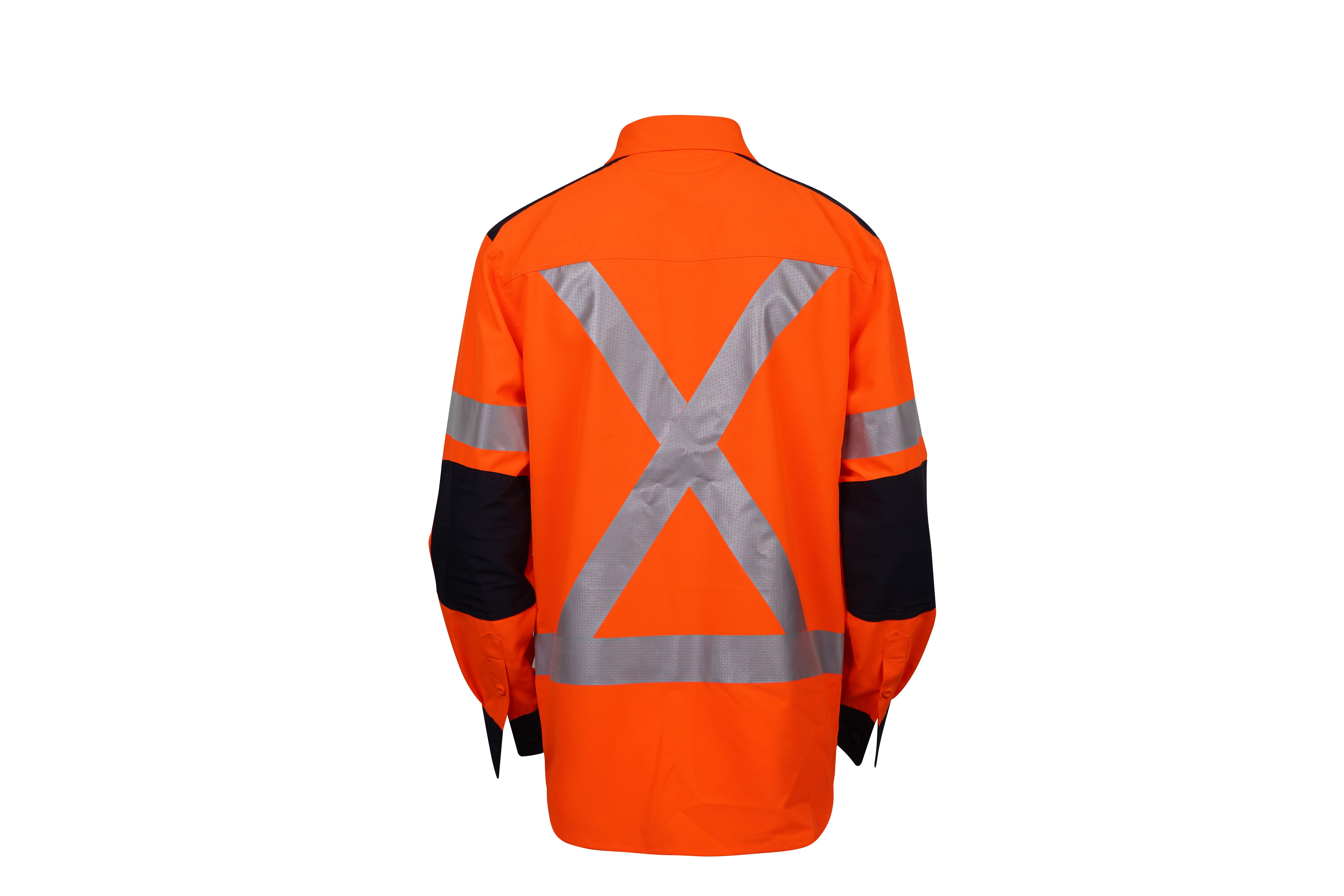
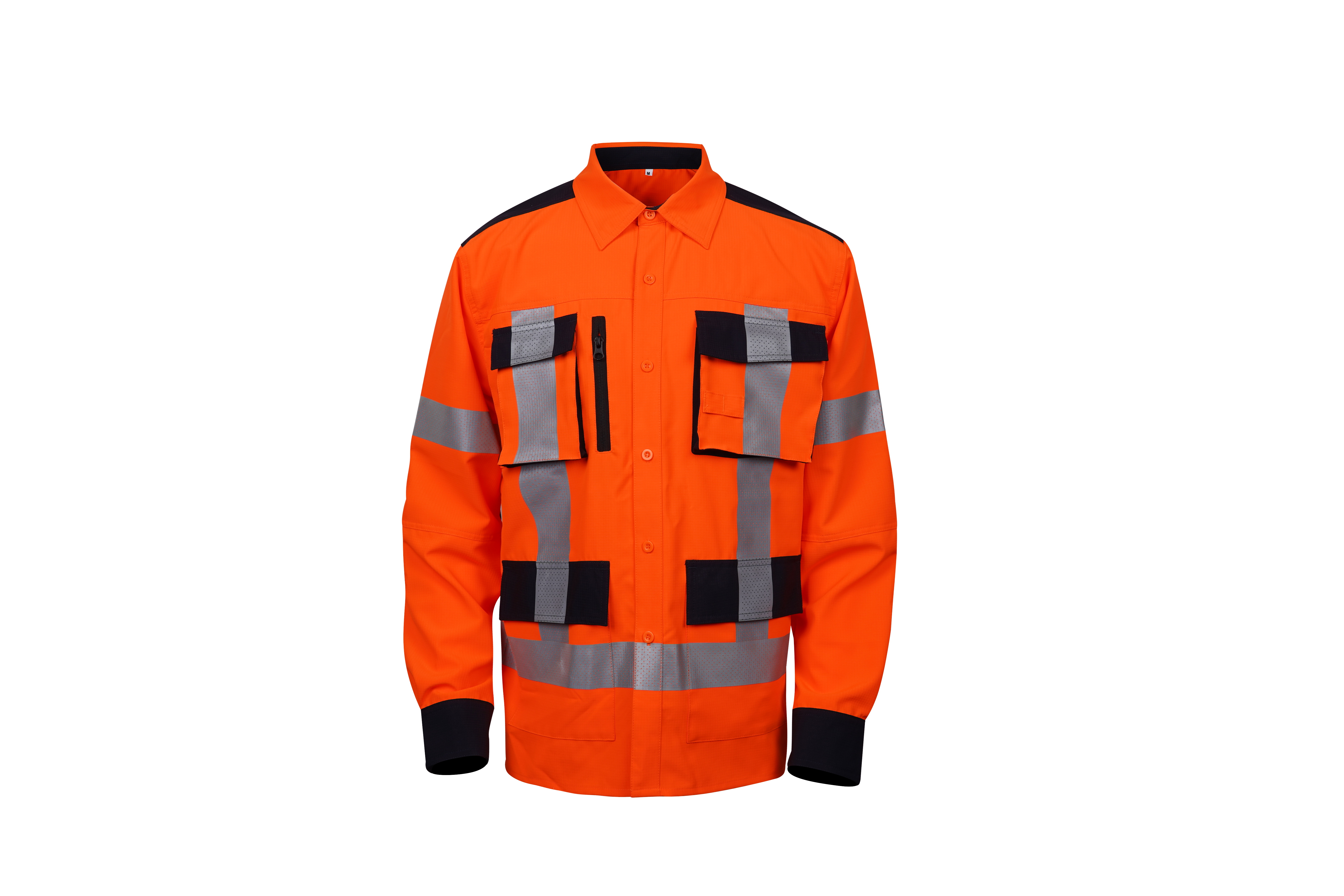
Product durability is rarely uniform across a garment. Failures typically occur at pocket openings, shoulder seams, cuffs, and underarm zones. Reinforcement is therefore applied selectively, using bartacks, double stitching, or structural layering only where stress accumulates.
Overbuilding increases stiffness and cost. Underbuilding shortens service life. Balance is intentional.
Manufacturing Discipline and Product Consistency
Process Control Over Visual Inspection
Consistent product performance comes from repeatable manufacturing processes, not final-stage inspection alone. This includes fabric batch control, standardized cutting tolerances, and fixed sewing sequences.
ISO 9001:2015 emphasizes this process-oriented approach to quality management, particularly for products requiring batch consistency across large production volumes.
Managing Variability in Multi-Size Production
Size grading accuracy plays a critical role in workwear comfort and usability. Small deviations, when multiplied across thousands of units, can result in widespread dissatisfaction and rework costs.
Experienced manufacturers reduce this risk through standardized grading templates and pre-production validation.
Manufacturing Approach Comparison: Market Practice vs. AOKENEW
| Evaluation Dimension | Typical Market Supplier | AOKENEW Manufacturing Approach |
|---|---|---|
| Product development logic | Style-driven or spec-matching | Usage-driven and condition-based |
| Fabric selection | Based on availability | Based on wear scenario and lifespan |
| Reinforcement strategy | Uniform or minimal | Targeted by stress zone |
| Multi-category coordination | Limited | Integrated across vest, jacket, woven systems |
| Batch consistency control | Reactive | Process-controlled |
| Replacement cycle predictability | Variable | More stable over time |
This distinction explains why initial unit pricing often fails to reflect long-term sourcing cost.
Procurement Execution: MOQ, Lead Time, and Customization
MOQ and Cost Stability
MOQ is typically aligned with fabric sourcing efficiency and production planning. Orders below optimal thresholds may increase unit cost or extend lead time due to fragmented material procurement.
Lead Time Structure
Lead time generally includes sampling confirmation, material allocation, production scheduling, and final assembly. Structural changes introduced after sampling—such as pocket layout or reflective positioning—are a common cause of delays.
Customization Without Production Risk
Customization is most effective when defined early. Logo method, reflective layout, color contrast, and accessory placement are finalized during sampling to maintain production flow stability.
A professional workwear manufacturer integrates customization into production planning rather than treating it as an add-on.
Product Application Across Workwear Categories
Category-Specific Manufacturing Demands
Different garments impose different production constraints:
-
Woven workwear prioritizes abrasion resistance and shape retention
-
Jackets require layered construction and weather protection balance
-
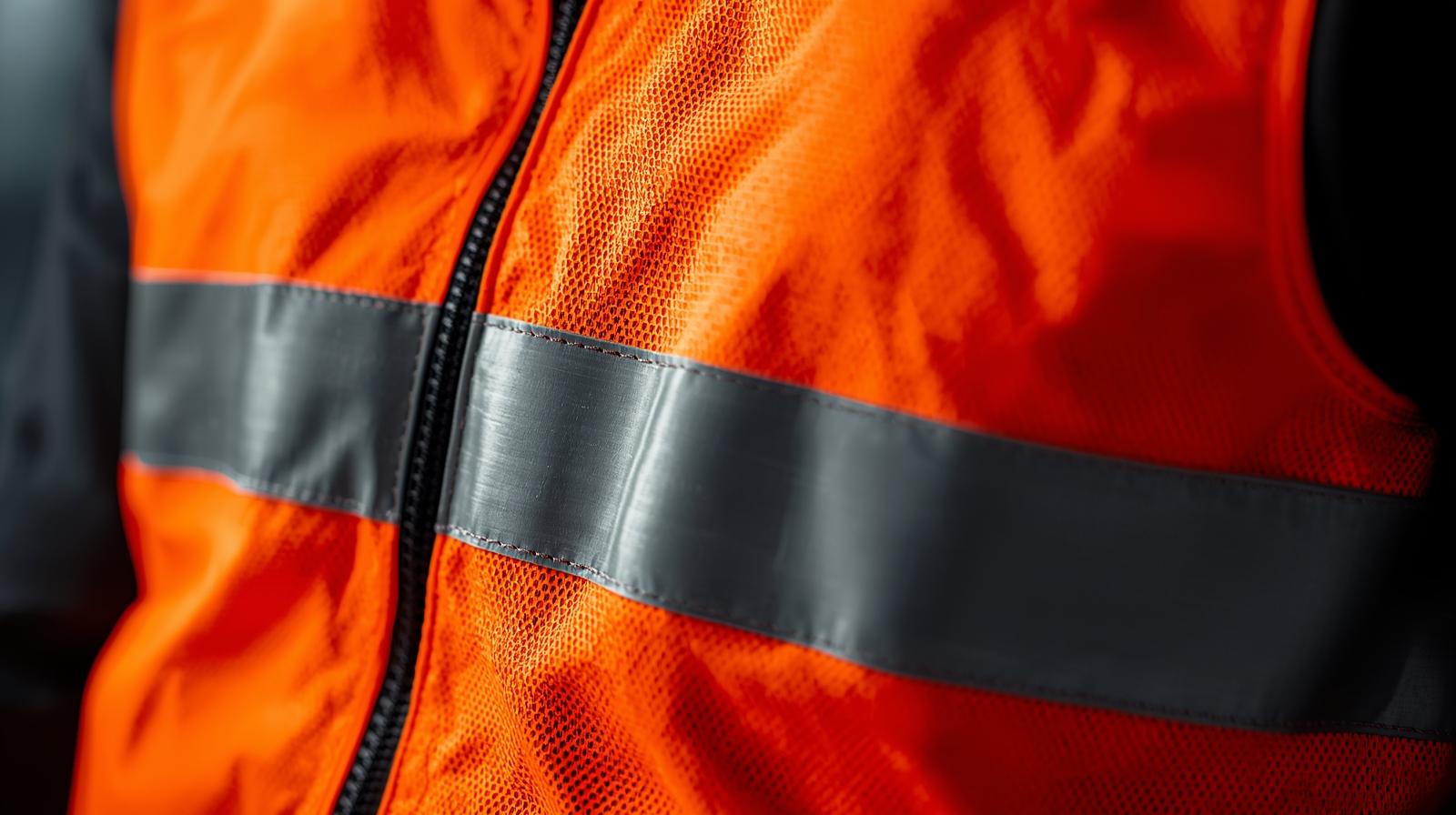
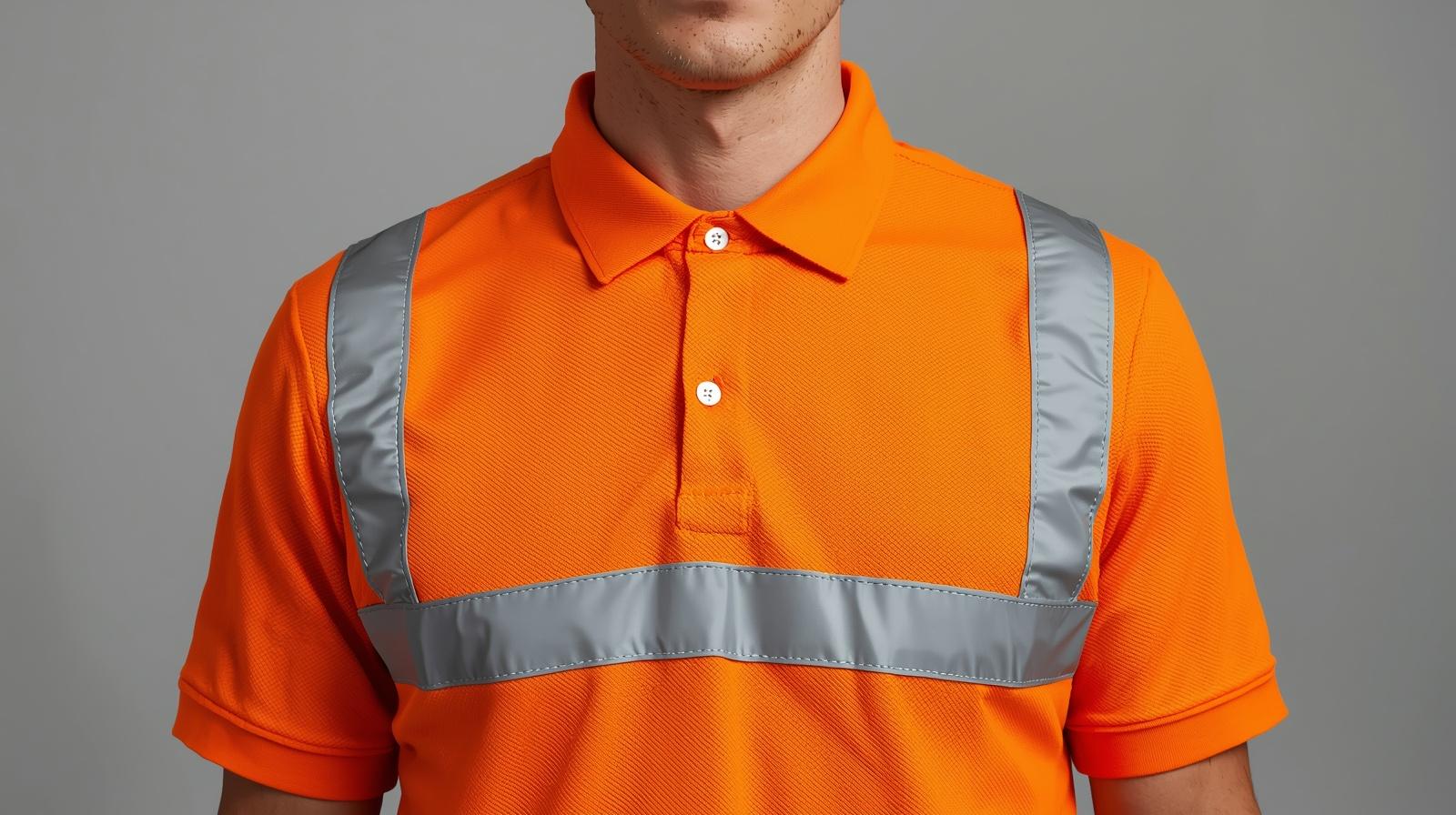
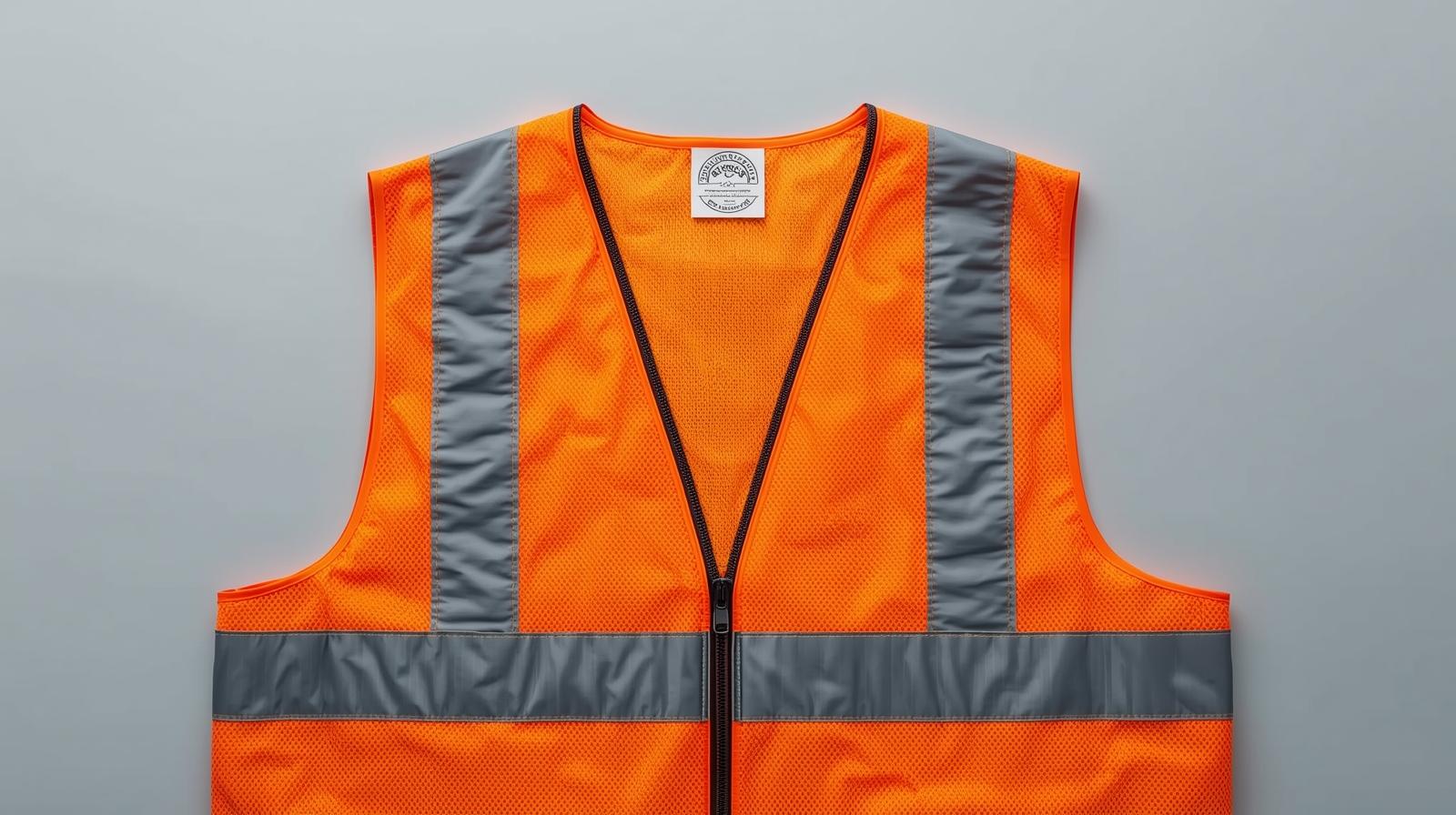
Vests emphasize visibility placement, pocket load, and freedom of movement
Coordinating these categories under one manufacturing system reduces inconsistency across full uniform programs.
Frequently Asked Questions
How can buyers evaluate product quality beyond samples?
Review reinforcement placement, seam construction, and size grading consistency rather than fabric appearance alone.
Does higher-spec construction always increase cost?
Not necessarily. Targeted reinforcement and appropriate fabric selection often reduce replacement frequency and long-term expense.
What should be locked before mass production starts?
Fabric behavior, structural details, size grading, and customization elements should all be finalized at the sampling stage.
Closing Perspective: Manufacturing Depth as a Sourcing Advantage
Choosing a professional workwear manufacturer is ultimately about ensuring long-term reliability under real working conditions, rather than short-term sourcing convenience. When materials, garment structure, and production control are aligned, workwear programs become easier to manage and more predictable in cost.
AOKENEW focuses on functional workwear manufacturing across woven workwear, jackets, vests, and reflective apparel, with particular attention to durability, targeted reinforcement, and batch consistency. An overview of our manufacturing capabilities and product categories is available on our homepage: https://www.aokenew.com.
If you have related requirements or questions—such as customization scope, MOQ alignment, or production timelines—our team can provide practical input based on real manufacturing experience. You are welcome to reach out directly through our Contact Us page: https://www.aokenew.com/contact-us.